Braces Cost Comparison: Albania vs the UK vs Poland vs Turkey (2025)
Braces are one of the most effective ways to straighten teeth, correct bite issues, and improve long‑term oral health. For adults in the UK, however, orthodontic treatment is almost always private and can be expensive, often costing several thousand pounds over one to two years.
Braces are one of the most effective ways to straighten teeth, correct bite issues, and improve long‑term oral health. For adults in the UK, however, orthodontic treatment is almost always private and can be expensive, often costing several thousand pounds over one to two years. Some of our surveyed patients reported treatment lengths of up to seven years in some UK clinics.
Because of this, a growing number of UK patients now consider having braces fitted abroad. Countries such as Albania, Poland, and Turkey regularly advertise orthodontic treatment at far lower prices than the UK. However, these lower costs often raise understandable concerns around quality, safety, follow‑up care, and whether travelling abroad actually makes financial sense once time and travel costs are included.
This guide is designed to answer those questions clearly. It explains how braces work, compares the cost of treatment in the UK with Albania, Poland, and Turkey, and, crucially, explains why prices differ so much without automatically meaning lower quality. The focus is on helping you make a confident, evidence‑based decision.
TL;DR - Are braces cheaper abroad than in the UK?
Yes. Private orthodontic treatments, including braces, are significantly cheaper abroad than in the UK, even after travel costs, when treatment is carefully planned.
Typical prices for full adult traditional metal braces (both arches):
- UK: £1,800–£3,000
- Albania: £800 - £1,200
- Poland: £900 - £1,300
- Turkey: £1,300 - £1,700
The same pattern in price differences generally applies to other types of braces, like ceramic or clear aligners. The main challenge with braces is that treatment lasts 12–24 months and requires follow‑ups. Lower prices abroad reflect economic differences such as wages and clinic overheads, without compromising on quality.
What are braces and how do they work?
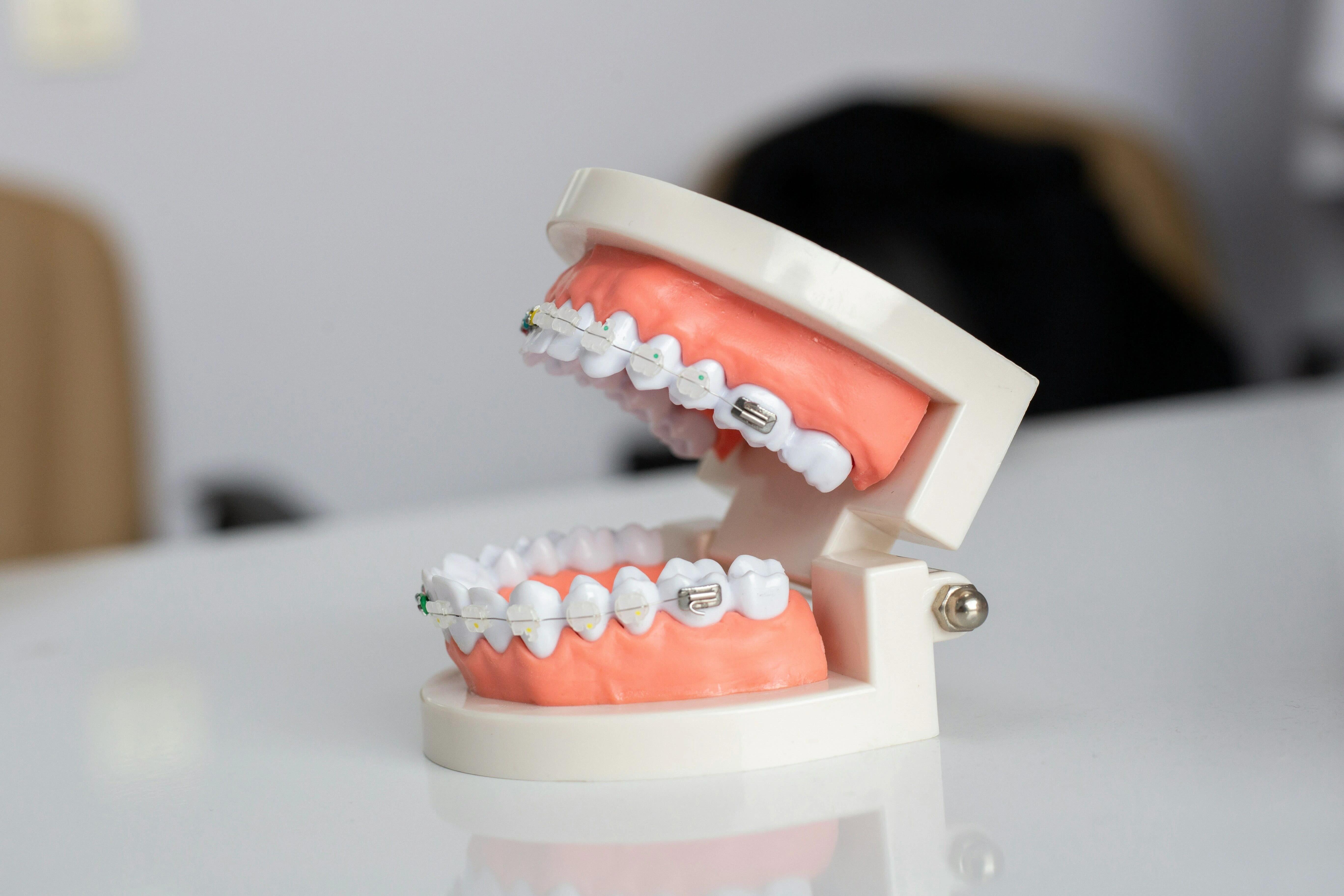
Braces are orthodontic devices used to gradually move teeth into better alignment. They apply gentle, controlled forces over time to straighten teeth, close gaps, and correct bite problems.
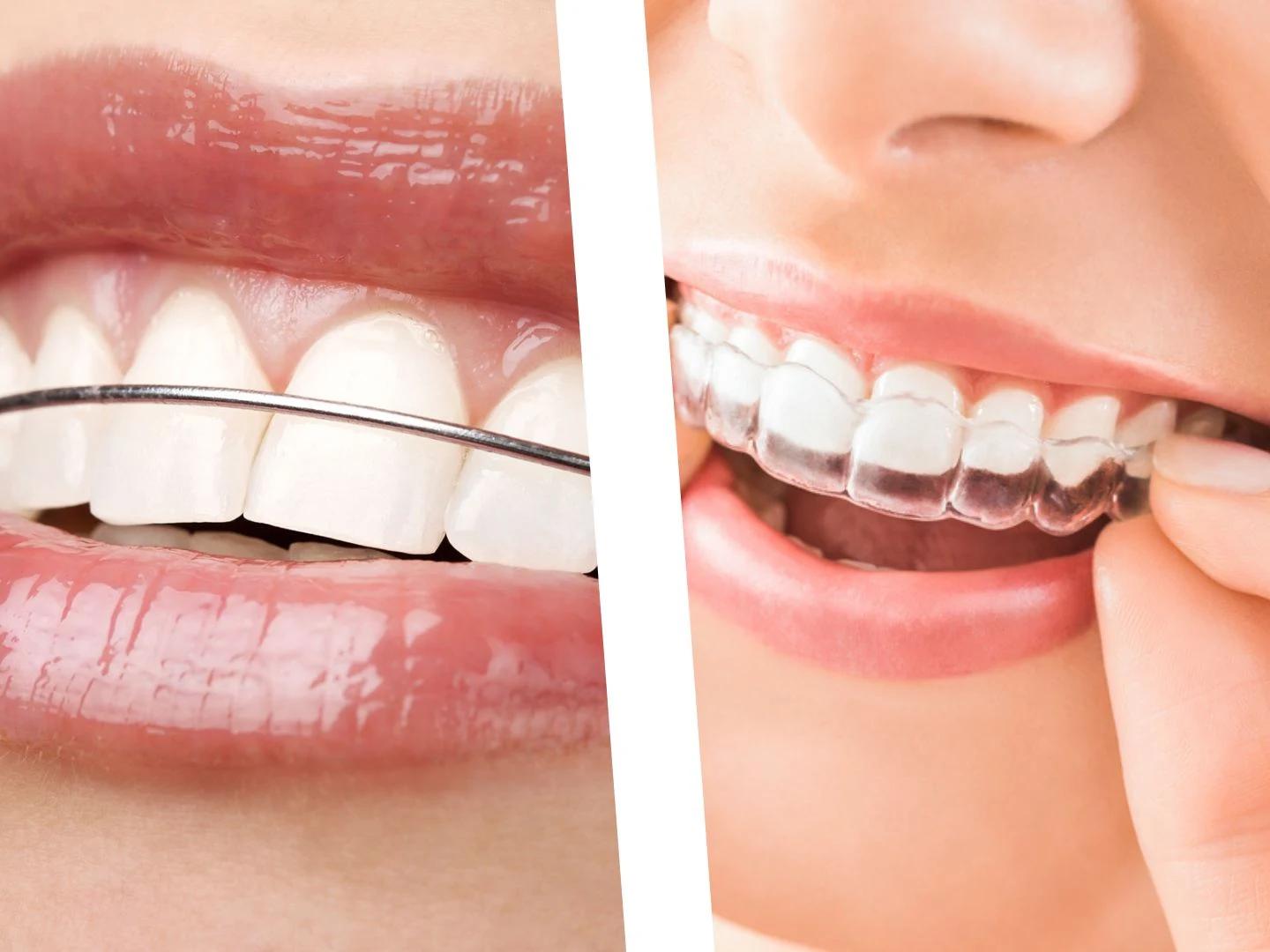
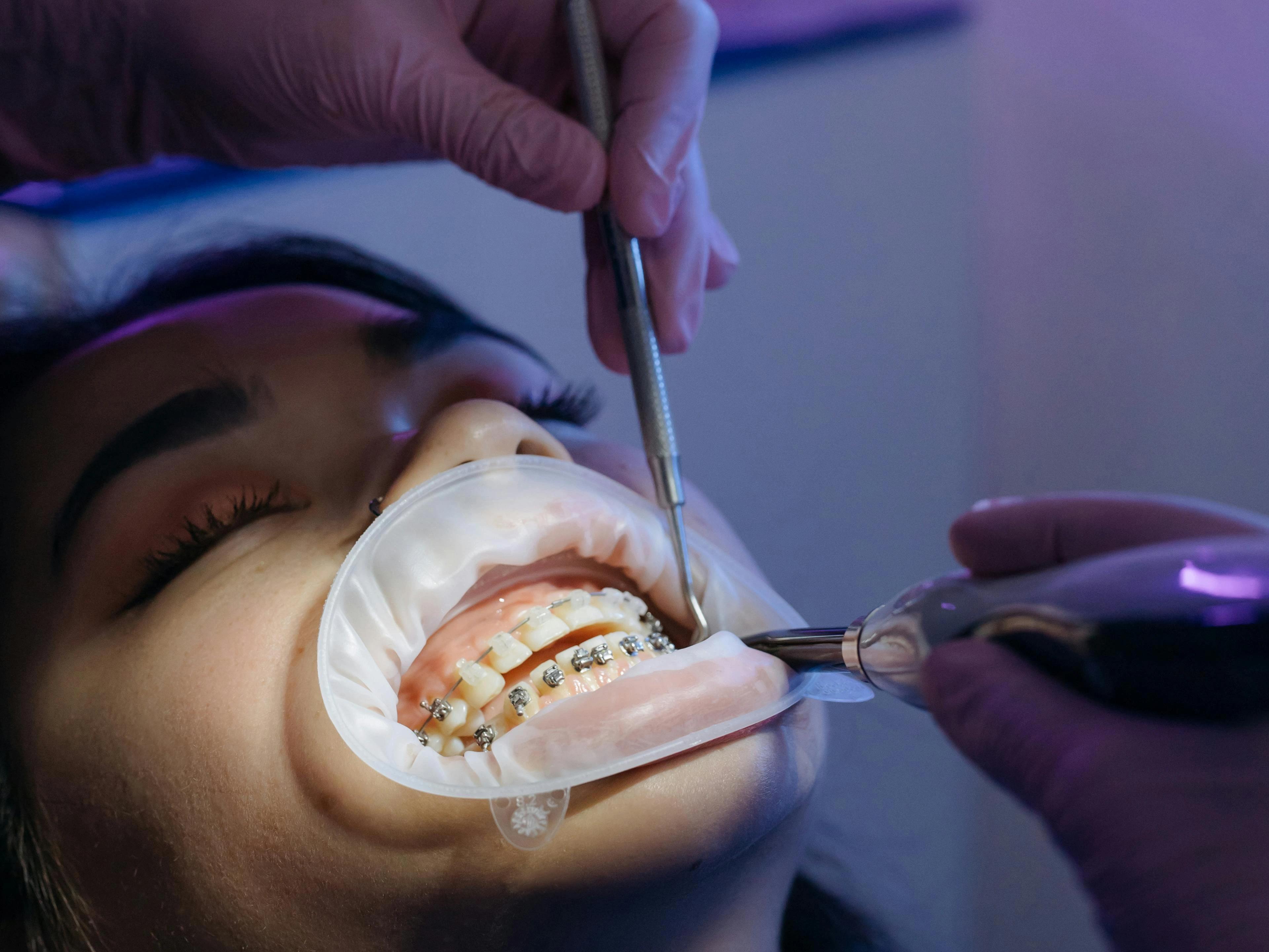
Traditional fixed braces use brackets bonded to the teeth and a wire that is adjusted periodically. Clear aligners use a series of removable trays. In both cases, treatment relies on biological tooth movement, which takes time and requires monitoring.
Adults can successfully have braces, but treatment often takes longer than in teenagers due to denser bone structure. Consistent follow‑up and good oral hygiene are essential for good outcomes.
References:
Types of braces and suitability for treatment abroad
Traditional metal braces are the most robust and cost‑effective option. They are suitable for simple and complex cases and are commonly used abroad due to predictable results.
Ceramic braces work in the same way as metal braces but use tooth‑coloured brackets. They are more discreet but slightly more expensive.
Lingual braces are attached to the back of the teeth, making them invisible from the front. They offer the aesthetic advantage of being hidden but can be more complex to adjust and slightly more expensive than traditional braces.
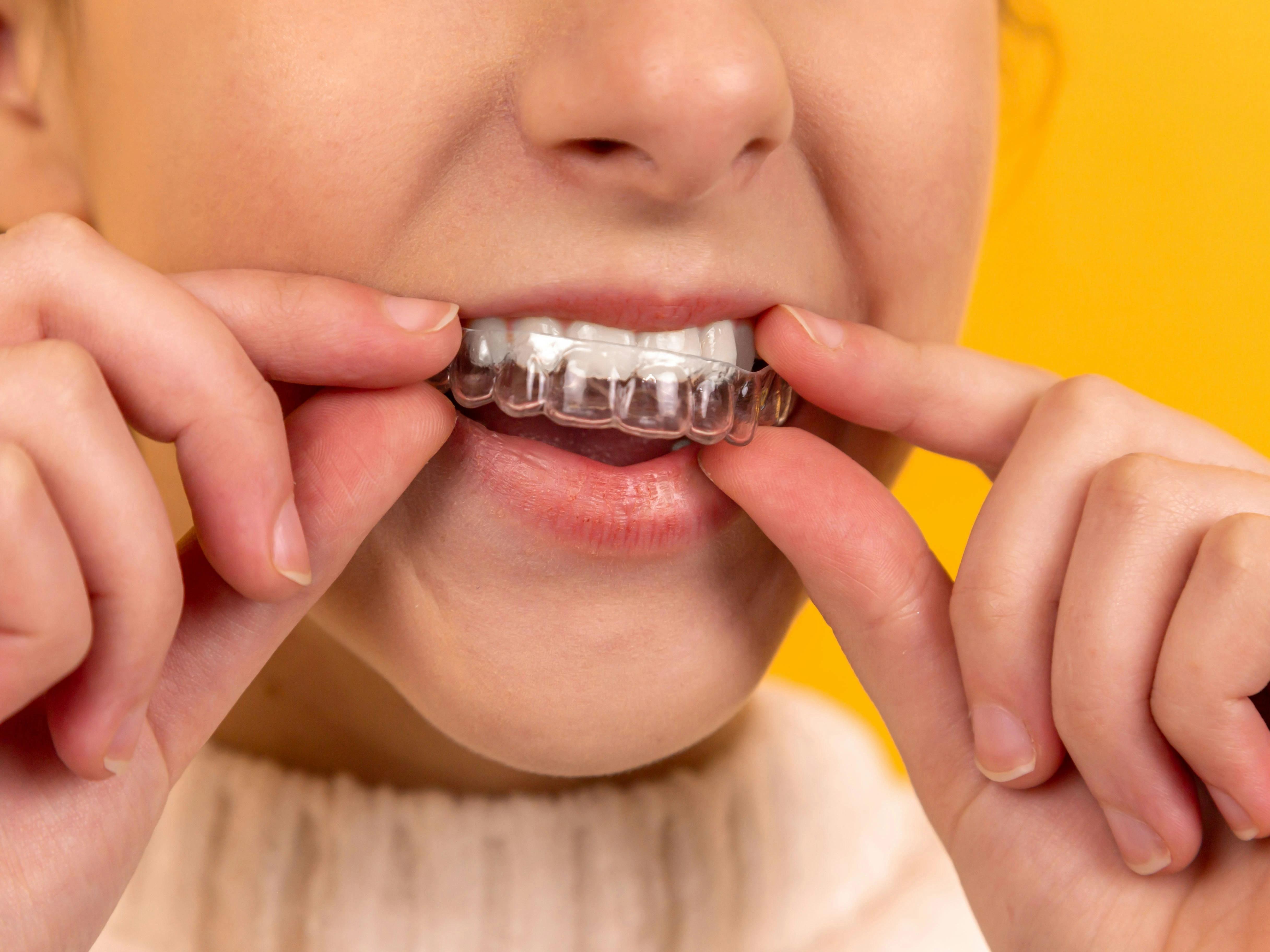
Clear aligners are removable and discreet. They often require fewer in‑person visits, making them attractive for overseas treatment, but they are not suitable for all cases.
References:
Let’s Talk About Your Smile - Free Consultation
Trusted by thousands of international patients in Albania

Braces costs in the UK
Adult orthodontic treatment in the UK is almost always private. NHS braces are typically limited to under‑18s with significant clinical need, which means the majority of adults must pay full private fees.
Typical private prices:
- Metal braces: £1,800–£3,000
- Ceramic braces: £2,000–£5,000
- Clear aligners:£2,000–£5,000
- Lingual braces: £3,000–£7,000
These prices usually include the initial consultation, diagnostic records (X‑rays, scans, photographs), fitting of braces or aligners, routine adjustment appointments over 12–24 months, and one set of retainers at the end of treatment. However, inclusions vary widely between practices.
Some UK clinics charge extra for replacement retainers, emergency visits, missed appointments, extended treatment time, or refinements beyond the original plan. This means final costs can exceed headline prices, especially if treatment takes longer than expected.
The high cost of UK braces is driven primarily by economics. Orthodontic practices face high staff wages, employer National Insurance contributions, professional indemnity insurance, Care Quality Commission compliance, and high premises and laboratory costs. Orthodontic treatment also requires frequent in‑person visits over a long period, which increases clinician time and overhead.
Importantly, the materials used in the UK are not unique or inherently superior. Brackets, wires, and aligner systems are manufactured by global suppliers and used worldwide. The higher UK price reflects cost structure and regulation, not better materials or outcomes.
References:
Braces costs in Albania
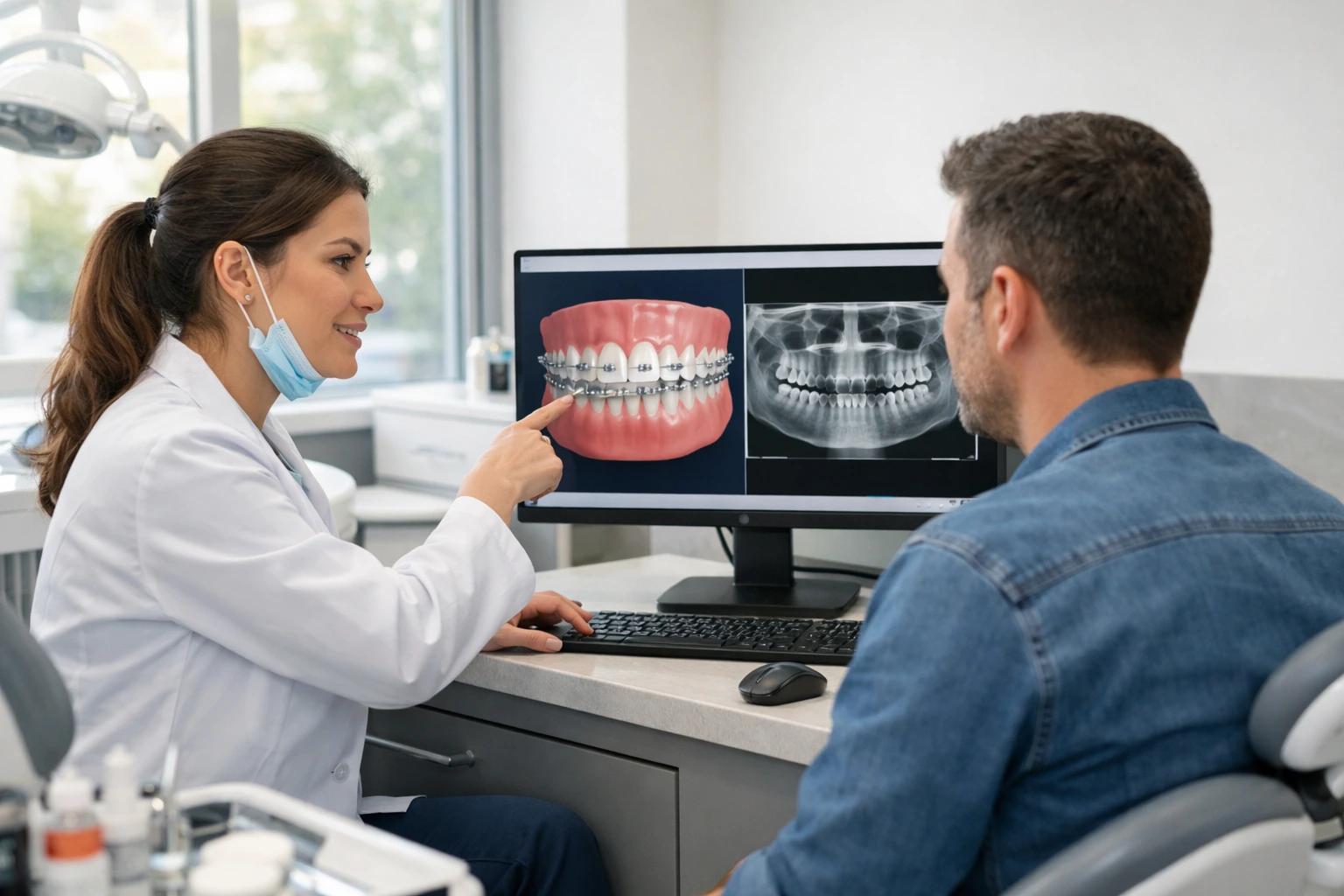
Albania has become an increasingly popular destination for adult orthodontic treatment, particularly among UK and EU patients seeking lower costs without sacrificing standards.
Typical prices:
- Metal braces: £800–£1,200
- Ceramic braces: £1000–£1,500
- Clear aligners: £1,500–£3,000
- Lingual braces: £1,300 – £1,700
These prices commonly include consultation, diagnostic imaging, fitting of braces or aligners, routine adjustments, and at least one set of retainers. Many Albanian dental clinics use bundled pricing models, which give patients clearer upfront costs than many UK private practices.
Lower prices are driven by structural economic factors rather than reduced quality. Albania has significantly lower wages, lower clinic overheads, lower laboratory fees, and no VAT on medical services.
Crucially, reputable Albanian clinics use CE‑marked orthodontic materials sourced from EU suppliers, modern digital imaging, and CAD/CAM workflows. Many orthodontists have trained or worked in Italy, Germany, or other EU countries. Clinical protocols closely mirror those used in the UK.
For patients concerned about “cheap meaning low quality,” the key distinction is that Albania’s lower costs reflect a different economic environment, not compromised materials or outdated techniques.
Braces costs in Poland
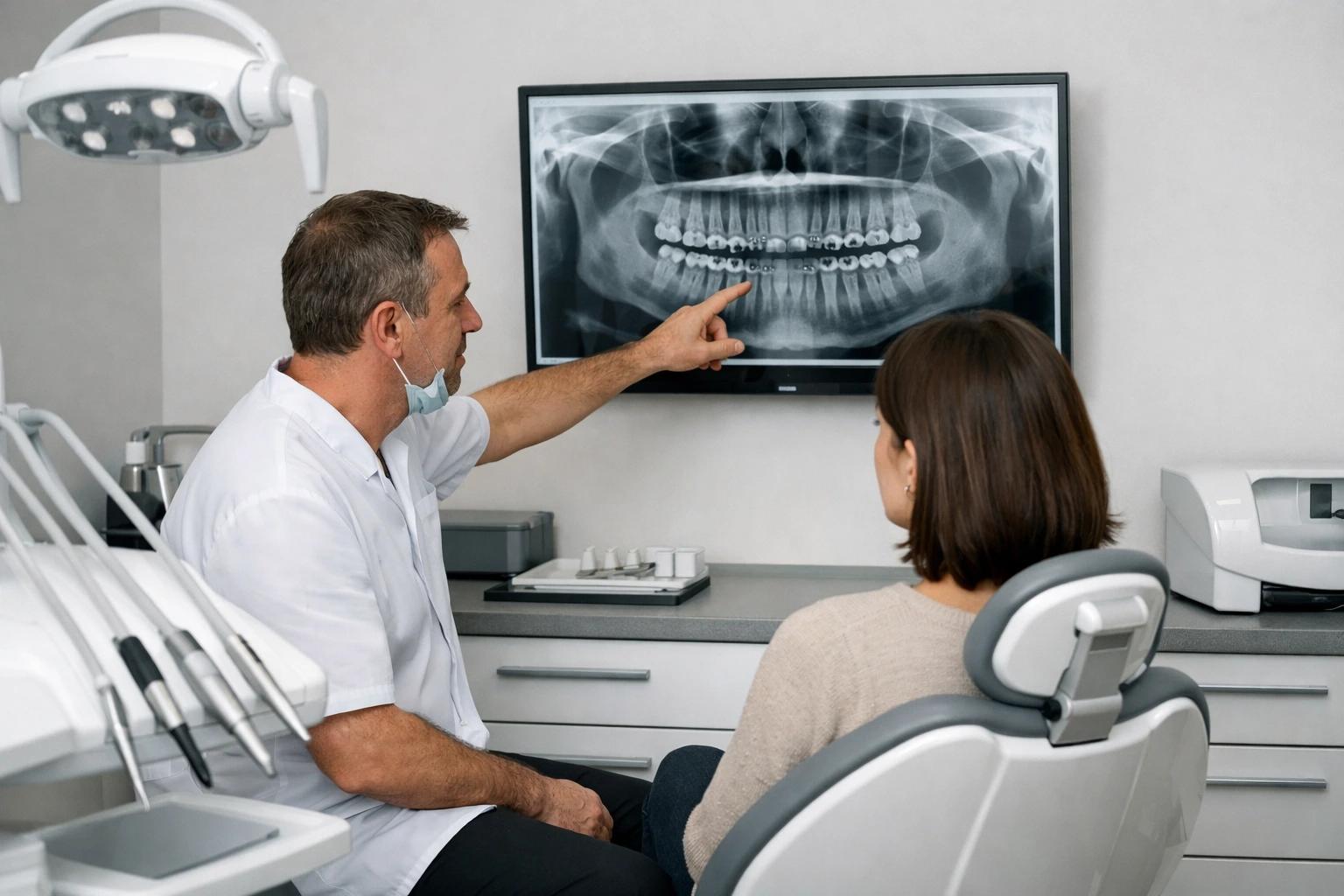
Poland is sometimes considered as a dental destination, mainly due to its lower prices compared to the UK.
Typical prices:
- Metal braces: £900 - £1,300
- Ceramic braces: £1,120 - £1,720
- Clear aligners: £1,700 - £4,050
- Lingual braces: £3,000 - £3,500
These prices generally include consultation, diagnostics, fitting, and routine adjustment visits. Some clinics charge separately for retainers or treatment extensions, so confirming inclusions is important.
Poland’s costs are higher than Albania’s because wages, rents, and laboratory fees are higher. However, they remain lower than the UK due to lower overall operating and employment costs.
Polish clinics operate fully under EU medical device regulation and commonly use the same orthodontic systems, laboratories, and materials as Western European clinics. Many patients choose Poland for regulatory familiarity, EU oversight, and ease of travel rather than maximum cost reduction.
References:
Braces costs in Turkey
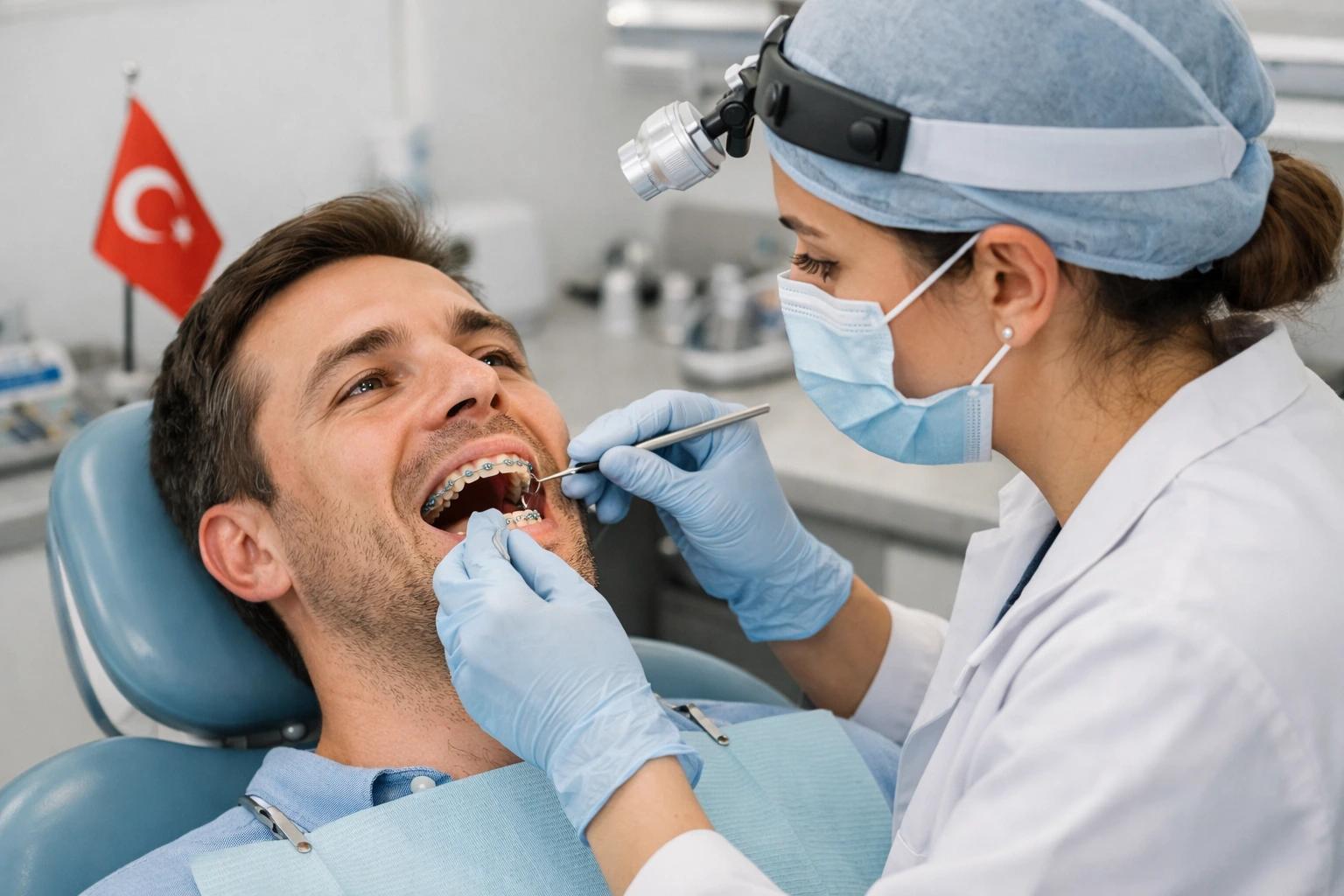
The cost of orthodontic treatment in Turkey can vary widely depending on the clinic, the type of braces, and the services included.
Typical prices:
- Metal braces: £1,300 - £1,700
- Ceramic braces: £1,300 - £2,150
- Clear aligners: £2,600 - £4,300
- Lingual braces: £1,300 - £2,600
These ranges reflect comprehensive treatment for both upper and lower teeth. Exact costs can depend on factors such as treatment duration, severity of misalignment, and whether any additional procedures (like extractions or retainers) are required.
Other factors influencing cost include the clinic’s reputation and location, as well as the technology used.
Because advertised prices don’t always include every step of the treatment, it’s essential to request a detailed cost breakdown before committing. This ensures you understand exactly what’s included and can make a fully informed decision.
References:
Like-for-like cost comparison
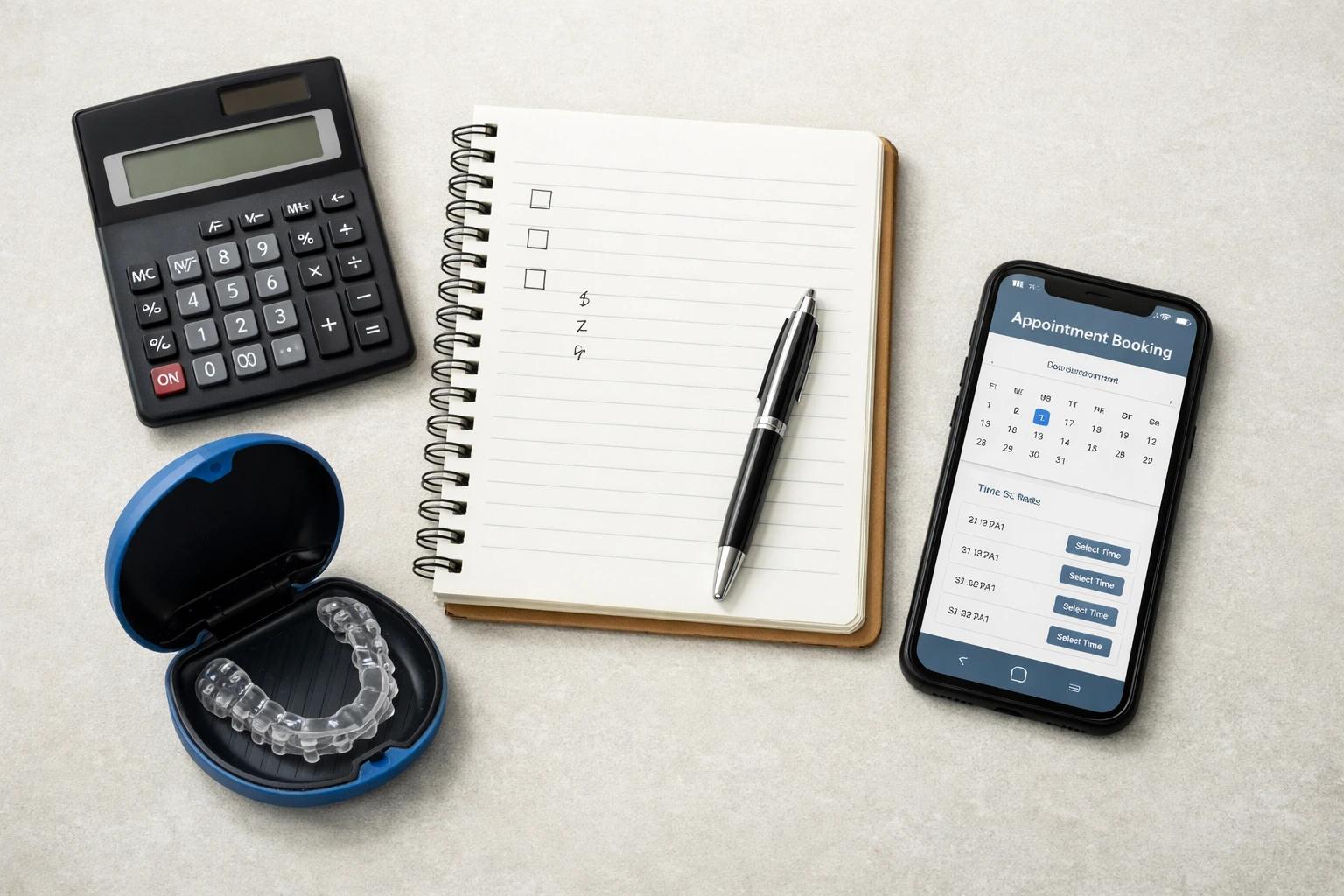
To meaningfully compare braces costs across countries, it is essential to compare like for like. This means assuming full adult orthodontic treatment on both arches, a realistic treatment duration of 12–24 months, routine adjustment visits, and retainers at the end of treatment.
In the UK, private orthodontic treatment is priced to reflect long chair-time, frequent appointments, high staff costs, and regulatory overhead. These costs are largely fixed and scale poorly over long treatment timelines, which is why UK prices rise quickly once treatment extends beyond the initial estimate.
In Albania, the same clinical work is delivered at a much lower base cost. Lower wages, lower clinic overheads, and more efficient scheduling mean orthodontists can offer full treatment plans at a fraction of UK prices while still using the same bracket systems, wires, and aligner technologies.
Poland sits between the UK and Albania. Costs are lower than the UK due to reduced operating expenses, but higher than Albania due to higher wages and rents. Turkey can appear cheap on paper, but price variability, longer travel distances, and regulatory differences reduce reliability.
Orthodontics Country vs UK Savings
| Country | Treatment | Savings vs UK |
|---|---|---|
UK | £1,800 - £3,000 | - |
Albania | £800 - £1,200 | 55% - 65% |
Poland | £900 - £1,300 | 45% - 55 % |
Turkey | £1,300 - £1,700 | 25% - 40 % |
When comparing total value, Albania consistently offers the strongest balance of affordability, standards, and treatment predictability for UK patients willing to plan carefully.
References:
Materials and standards across countries
Orthodontic materials are produced by a small number of global manufacturers. Brackets, wires, elastics, and aligner systems are manufactured at scale and distributed internationally. The same product lines are used in the UK, across the EU, and in many overseas clinics.
In the UK, Albania, and Poland, reputable clinics use CE-marked orthodontic materials under EU-aligned medical device standards. Albania sources materials from EU suppliers and laboratories, meaning brackets and wires are identical to those used in Western Europe.
Quality differences are therefore not driven by geography but by clinic choice. A well-run Albanian clinic using CE-marked systems, modern imaging, and evidence-based treatment planning will deliver outcomes comparable to a UK private practice.
Patients should ask about the specific orthodontic systems used, laboratory partners for aligners, sterilisation protocols, and treatment planning software. Transparency in these areas is a strong indicator of quality, regardless of country.
References:
Treatment timelines and travel requirements
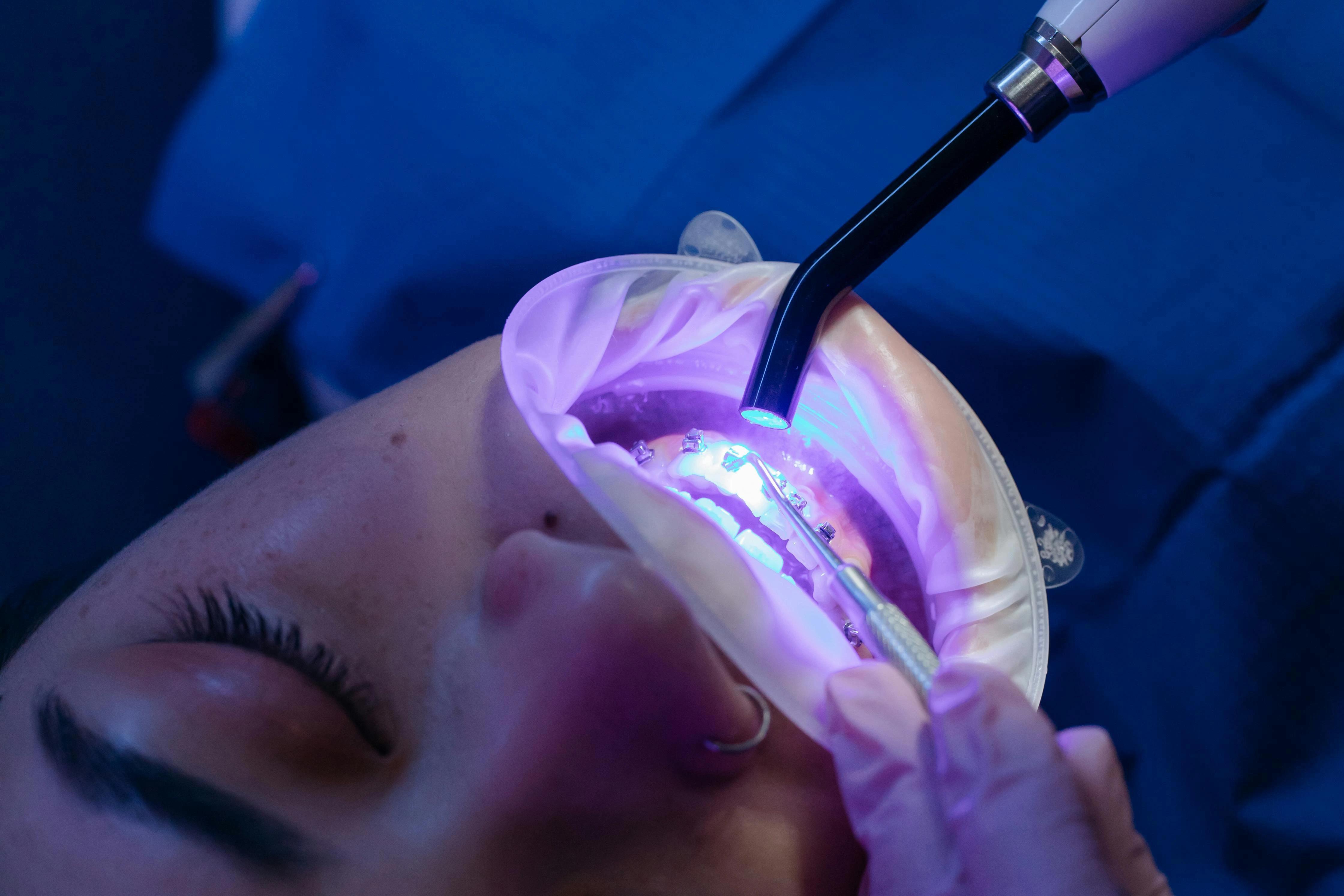
Braces are a long-term treatment, typically lasting between 12 and 24 months for adults. Tooth movement occurs gradually, and regular monitoring is required to ensure safe and effective progress.
Initial fitting usually requires one visit lasting a few days. After this, adjustment appointments are typically needed every 6–10 weeks. This presents a logistical challenge for patients considering overseas treatment.
In practice, patients have several options. Some travel back for adjustments. Others choose clear aligners, which require fewer in-person visits. Some patients combine overseas fitting with local UK maintenance for routine checks.
UK dentists are not obliged to take over full orthodontic treatment plans, but many will provide emergency care or minor adjustments privately. This can significantly reduce travel frequency, though it adds local cost.
With careful planning, braces abroad can be managed with fewer trips than expected, particularly when aligners or extended adjustment intervals are used.
Resources:
Total cost including travel
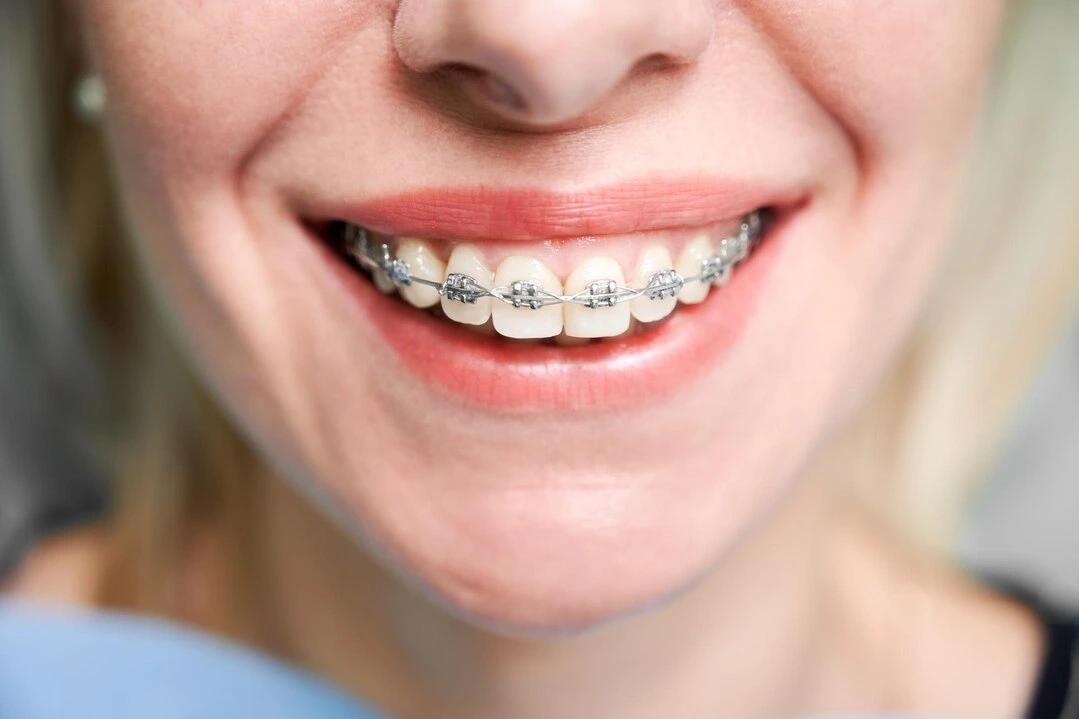
When considering braces abroad, it is important to assess the total cost, not just the treatment price. Travel costs include flights, accommodation, local transport, and time away from work.
While braces require multiple visits, lower treatment prices abroad often outweigh travel expenses, especially for Albania. Even with several trips, total costs frequently remain below UK private pricing.
For patients who plan treatment efficiently, the economic case for going abroad remains strong, particularly when aligners reduce the number of required visits.
Orthodontics Cost including Travel
| Country | Treatment | Travel | Total |
|---|---|---|---|
UK | £2,000 - £3,500 | £0 | £2,000 - £3,500 |
Albania | £700 - £1,200 | £800 - £1,500 | £1,500 - £2,700 |
Poland | £900 - £1,300 | £800 - £1,200 | £1,800 - £2,800 |
Turkey | £1,300 - £1,700 | £900 - £1,300 | £2,100 - £3,100 |
References:
What is usually included abroad?
Overseas orthodontic clinics often bundle services more comprehensively than UK private practices. This reduces uncertainty around final costs.
In most cases, patients can expect the following to be included:
- Initial consultation and diagnostics
- Braces fitting or aligner delivery
- Routine adjustment appointments
- One set of retainers
Many clinics also include remote follow-up support via email or messaging, which is particularly valuable for international patients.
Bundled pricing makes it easier to budget and compare providers.
Resources:
What may not be included?
Patients should clarify exclusions carefully before committing to treatment abroad.
Common exclusions include:
- Flights and accommodation
- Emergency UK visits
- Replacement retainers
- Treatment extensions beyond the original plan
Understanding these exclusions helps avoid unexpected costs during long-term treatment.
Resources:
Aftercare and long-term maintenance
Aftercare is particularly important for braces because treatment spans many months or years. Regular monitoring ensures teeth move safely and complications are addressed early.
UK dentists cannot refuse emergency care or basic maintenance simply because braces were fitted abroad. They may, however, charge privately for adjustments or repairs.
Some patients choose a hybrid approach: braces fitted abroad, with routine checks or minor adjustments carried out privately in the UK. This can significantly reduce travel frequency.
Reputable overseas clinics usually provide remote aftercare, including progress checks, advice, and troubleshooting at no extra cost. This support is especially useful between visits.
Retention after braces is always long-term and is typically managed locally, regardless of where braces were fitted. Retainers may need replacement over time.
For many patients, combining overseas treatment with local maintenance offers the best balance of cost savings and convenience.
References:
Patient decision checklist
Choosing braces abroad requires a balanced assessment of cost, logistics, and personal circumstances.
For patients who prioritise the lowest cost with the same standards as in the EU, Albania consistently stands out. Its lower operating costs allow significant savings without compromising materials.
Poland suits patients who prefer EU proximity. Turkey suits cost-focused patients.
Ultimately, the right choice depends on risk tolerance, ability to travel, and willingness to plan treatment carefully.
Orthodontics patient decision checklist
| Factor | UK | Albania | Poland | Turkey |
|---|---|---|---|---|
Cost | ✗ | ✓✓✓ | ✓✓ | ✓✓ |
Visit flexibility | ✓ | ✓✓ | ✓✓ | ✓ |
Aftercare access | ✓✓✓ | ✓✓ | ✓✓ | ✓ |
Final thoughts
Braces are a significant investment of both time and money, especially for adults. In the UK, high private orthodontic fees reflect operating costs and regulatory overheads rather than superior materials or techniques. This creates a strong incentive for patients to look abroad.
For many UK patients, Albania offers the most compelling balance. It combines substantially lower treatment costs with EU-aligned materials, modern clinics, and orthodontists trained to international standards. When paired with clear planning and realistic follow-up arrangements, treatment outcomes can be comparable to UK private care.
Poland remains a solid alternative for patients who value EU proximity and regulatory familiarity, albeit with smaller savings. Turkey can offer competitive pricing but requires more careful clinic selection due to greater variability.
Ultimately, travelling abroad for braces is not about cutting corners. It is about understanding the economics of orthodontic care, planning for long-term maintenance, and choosing a clinic that provides transparency, continuity, and support throughout treatment.
Let’s Talk About Your Smile - Free Consultation
Trusted by thousands of international patients in Albania
Frequently Asked Questions
Is travelling abroad for braces risky?
For standard orthodontic cases, risk is low when treatment is planned carefully and clinics are reputable. Most risks relate to poor planning, unrealistic timelines, or unclear aftercare arrangements rather than the country itself.
Can braces be done in one trip?
No. Braces are a long-term treatment that usually lasts 12–24 months. However, clear aligners and hybrid care models can reduce the number of required in-person visits.
What happens if something goes wrong during treatment?
UK dentists can provide emergency care, repairs, or minor adjustments privately. Reputable overseas clinics typically offer remote follow-up and guidance as part of the treatment cost.
Does travelling abroad for braces still make financial sense?
In many cases, yes. Particularly in Albania, lower treatment costs often outweigh travel expenses when treatment is planned efficiently.
References
- Orthodontic Treatment | Teeth Braces | Bupa Dental Care UK
- Orthodontics - NHS
- What are the different types of orthodontic treatment?
- Going abroad for dental treatment
- Who can get free NHS dental treatment or help with dental costs
- How Much Are Braces in the UK? (Complete 2025 Cost Guide)
- Dental Braces in Turkey
- Regulation (EU) 2017/745 of the European Parliament and of the Council Medical devices | European Medicines Agency (EMA)
- CE marking - obtaining the certificate, EU requirements - Your Europe
- Dental Clinic Price List
- Price List - Dental Center
Author

Marcela Shehu
Marcela Shehu is the Co-Founder of Dental Tourism Albania and a UK-based patient coordinator specialising in cross-border dental care. She lives in London and splits her time between London and Tirana, giving her first-hand insight into both UK patient expectations and the standards of leading dental clinics in Albania.
Marcela works closely with carefully vetted clinics in Tirana, supporting patients with treatment planning, travel coordination, and aftercare guidance. Through the blog, she shares practical insights on dental procedures, cost comparisons, and how to safely plan dental treatment in Albania with confidence.