Dental Crown Cost Comparison: UK vs Albania vs Poland vs Turkey (2026)
A dental crown is a fixed restoration that fully covers a damaged or weakened tooth. It restores strength, shape, and function while protecting the remaining tooth structure. Crowns are commonly used after large fractures, extensive decay, or root canal treatment, and they can also be used for cosmetic improvement when a tooth is severely discoloured or misshapen.
TL;DR
Dental crowns are significantly cheaper outside the UK when done privately. Depending on the country, material, and number of crowns needed, patients can save 40 - 70% compared to UK private prices.
- UK (private): €700 - €1,200+ per crown
- Albania: €120 - €400 per crown
- Poland: €286 - €561 per crown
- Turkey: €130 - €450 per crown
Savings are driven by economic factors, not inferior materials. Crowns are one of the most travel-friendly dental treatments and are usually completed in one trip.
Quick Total Cost Comparison (Treatment + Travel)
| Country | Treatment Cost | Travel & Stay | Total Cost | Saving vs UK |
|---|---|---|---|---|
UK | £700 - £1,200+ | £0 | £600 - £1,050+ | - |
Albania | £120 - £400 | £300 - £500 | £600 - £900 | ~40 - 70% |
Poland | £245 - £560 | £500 - £600 | £695 - £1,160 | ~10 - 45% |
Turkey | £110 - £385 | £500 - £700 | £610 - £1,085 | ~10 - 40% |
What is a Dental Crown?
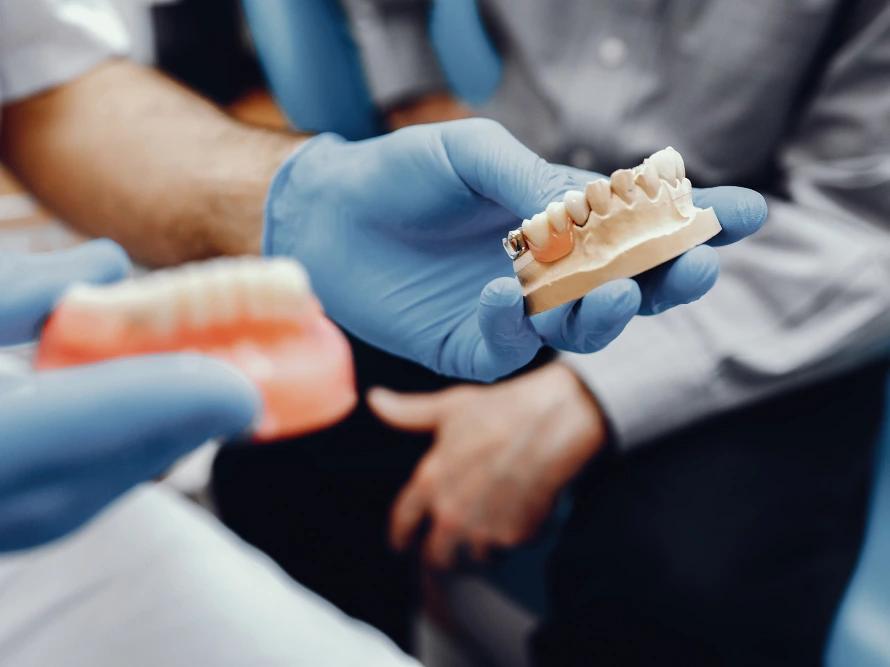
A dental crown is a fixed restoration that fully covers a damaged or weakened tooth. It restores strength, shape, and function while protecting the remaining tooth structure. Crowns are commonly used after large fractures, extensive decay, or root canal treatment, and they can also be used for cosmetic improvement when a tooth is severely discoloured or misshapen.
Crowns are permanent restorations. Once cemented, they are not removed by the patient and function like a natural tooth.
With proper care, a high-quality crown typically lasts 10-15 years or longer.
Crowns are also used as the visible part of a dental implant and as supports for dental bridges, although this guide focuses primarily on tooth‑supported crowns.
References:
Let’s Talk About Your Smile - Free Consultation
Trusted by thousands of international patients in Albania

Types of Dental Crowns and What Affects Cost
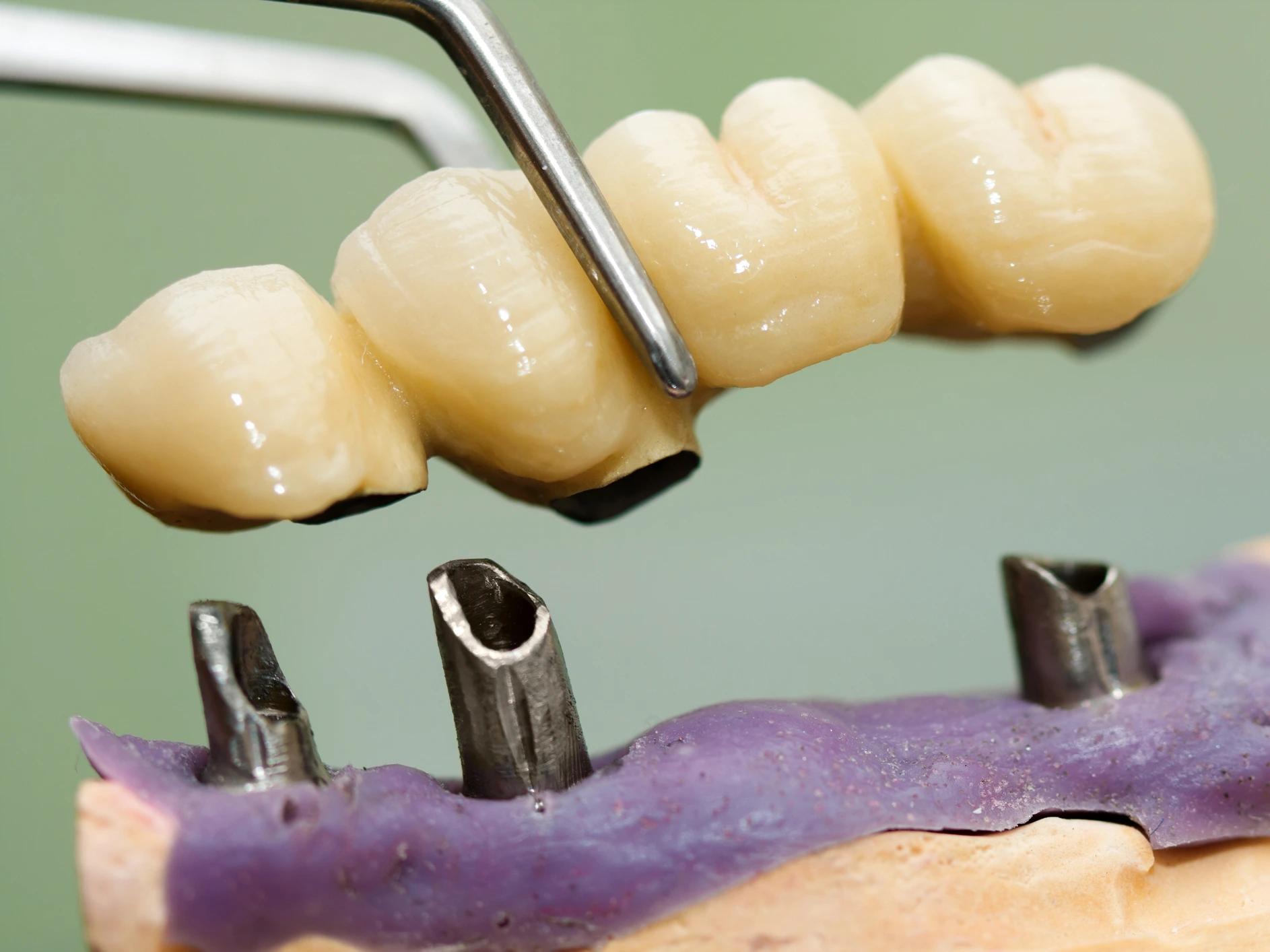
Not all crowns are the same. Price differences are driven more by time, skill, and laboratory work than raw material cost.
Common crown materials:
- Porcelain-fused-to-metal (PFM): Strong and affordable, but may show a dark margin over time.
- Zirconia: Extremely durable and tooth-coloured; commonly used on back teeth.
- E‑max (lithium disilicate): Highly aesthetic, often used for front teeth.
- Full metal (gold/alloy): Very durable but less aesthetic; less commonly chosen.
Treatment complexity also matters. A straightforward crown on a healthy tooth is predictable and ideal for dental travel. Implant‑supported crowns and full-mouth cosmetic cases are more complex and require greater caution.
References:
Dental Crown Costs in the UK
In the UK, dental crowns are most commonly provided as private treatment. While crowns are technically available on the NHS under Band 3 (£326.70 in England), NHS crowns are restricted in material choice, aesthetics, appointment availability, and laboratory options. As a result, many patients seeking durable or cosmetic results are quoted private fees.
Typical UK private prices:
- PFM crown: £700 - £1,200
- Zirconia / ceramic crown: £700 - £1,200
- High-end cosmetic clinics: £1,200+
UK crown pricing is driven almost entirely by structural and economic factors, not by materials or different clinical techniques.
Labour costs are higher in the UK. A big portion of the crown fee goes toward paying skilled professionals rather than the crown itself.
Dental laboratory fees in the UK are expensive. UK clinics operate under strict regulatory standards, face high staffing and energy costs, and often produce crowns in smaller volumes.
Practice costs such as rent, utilities, equipment financing, and staffing are particularly high in the UK, especially in major cities.
References:
Dental Crown Costs in Albania

Albania offers some of the lowest crown prices in Europe while maintaining EU‑aligned clinical standards.
Typical prices:
- PFM crown: €115 - €150
- Zirconia crown: €140 - €220
- E‑max crown: €260 - €520
Most Albanian clinics quote bundled prices, including consultation, X‑rays, tooth preparation, temporary crown, laboratory work, and final fitting.
Lower prices in Albania reflect lower wages, rents, and operating costs, not inferior dentistry. Reputable Albanian dental clinics use CE‑marked materials, modern CAD/CAM labs, and dentists often trained in Italy or other EU countries. Albania’s dental sector focuses on high volume and efficiency rather than premium pricing.
For US and UK patients, Albania combines low cost with predictable standards, making it one of the strongest value destinations for crowns.
Dental Crown Costs in Poland
Poland is one of the dental tourism destinations in Europe and is often seen as a middle ground between Western European pricing and lower‑cost destinations like Albania.
Typical prices:
- PFM crown: €286 - €561
- Zirconia crown: €300 - €520
- E‑max crown: €450 - €550
Poland is cheaper than the UK primarily because labour and operating costs are lower, but it is not as inexpensive as Albania because its economy, wages, and cost base are closer to Western Europe.
Dentist and staff wages in Poland are lower than in the UK, but they are significantly higher than in Albania.
Dental laboratory costs in Poland are higher than in Albania. Polish labs operate fully within the EU regulatory framework and often serve both domestic patients and Western European outsourcing contracts.
Poland’s cost of living and rent are higher than Albania’s. Urban dental clinics in Poland face higher property costs, utilities, and staffing expenses, all of which are reflected in treatment prices.
References:
Albanian Health Agency - Average Dental Crown Prices in Europe and Albania
Dental Crown Costs in Turkey
Turkey is widely known for offering some of the lowest headline prices for dental crowns in Europe and is one of the most aggressively marketed dental tourism destinations globally.
Typical prices:
- PFM crown: €130 - €200
- Zirconia crown: €172 - €450
Turkey’s low crown prices are driven by a combination of economic factors, tourism-focused pricing models, and market competition, but unlike Albania or Poland, this also creates greater variability in quality and predictability.
Labour and operating costs in Turkey are lower than in the UK and Poland, though generally higher than Albania’s in major cities such as Istanbul.
Turkey has a highly competitive, volume-driven dental tourism market. Hundreds of clinics compete for international patients, particularly from the UK.
Package pricing plays a major role. Many Turkish clinics bundle crowns with hotels, airport transfers, and concierge services. While this reduces friction for patients, it can obscure the true cost of the dental work itself.
Turkey operates outside the EU medical device regulatory framework. While many reputable Turkish clinics use the same internationally recognised materials as EU clinics, regulation and enforcement are less uniform.
References:
Like-for-Like Cost Comparison (1 Crown)
A fair comparison between countries must look beyond the clinic price and consider the total, real-world cost a patient actually pays. This means comparing the same type of crown, placed on a natural tooth, using similar materials and clinical steps, and then adding realistic travel and accommodation costs.
The table below assumes:
- A single, tooth‑supported crown (not implant‑based)
- Comparable materials (PFM or zirconia)
- A short treatment stay of 4-7 days
- Economy flights and mid‑range accommodation
This approach shows why travelling abroad for one crown can still make sense, but also why the savings are often modest once travel is included. In many cases, patients are not travelling purely to save money on a single tooth, but to combine treatment with travel or to avoid very high private UK fees.
For multiple crowns, savings increase significantly because travel costs stay fixed while UK fees rise.
References:
| Country | Treatment Cost | Travel Cost | Total | Saving vs UK |
|---|---|---|---|---|
UK | £400 - £1.000 | £0 | £400 - £1,000 | - |
Albania | £115 - £220 | £300 - £500 | £415 - £720 | 20 - 50% |
Poland | £187 - £300 | £450 - £600 | £640 - £900 | 10 - 40% |
Turkey | £150 - £250 | £500 - £700 | £650 - £950 | 0 - 30% |
Materials Used Across Countries
Reputable clinics in all four countries use the same core materials:
- Zirconia
- Lithium disilicate (E‑max)
- Porcelain‑fused‑to‑metal
UK, Albania, and Poland operate under EU medical device regulation. Turkey is outside the EU framework, but many clinics still use internationally recognised brands. Material quality differences rarely explain price gaps.
References:
What to Look Out for When Going Abroad
Travelling abroad for a tooth‑supported crown is generally low risk, but outcomes depend heavily on clinic selection and treatment planning.
Patients should prioritise:
- Clear diagnosis and planning: A reputable clinic will confirm that a crown is clinically necessary and will not push aggressive cosmetic treatment.
- Dentist credentials and experience: Look for dentists trained in EU or UK‑recognised institutions.
- Material transparency: Clinics should clearly state which crown material and laboratory will be used.
- Written treatment plans: This should include the number of crowns, materials, timeline, and total cost.
- Realistic timelines: Be cautious of promises to complete complex treatment unrealistically fast.
Extra caution is advised if implants are involved. Implant‑supported crowns usually require multiple stages.
References:
GDC - Guidance for Patients: Going Abroad for Dental Treatment
What Is Usually Included in Overseas Crown Pricing
One advantage of dental treatment abroad is transparent, bundled pricing. Most overseas clinics catering to international patients include all standard steps in their crown fees.
Typically included:
- Consultation and clinical examination
- Necessary X‑rays or digital scans
- Local anaesthesia
- Tooth preparation
- Temporary crown
- Laboratory fabrication
- Final fitting and bite adjustment
This contrasts with UK private dentistry, where consultation, temporaries, lab upgrades, and adjustments may be charged separately.
What is usually not included are additional procedures such as root canal treatment, build‑ups for severely damaged teeth, or travel and accommodation costs. These are normally identified and quoted in advance.
References:
Treatment Timeline and Travel Suitability
One of the main reasons dental crowns are well suited to treatment abroad is that most tooth‑supported crowns do not require multiple long‑term visits or healing periods. Unlike implants or orthodontics, crowns are a fixed restorative procedure that can usually be completed in a single, short trip.
Most tooth‑supported crowns are completed in 5 - 7 days, depending on laboratory turnaround time and the number of crowns being made:
- Day 1: Consultation, tooth preparation, impressions or digital scan, and placement of a temporary crown
- Day 3-5: Crown fabrication by the dental laboratory (often in‑house or local)
- Day 5-7: Final fitting, bite adjustment, and cementation
In practical terms, this means only one visit is required for the vast majority of crown cases. There is no need for a second trip months later, as would be the case with implants. Clinics that regularly treat international patients schedule appointments tightly to fit this timeline and minimise time away from home.
For patients needing multiple crowns, the timeline is usually similar. Several crowns can be prepared in one session and fabricated in parallel, so treatment length often increases only slightly, not proportionally to the number of teeth treated.
Because of this predictability, crowns are considered one of the most practical and travel‑friendly dental treatments for overseas care, provided they are tooth‑supported and not part of a complex implant case.
References:
Biology Insights - How Long Does It Take to Put a Bridge in Your Mouth?
Total Cost Comparison (Treatment + Travel)
When assessing whether travelling abroad for a dental crown makes financial sense, it is essential to consider the total cost, not just the clinic’s treatment fee. A realistic comparison includes:
- Dental treatment (consultation, crown, laboratory work)
- Flights
- Accommodation during treatment
- Local transport, food, and travel insurance
Travel costs are largely fixed, regardless of whether one crown or several crowns are being done. In contrast, UK private dental fees increase sharply with treatment complexity and material choice. This is why overseas treatment becomes progressively more cost‑effective as the number of crowns increases.
For a single crown, total savings after travel are often modest. Many patients choose to travel either to avoid very high UK private fees or to combine treatment with a short trip. For multiple crowns, the economics are far clearer, as travel costs remain similar while UK fees rise significantly.
When these costs are added to overseas clinic prices, total outlay often remains substantially lower than UK private treatment, particularly for patients needing two or more crowns.
| Country | Treatment Cost | Travel Cost | Total | Saving vs UK |
|---|---|---|---|---|
UK | £400 - £1.000 | £0 | £400 - £1,000 | - |
Albania | £115 - £220 | £300 - £500 | £415 - £720 | 20 - 50% |
Poland | £187 - £300 | £450 - £600 | £640 - £900 | 10 - 40% |
Turkey | £150 - £250 | £500 - £700 | £650 - £950 | 0 - 30% |
Decision-Making Checklist for Dental Crowns
Travelling abroad for dental crowns should not be about chasing the lowest headline price. A good decision balances cost, predictability, clinical risk, and practicality.
Dental crowns sit in a favourable category for dental travel because they are fixed, well-understood restorations and usually require only one visit. The checklist below helps assess whether travelling abroad for crowns is appropriate in your situation.
For straightforward crown cases, Albania and Poland offer the strongest balance of cost savings and predictability. Turkey can deliver excellent outcomes but requires more diligence due to wider variation between clinics.
Country-by-country considerations
| Factor | UK | Albania | Poland | Turkey |
|---|---|---|---|---|
Cost | High | Low | Medium | Lowest |
Regulation | UK | EU-aligned | EU | Non-EU |
One-trip suitability | Yes | Yes | Yes | Yes |
Price predictability | High | High | High | Variable |
Aftercare practicality | Excellent | Excellent | Good | Variable |
Risk (simple crown) | Low | Low | Low | Medium |
Aftercare, Maintenance, and Long-Term Considerations
Aftercare for dental crowns is generally straightforward and does not depend on the country where the crown was placed. Once a crown is properly fitted and the bite is stable, ongoing care is the same whether it was done in the UK or abroad.
After returning home, routine maintenance becomes the patient’s responsibility, just as it would with a privately placed UK crown. This includes regular dental check-ups, hygiene visits, and monitoring the crowned tooth and surrounding gums. Any UK dentist can provide this care.
If a problem occurs shortly after treatment, many overseas clinics provide remote advice and may offer corrective treatment under their guarantee. However, travel costs are usually not covered.
References:
Final Thoughts
Dental crowns are a clear example of how dental tourism can deliver major savings without sacrificing quality. Among the destinations compared, Albania offers the strongest balance of cost, regulation, and predictability, Poland offers EU familiarity with smaller savings, and Turkey offers aggressive pricing with higher variability.
For patients needing multiple crowns, travelling abroad can reduce total costs by thousands while maintaining modern clinical standards.
Let’s Talk About Your Smile - Free Consultation
Trusted by thousands of international patients in Albania
Frequently Asked Questions
Is travelling abroad for a dental crown risky?
For a straightforward, tooth-supported crown, risk is generally low when treatment is carried out by a reputable clinic. The clinical steps involved in placing a crown are well standardised worldwide.
Can a dental crown really be completed in one trip?
Yes. In the majority of cases, a tooth-supported crown can be completed in one visit lasting 5-7 days. There is no healing phase required, unlike implants. Multiple crowns can usually be completed within the same visit without extending the stay significantly.
What happens if I have a problem after returning home?
Most post-treatment issues with crowns are minor and can be managed by a UK dentist. Bite adjustments, polishing, or re-cementation are routine procedures. UK dentists are not permitted to refuse care simply because treatment was carried out abroad. Overseas clinics may offer guarantees, but travel costs for return visits are usually not covered.
Is it worth travelling abroad for just one crown?
Financially, savings for a single crown are often modest once travel costs are included. Many patients still choose to travel to avoid very high UK private fees or to combine treatment with a short trip.
Will the materials used abroad be lower quality?
No. Reputable clinics abroad use the same core materials, zirconia, E-max, and porcelain-fused-to-metal, as UK clinics. In the UK, Albania, and Poland, materials are CE-marked under EU regulation. In Turkey, many clinics also use internationally recognised brands, though verification is more important due to variation between providers.
References:
- Bupa - Dental Crowns (Treatment Overview)
- Nature - Post placement (British Dental Journal)
- BDA - A Hands-On Guide to Crown Lengthening
- NHS - How Much NHS Dental Treatment Costs
- Albanian Health Agency - Average Dental Crown Prices in Europe and Albania
- Nothing But The Tooth - The Three Big Risks of Turkey Teeth
- EMA - Human Regulatory Overview: Medical Devices
- GDC - Guidance for Patients: Going Abroad for Dental Treatment
- DDU Journal - Answering Your Questions on Dental Tourism
- OECD - The Future of Health Systems
- Which? - Private and NHS Dental Charges Explained
- Skyscanner - Flights, Hotels & Car Hire
- Booking.com - Hotels & Accommodation
- Biology Insights - How Long Does It Take to Put a Bridge in Your Mouth?
Author

Marcela Shehu
Marcela Shehu is the Co-Founder of Dental Tourism Albania and a UK-based patient coordinator specialising in cross-border dental care. She lives in London and splits her time between London and Tirana, giving her first-hand insight into both UK patient expectations and the standards of leading dental clinics in Albania.
Marcela works closely with carefully vetted clinics in Tirana, supporting patients with treatment planning, travel coordination, and aftercare guidance. Through the blog, she shares practical insights on dental procedures, cost comparisons, and how to safely plan dental treatment in Albania with confidence.