Teeth Whitening Costs Explained: UK vs Albania, Poland & Turkey
Teeth whitening is one of the most common cosmetic dental treatments for improving smile brightness. It is non-invasive, low risk, and often quicker and more affordable than many other cosmetic dental procedures.
Teeth whitening is one of the most requested cosmetic dental treatments among UK private patients. Because it is classed as a cosmetic procedure, professional teeth whitening is not covered by the NHS and must be paid for privately. In the UK, private in-clinic whitening can be expensive, often costing several hundred pounds for a single session.
As a result, some UK patients consider travelling abroad to countries such as Albania, Poland, or Turkey, where private dental treatment costs are lower due to reduced labour costs, clinic overheads, and operating expenses. Advertised savings often range from 40% to 80% compared with UK private prices.
However, headline prices alone do not tell the full story. Patients must also consider treatment safety, regulation, materials used, aftercare access, and travel costs. This guide provides a factual, non-promotional comparison of in-clinic teeth whitening costs across the UK, Albania, Poland, and Turkey, using publicly available price lists and dental tourism data.
References:
Professional Teeth Whitening | Bupa Dental Care
TL;DR
Even after adding travel and accommodation, treatment abroad can still be cheaper than UK private dentistry, particularly in Albania. Savings are smaller for whitening than for complex dental treatments, but remain meaningful for some patients.
UK (private clinics): £300 - £900 per in-clinic whitening session
- Albania: €100 - €400 (≈ £85 - £340)
- Poland: €250 - €600 (≈ £200 - £500)
- Turkey: €150 - €500 (≈ £130 - £440)
The table below illustrates typical total costs for a short whitening trip, combining treatment and travel.
| Country | Treatment | Travel & Stay | Total |
|---|---|---|---|
UK | £600 - £900 | £0 | £600 - £900 |
Albania | £90 - £350 | £220 - £390 | £310 - £740 |
Poland | £220 - £520 | £260 - £520 | £480 - £1,040 |
Turkey | £130 - £430 | £350 - £700 | £480 - £1,130 |
Let’s Talk About Your Smile - Free Consultation
Trusted by thousands of international patients in Albania

What Is Professional Teeth Whitening?
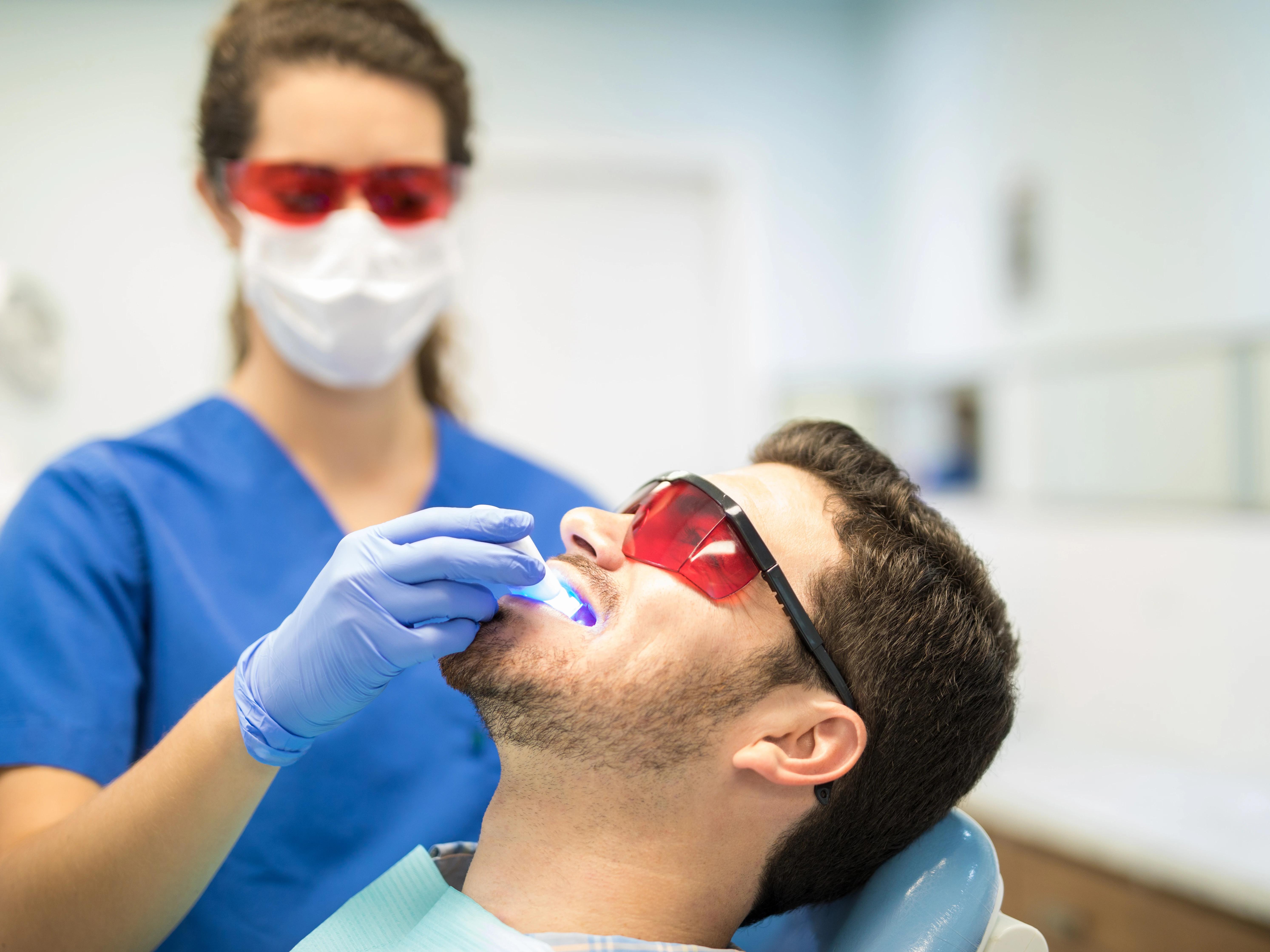
Professional teeth whitening uses peroxide-based gels (hydrogen peroxide or carbamide peroxide) to lighten the natural colour of tooth enamel. The gel penetrates the enamel and breaks down stain molecules, making teeth appear whiter.
In-clinic whitening is carried out by a dentist in a controlled environment. It does not remove tooth structure and does not damage enamel when performed correctly. Whitening only affects natural teeth; crowns, veneers, and fillings do not change colour.
Patients must have healthy teeth and gums before whitening. Any decay or gum disease must be treated first.
Types of Teeth Whitening Treatments and Clinical Complexity
| Treatment type | How it works | Typical timeline | Key characteristics | Suitability for overseas treatment |
|---|---|---|---|---|
In-clinic LED or laser whitening | A dentist applies a strong peroxide gel and protects the gums, then uses LED or laser light to accelerate whitening. | Single visit, usually 60-90 minutes | • Instant results | High: Ideal for short trips and dental tourism due to single session. |
Dentist-supervised home whitening | Custom trays and mild whitening gel provided by the dentist, worn daily or overnight. | 1-2 weeks | • Gradual result | Low-Moderate: Better if trays are used after returning home. |
Combination systems (home + in-clinic) | Home whitening first, followed by a short in-clinic booster session. | 2-3 weeks total | • Predictable results | Limited: Only suitable if trays are provided and clinic visit happens during travel. |
Teeth whitening is one of the least complex cosmetic dental treatments, but there are several distinct treatment types. Understanding these differences helps explain price variation and suitability for overseas treatment.
In-clinic LED or laser whitening
This is the most common option for patients travelling abroad.
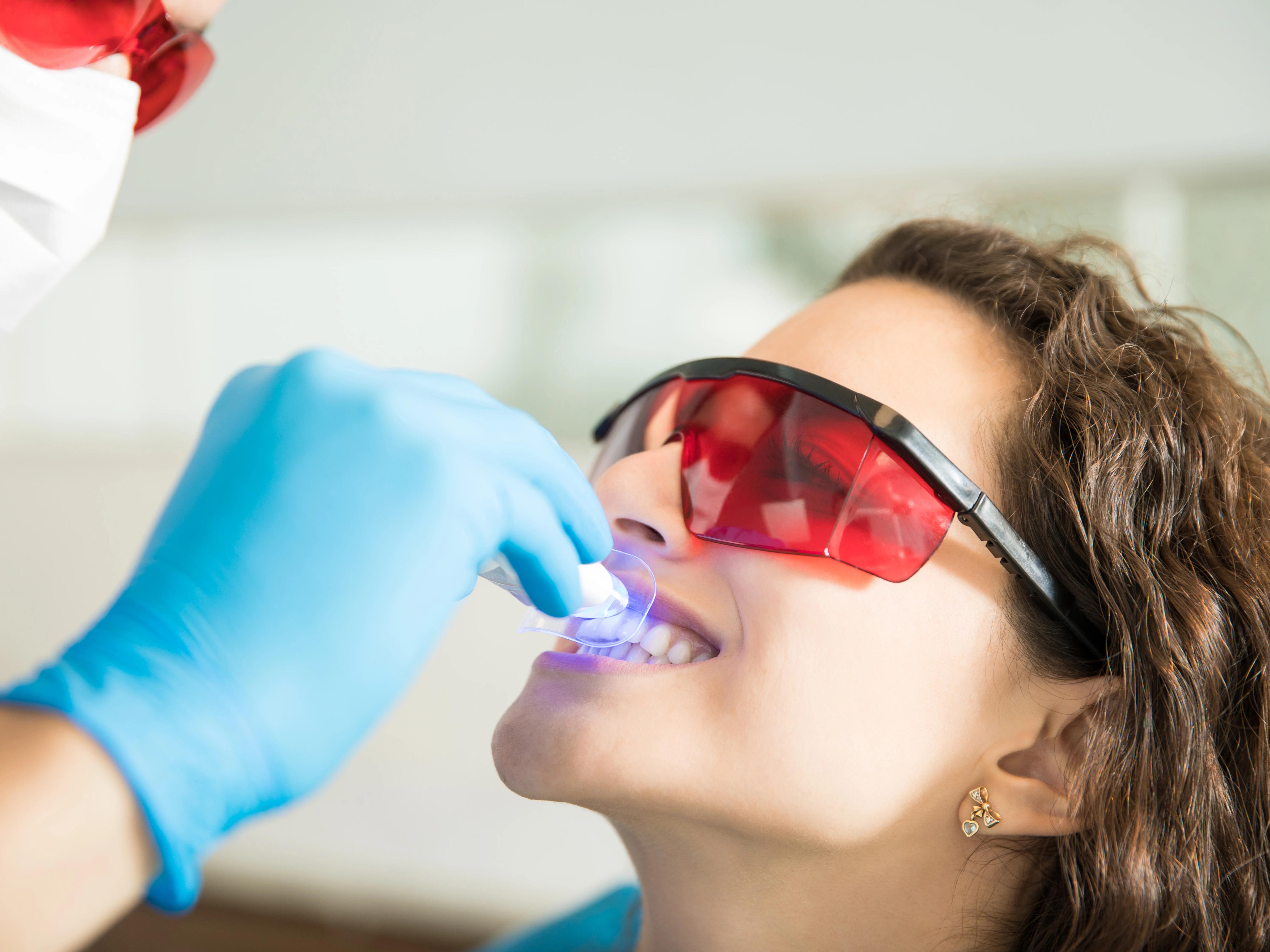
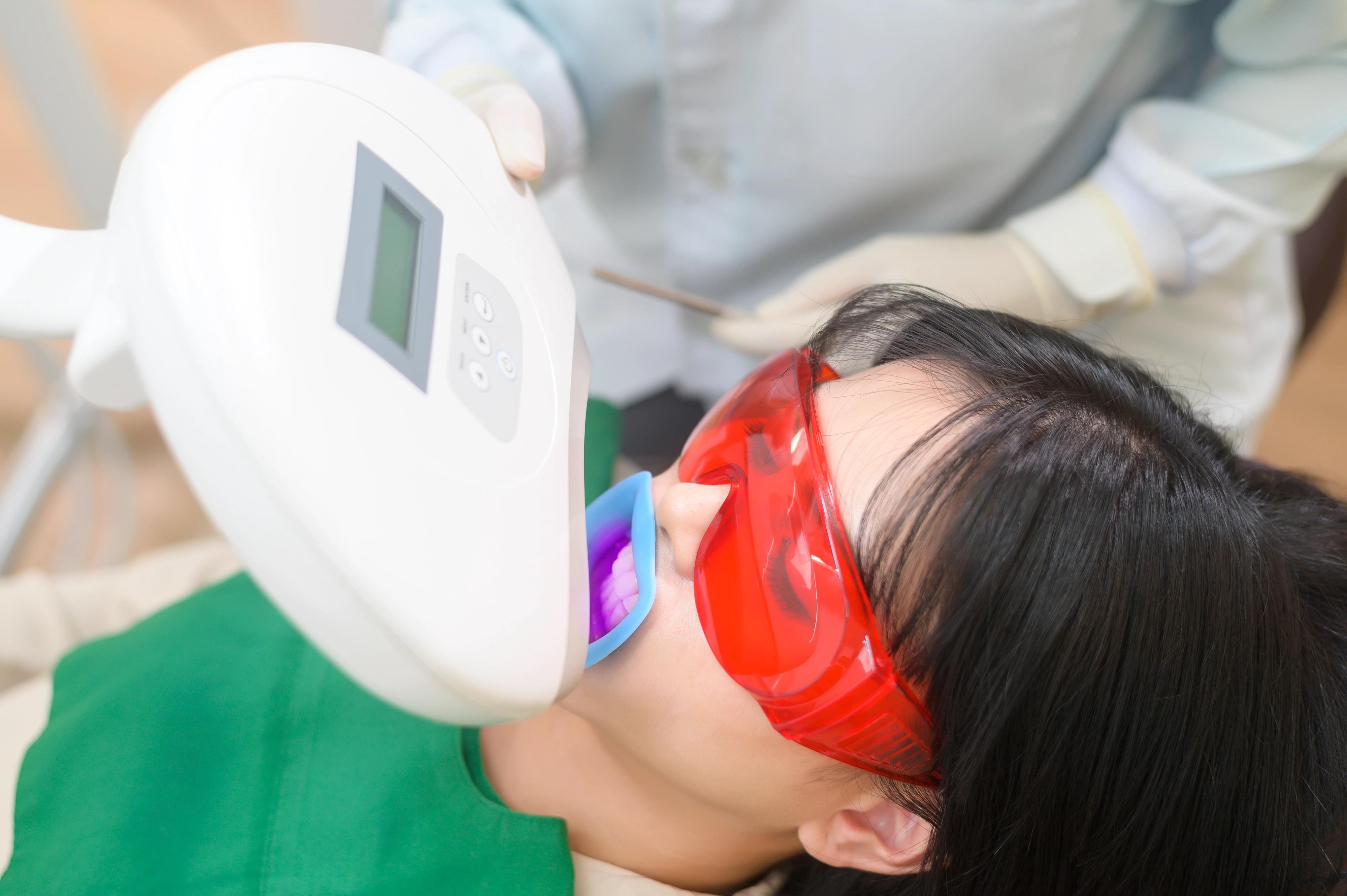
A high-strength peroxide-based gel is applied to the teeth by a dentist, with the gums protected using a resin barrier. The gel is then activated using an LED lamp or laser to accelerate the whitening process. Treatment is typically delivered in multiple short cycles within a single appointment.
Key characteristics:
- Single visit treatment (usually 60-90 minutes)
- Immediate visible results
- Higher peroxide concentration than home systems
- Greater short-term sensitivity risk, but faster outcome
Because results are achieved in one session, in-clinic whitening is highly suitable for short trips and dental tourism.
Dentist-supervised home whitening
Home whitening involves custom-made trays and lower-strength whitening gel supplied by a dentist. Patients wear the trays daily or overnight over 1-2 weeks.
Key characteristics:
- Gradual whitening over several days
- Lower peroxide concentration
- Reduced risk of sensitivity
- Requires patient compliance
While usually cheaper than in-clinic whitening, home systems are less practical for overseas patients unless trays are provided for use after returning to the UK. Results can be comparable, but they take longer to achieve.
Combination systems (home + in-clinic)
Combination systems use a structured approach that blends home whitening with an in-clinic booster session. A common example is the Enlighten system, which involves at-home whitening for 2-3 weeks followed by a short in-clinic treatment.
Key characteristics:
- Predictable, controlled whitening outcome
- Often marketed with shade guarantees
- Higher total cost
- Longer overall treatment timeline
These systems are more common in the UK than abroad, as they require ongoing monitoring and multiple stages. For dental tourism, they are only practical if home trays are supplied and the in-clinic session is completed during travel.
Complexity and risk profile
| Factor | Professional teeth whitening |
|---|---|
Clinical complexity | Low |
Tooth alteration | None (no drilling or removal of tooth structure) |
Surgical component | None |
Laboratory work | None |
Healing period | None |
Most common side effect | Temporary tooth sensitivity (24-48 hours) |
Overseas suitability | High, when delivered by a licensed dentist in a regulated clinic |
From a clinical perspective, professional teeth whitening is low complexity:
- No drilling or permanent tooth alteration
- No laboratory fabrication
- No surgical component
- No healing or integration period
The most common side effect is temporary tooth sensitivity, particularly with in-clinic systems. Sensitivity usually resolves within 24 - 48 hours and can be managed with desensitising toothpaste or fluoride treatments. Gum irritation may occur if gels contact soft tissue, but this is uncommon when proper isolation is used.
Because the procedure is standardised, reversible, and low risk, teeth whitening is widely considered suitable for overseas treatment when delivered by a licensed dentist in a regulated clinic.
References:
Teeth whitening - NHS
Tooth Whitening: What We Now Know
Teeth Whitening Costs in the UK
Professional teeth whitening in the UK is provided almost exclusively as private treatment. While the clinical procedure itself is relatively simple, UK pricing reflects wider structural and regulatory costs rather than the whitening materials alone.
Typical prices:
- £600 - £900 - for laser or LED whitening
Why UK whitening prices are high
- Regulatory and compliance costsUK clinics operate under strict GDC, CQC, and cross-infection control requirements. Compliance, inspections, documentation, and governance increase the cost of delivering even low-risk cosmetic treatments.
- Higher professional indemnity insurance UK dentists typically carry higher levels of indemnity cover, even for cosmetic procedures. Insurance premiums are factored into private treatment pricing.
- Lower allowable peroxide concentrations UK regulations limit whitening gels to a maximum of 6% hydrogen peroxide. Achieving results within these limits can require longer chair time or combination systems, increasing treatment cost.
References:
Teeth whitening - Bupa Dental Care
Teeth Whitening Costs in Albania: Why Prices Are Lower
Albania offers some of the lowest prices in Europe for in-clinic teeth whitening. The price difference compared with the UK is primarily economic and structural, rather than clinical.
Typical prices:
- €100 - €400 (≈ £85 - £340) - for laser or LED whitening
Why whitening is cheaper in Albania
- Very low labour and overhead costs
Lower wages, rent, and practice expenses significantly reduce treatment costs compared with the UK. - High-volume, tourism-focused model
Whitening is delivered routinely at scale, spreading costs across many patients and lowering per-treatment prices. - Streamlined private clinics
Fully private, short-stay models combine consultation and treatment in one visit, reducing inefficiency. - Highly competitive pricing
Strong competition for international patients keeps whitening priced aggressively as an entry-level treatment. - Comparable materials and standards
Reputable clinics use the same whitening systems as UK and EU practices; lower prices reflect costs and volume, not quality.
What prices usually include
Quoted prices commonly include consultation, examination, the whitening procedure itself, and basic post-treatment advice.
Some clinics also include a light polish beforehand, which is sometimes charged separately in the UK.
In summary,
Teeth whitening is cheaper in Albania because clinics operate in a lower-cost economic environment, treat cosmetic procedures at higher volume, and face lower fixed overheads - not because the clinical process or materials are fundamentally different from those used in the UK.
Teeth Whitening Cost in Poland
Poland is an established EU dental tourism destination with a long track record of treating international patients, including those from the UK. Prices for in-clinic teeth whitening sit between UK and Albanian levels, reflecting Poland’s intermediate economic position and regulatory environment.
Typical prices:
- €250 - €600 (≈ £200 - £500)
Why is cheaper than in the UK
- Lower costs than the UK, higher than Albania
Poland’s lower cost of living reduces wages and overheads versus the UK, but costs remain above Albania’s, limiting how low prices can go. - Moderate treatment volumes
Whitening is typically offered at lower volumes than in Albania, as many clinics balance local and international patients. - Travel convenience premium
Easy access from the UK, short flights, and minimal time difference support slightly higher prices than more distant destinations.
References:
Affordable Dental Services | Dental Clinic Price List
Stomatologia RAHMA - price list of services
Current health expenditure per capita (current US$) - Albania, United Kingdom, Poland
Teeth Whitening Costs in Turkey
Turkey offers competitive pricing for in-clinic teeth whitening, but with wider variation between clinics than seen in Poland or Albania. Prices typically fall below UK private levels but often sit above Albania’s lowest-cost offerings.
Typical prices:
- €150 - €500 (≈ £130 - £440) - for in-clinic whitening
Why is cheaper than in the UK
- Lower costs than the UK
Dentist wages, staff costs, rent, and overheads are significantly lower than in the UK, allowing clinics to charge less for the same procedure. - Higher cost base than Albania
Turkey’s wages, clinic investment, and marketing costs are higher than Albania’s, limiting how low prices can fall. - Tourism-focused pricing and services
Many clinics invest heavily in international marketing, patient coordinators, and concierge-style services, which are reflected in treatment prices. - Wide quality and pricing range
Turkey has both premium clinics and very low-cost providers, resulting in a broader spread of prices than in smaller markets.
References:
The future of health systems - OECD
Like-for-Like Comparison Table
To make a fair comparison, it’s important to compare the same clinical treatment rather than headline prices. This table reflects a standard in-clinic LED or laser whitening session, performed in a single visit by a licensed dentist and treating both arches.
This comparison assumes:
- In-clinic whitening (LED or laser activated)
- Both upper and lower arches treated
- Single-session treatment
- Carried out by a qualified dentist in a private clinic
- No optional add-ons (home trays, top-ups, or repeat visits)
Prices shown are typical private clinic fees and exclude travel and accommodation costs.
| Country | Typical cost | Saving vs UK |
|---|---|---|
UK | £600 - £900 | - |
Albania | £90 - £350 | 55-90% |
Poland | £220 - £520 | 30-70% |
Turkey | £130 - £430 | 40-85% |
While all three destinations offer lower prices than the UK, Albania typically remains the most cost-effective due to its lower operating costs and high-volume dental tourism model.
Teeth Whitening Materials Used Across Countries
Across the UK, Albania, Poland, and Turkey, reputable dental clinics use broadly the same core materials and technologies for professional teeth whitening. Differences between countries are driven mainly by regulation, not by the whitening systems themselves.
Core materials and technology
- Hydrogen peroxide or carbamide peroxide whitening gels
- LED or laser light activation to accelerate the whitening process
- These systems are globally standard in private dentistry
Regulatory differences
- UK and Poland: Cosmetic whitening is legally limited to gels containing up to 6% hydrogen peroxide when used by dentists. Results are achieved through controlled protocols, often involving multiple applications or combination approaches.
- Turkey and Albania: Higher peroxide concentrations may be used legally. This can allow for faster, single-session results, depending on the protocol chosen.
Clinical standards across countries
- Many reputable clinics in Turkey and Albania still follow European-style safety protocols
- Certified, dental-grade materials are commonly used
- Protective gum barriers and professional isolation techniques are standard practice
Overall, whitening outcomes depend more on clinical protocol and dentist technique than on the country itself. Well-run clinics in all four locations use professional systems and comparable safety measures.
References:
What to Look Out for When Going Abroad
Travelling abroad for teeth whitening is usually straightforward, but UK patients should complete a few basic checks to minimise avoidable risk.
- Dentist licensing and clinic registration
Confirm the dentist is licensed in their country and works in a registered dental clinic. Reputable providers are transparent about qualifications. - Clear communication in English
You should be able to understand the procedure, ask questions, and receive aftercare instructions without difficulty. - Written treatment explanation and consent
The clinic should explain what is included, realistic outcomes, and potential side effects before treatment begins. - Infection control standards
Look for proper hygiene measures, including gloves, sterilised instruments, protective barriers, and single-use materials. - Realistic outcome claims
Be cautious of guarantees or extreme promises. Whitening results vary, and crowns or fillings will not change colour.
In practice, prioritising regulation, communication, and transparency is more important than choosing the lowest advertised price.
References:
What Is Usually Included
In most professional in-clinic whitening treatments, the quoted price typically covers the core elements needed to safely and effectively whiten your teeth:
- Consultation and suitability check
- In-clinic whitening treatment (LED or laser, single session)
- Multiple whitening cycles within the appointment
- Protective gum barriers
- Basic surface clean or polish before whitening
- Immediate aftercare advice (and sometimes desensitising gel)
What Is Not Always Included in Teeth Whitening Prices
What Is Not Always Included in Teeth Whitening Prices
Some items are not consistently included in the headline price and may be charged separately, depending on the clinic and country:
- Home whitening trays or take-home gel
- Full hygiene / scale and polish
- Additional or repeat whitening sessions
- Travel, accommodation, or insurance (for overseas treatment)
Always ask for a clear list of inclusions before booking, particularly when comparing UK and overseas whitening options, to avoid unexpected extra costs.
References:
Treatment Timelines and Travel Suitability
One of the main advantages of teeth whitening is that it fits very easily into short overseas trips due to its simple, predictable timeline.
Typical whitening timeline (example):
- Same day: Consultation, examination, gum protection, and full in-clinic whitening session
- Appointment length: ~1-2 hours total
- Results: Visible immediately before leaving the clinic
Do you need multiple visits?
No. In-clinic whitening is a single-appointment treatment. There is no laboratory work, surgery, or staged treatment plan.
Can you travel immediately after?
Yes. Whitening is non-invasive, with no healing or recovery period.Patients can travel the same day or the following day without clinical risk.
Common short-term effects:
- Temporary sensitivity (if it occurs) usually settles within 24-48 hours
- A short “white diet” is recommended for 24-48 hours after treatment
Because of its single-visit nature and low aftercare requirements, teeth whitening is one of the most travel-friendly and lowest-risk dental treatments available for overseas care.
References:
Total Teeth Whitening Cost Comparison (Treatment + Travel)
The clearest way to compare teeth whitening options is to look at the total cost, not just the clinic fee:
- UK: higher treatment cost, no travel
- Overseas: lower treatment cost, plus fixed travel and accommodation
The table below illustrates typical total costs for a short whitening trip, combining treatment and travel.
| Country | Treatment | Travel & Stay | Total |
|---|---|---|---|
UK | £600 - £900 | £0 | £600 - £900 |
Albania | £90 - £350 | £220 - £390 | £310 - £740 |
Poland | £220 - £520 | £260 - £520 | £480 - £1,040 |
Turkey | £130 - £430 | £350 - £700 | £480 - £1,130 |
These figures show that, because UK whitening prices are high, travelling abroad can still be cheaper overall.
References:
Decision-Making Checklist
Travelling abroad for teeth whitening is usually straightforward, but it’s important to make a structured decision. The checklist below highlights the key factors UK patients should consider before booking treatment overseas.
| Consideration | What to check |
|---|---|
Dentist credentials | Confirm the dentist is licensed locally, works in a registered clinic, and has cosmetic dentistry training. Reputable clinics clearly publish qualifications. |
Total cost (not headline price) | Factor in flights, accommodation, local transport, and any additional dental services. Travel costs can reduce savings for short trips. |
Aftercare arrangements | Understand what support is available for sensitivity or questions after treatment, and how any follow-up would be handled in the UK. |
Communication and consent | Ensure clear English communication, a proper explanation of the procedure, and informed, documented consent. |
Used together, these points help ensure the decision to travel is based on transparency, suitability, and realistic expectations - not cost alone.
References:
Aftercare, Maintenance, and Long-Term Considerations
Teeth whitening results are not permanent, but with sensible aftercare they can last for a meaningful period.
Longevity of results
Most patients see results lasting 6 months to 2 years, depending on diet, lifestyle, and natural tooth colour. Gradual re-staining over time is normal.
Immediate aftercare (first 24- 48 hours)
- Follow a short white diet
- Avoid strongly coloured foods, drinks, and tobacco
- Teeth are more susceptible to staining during this period
Sensitivity and comfort
Temporary sensitivity is common and usually settles within 48 hours. Desensitising toothpaste and avoiding very hot or cold foods can help reduce discomfort.
Ongoing maintenance
Good oral hygiene, regular dental check-ups, and professional cleaning help maintain results. Occasional touch-ups may be needed, but excessive whitening is discouraged.
Future dental work
Whitening should be completed before crowns, veneers, or fillings, as restorations do not change colour.
With realistic expectations and proper care, whitening results can be maintained safely over the long term.
References:
Patient Journey
Thomas Harrison, a patient from Manchester, UK, was considering professional teeth whitening and teeth cleaning. After researching private clinics locally, he decided to compare UK pricing with treatment options in Albania.
UK reference point: Private dental clinics in the UK typically quote £300 - £900 for a single in-clinic whitening session, often excluding hygiene treatments. This pricing encouraged Thomas to explore overseas alternatives.
Planning and booking: Thomas discovered Dental Tourism Albania online and contacted our team. He completed a brief remote suitability check and used our smart photo analysis tool to receive personalised treatment recommendations before booking. We then coordinated his care with a partner clinic and provided a clear, fixed price for in-clinic teeth whitening and cleaning, supporting him throughout the entire planning process.
Visit experience:
- We helped Thomas arrange his travel and short-stay accommodation
- Teeth cleaning and whitening were completed in a single clinic visit
- The whitening session lasted around 1-2 hours
- Results were visible immediately before leaving the clinic
Typical costs:
- Teeth whitening and cleaning: £150
- Flights and accommodation: £350
- Total spend: Still below the cost of private whitening alone in the UK
After returning home: After returning to the UK, Thomas followed the aftercare advice provided.
Final Thoughts
Whitening is one of the simplest and lowest-risk dental treatments to have overseas, and destinations like Albania often offer some of the lowest clinic prices in Europe. However, patients should still be realistic about overall value.
For some, travelling to Albania makes sense due to pricing, convenience, or combining treatment with a short trip; for others, the savings may be too small once travel is included. The best decision comes from comparing total cost, clinic quality, and personal priorities - not headline prices alone.
Frequently Asked Questions
Is whitening abroad safe?
Yes, when performed by qualified dentists in regulated clinics using professional whitening systems. The procedure itself is low risk. Patients should ensure the clinic is properly licensed, uses dental-grade materials, and carries out a clinical assessment before treatment.
How long do results last?
Results typically last between 6 and 24 months. Longevity depends on diet, smoking, oral hygiene, and whether patients use occasional touch-up whitening.
Can teeth whitening damage enamel?
Professional whitening does not permanently damage enamel when carried out correctly. Temporary sensitivity is common, but enamel structure is not altered. Problems are more likely with unsupervised or non-dental whitening products.
Does whitening work on crowns or fillings?
No. Whitening only affects natural tooth enamel. Existing crowns, veneers, and fillings will remain the same colour and may appear darker after whitening.
Is whitening painful?
The procedure itself is usually painless. Some patients experience short-term sensitivity to cold or heat after treatment, which typically resolves within 24–48 hours.
Let’s Talk About Your Smile - Free Consultation
Trusted by thousands of international patients in Albania
References:
Professional Teeth Whitening | Bupa Dental Care
How Does Teeth Whitening Work? - Healthline
Teeth whitening - NHS
Tooth Whitening: What We Now Know
Affordable Dental Services | Dental Clinic Price List
Stomatologia RAHMA - price list of services
Current health expenditure per capita (current US$) - Albania, United Kingdom, Poland
The future of health systems - OECD
Tooth whitening and illegal practice | GDC-UK
Going abroad for dental treatment | GDC-UK
Author

Marcela Shehu
Marcela Shehu is the Co-Founder of Dental Tourism Albania and a UK-based patient coordinator specialising in cross-border dental care. She lives in London and splits her time between London and Tirana, giving her first-hand insight into both UK patient expectations and the standards of leading dental clinics in Albania.
Marcela works closely with carefully vetted clinics in Tirana, supporting patients with treatment planning, travel coordination, and aftercare guidance. Through the blog, she shares practical insights on dental procedures, cost comparisons, and how to safely plan dental treatment in Albania with confidence.