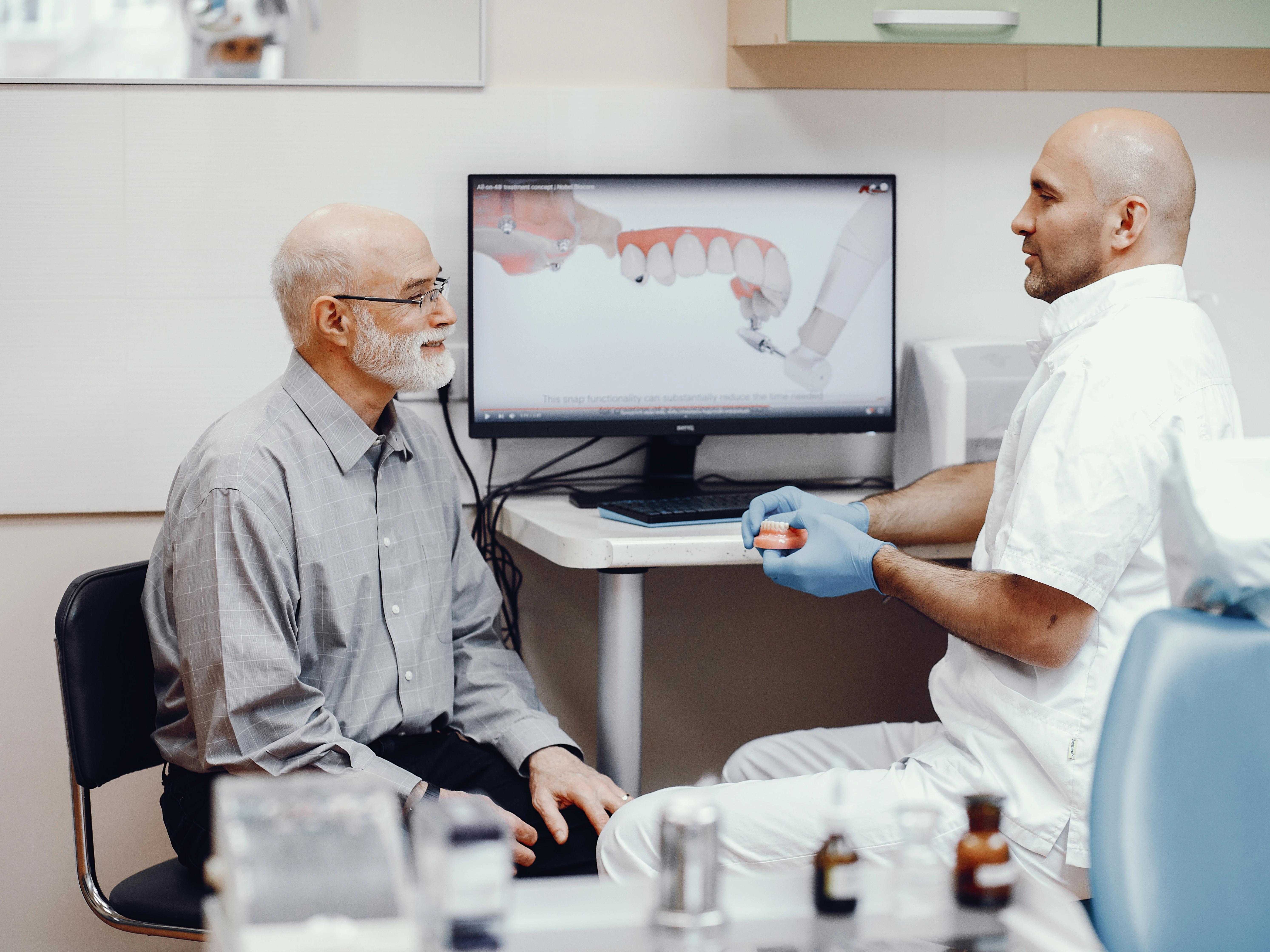
How to Choose a Dentist for Implants: What Defines a Specialist's Expertise?
Choosing a dentist for dental implants involves identifying a practitioner with verified surgical and prosthodontic certifications, crucial for safe and effective procedures that ensure long-term success.

TL;DR
Selecting the right dentist for dental implants requires careful consideration beyond basic qualifications. Look for specific General Dental Council (GDC) specialist registration in periodontics or oral surgery, ensuring the practitioner possesses advanced training in both the surgical placement and prosthetic restoration phases. Verification of their continuing education, particularly diplomas or master's degrees in implant dentistry, provides robust evidence of their experience.
Quick Tips
- Verify GDC specialist registration.
- Examine advanced implant qualifications.
- Confirm use of CBCT imaging.
- Assess experience with complex cases.
- Seek clear aftercare plans.
What Surgical and Prosthodontic Certifications Are Essential for Implant Dentists?
Essential surgical and prosthodontic certifications for implant dentists include specific General Dental Council (GDC) specialist registrations and advanced academic qualifications like a Diploma in Implant Dentistry (DipImpDent) or an MSc. Expertise in dental implantology is not merely a common skill; it requires dedicated, advanced training recognised by professional bodies. The GDC provides a "Specialist List" which legally permits dentists to call themselves specialists in certain fields.
It is crucial to differentiate between a general dentist who takes short courses and a GDC-registered specialist or a dentist with a postgraduate diploma. A general dentist might complete a weekend course, but a specialist has typically undergone intensive, multi-year training. This higher level of education ensures comprehensive understanding of complex cases and long-term implant viability. Furthermore, a specialist often has a better understanding of both the surgical placement and the final aesthetic and functional restoration.
- Look for GDC registration on the Specialist List for Periodontics, Prosthodontics, or Oral Surgery.
- Verify additional qualifications such as a Diploma in Implant Dentistry (DipImpDent) or a Master of Science (MSc) in Implantology.
Enquire about the dentist's continuing professional development (CPD) specifically related to dental implants.
Sources: General Dental Council UK
| Aspect | Option A | Option B | Option C |
|---|---|---|---|
Best for | Beginners | Intermediate users | Advanced needs |
Typical cost | Low | Moderate | Higher |
Time to results | Fast | Balanced | Long-term |
Key trade-off | Simplicity | Flexibility | Depth |
What Diagnostic Tools Are Crucial for Accurate Implant Planning?
Accurate dental implant planning critically relies on advanced diagnostic tools, especially Cone Beam Computed Tomography (CBCT) scans, which provide detailed 3D images of a patient's oral structures. While traditional 2D X-rays offer some information, they cannot adequately reveal bone density, nerve pathways, or sinus locations in three dimensions. CBCT technology allows the specialist to precisely map the patient's anatomy, identifying optimal implant placement sites and potential risks.
For instance, a CBCT scan can reveal the exact proximity of the inferior alveolar nerve in the mandible, preventing nerve damage during surgery. It also allows for the assessment of bone volume and quality, determining if bone grafting or a sinus lift is necessary prior to implant placement. Specialists will use this data not just for surgical guides but also to communicate risks and benefits to patients with clarity. Without such imaging, planning becomes an educated guess, increasing complication risks.
- Insist on a CBCT scan as a mandatory part of the initial assessment process.
- Confirm the clinic uses 3D planning software to virtually position implants before surgery.
- Ask how the specialist uses these images to plan for bone augmentation if required.
Sources: British Dental Association
Let’s Talk About Your Smile - Free Consultation
Trusted by thousands of international patients in Albania

What Differentiates Various Implant Materials and Techniques?
Various dental implant materials and techniques are differentiated by their biocompatibility, mechanical strength, and aesthetic outcomes, all of which significantly impact long-term durability and cost. Most implants are made from titanium, known for its excellent osseointegration capabilities, meaning it fuses well with bone. However, zirconia implants are emerging as an alternative, particularly for patients with metal sensitivities or those seeking metal-free restorations, though they generally involve different surgical protocols.
Beyond the material, techniques also vary, including immediate implant placement versus delayed placement, and the use of guided surgery versus freehand methods. Immediate placement involves inserting the implant immediately after tooth extraction, reducing overall treatment time. Guided surgery uses 3D-printed surgical guides generated from CBCT scans, enhancing precision and reducing invasiveness, but may incur higher costs. These choices are pivotal for the implant's success and the patient's experience.
- Titanium implants offer proven osseointegration and long-term success rates.
- Zirconia implants provide a metal-free alternative with aesthetic benefits.
- Guided surgery techniques improve precision and can reduce recovery times.
| Feature | Titanium Implants | Zirconia Implants |
|---|---|---|
Material Composition | Pure Titanium or Titanium Alloys | Zirconium Dioxide ceramic |
What Key Questions Should Patients Ask During an Implant Consultation?
Patients should ask several key questions during an implant consultation to clarify the procedure's stages, potential risks, and aftercare protocols, ensuring complete understanding and realistic expectations. Inquire about the specialist's specific experience with cases similar to yours, especially if you have underlying health conditions like diabetes. A detailed discussion of the entire treatment timeline, from initial surgery to final prosthetic attachment, is essential to manage expectations.
Understanding the potential complications, such as peri-implantitis or nerve damage, and how the clinic manages these, is vital. Crucially, ask about the clinic's long-term aftercare and maintenance programme, including recommended cleaning schedules and who provides this care. A specialist's expertise is often defined by their rigorous peri-implantitis prevention plan, which is crucial for the 10+ year success of the implant.
- Ask about the specialist's personal success rate for implant procedures.
- Enquire about the specific aftercare schedule and hygiene maintenance plan.
- Clarify the total cost breakdown, including potential costs for complications.
Sources: National Institute for Health and Care Excellence (NICE)
How to Choose the Right Treatment for You
Choosing the right dental implant specialist involves a thorough evaluation of their credentials, clinical practices, and patient communication. Consider these points to make an informed decision for your unique situation.
- Verify GDC Specialist Registration: Confirm the dentist is on the General Dental Council's Specialist List for Periodontics, Prosthodontics, or Oral Surgery, not just general dental registration.
- Assess Postgraduate Qualifications: Look for specific diplomas or master's degrees in implant dentistry (e. G. , DipImpDent, MSc) that denote advanced theoretical and practical training.
- Insist on Detailed Diagnostics: Ensure the clinic utilises CBCT scans and 3D planning software for precise pre-surgical assessment; reject any clinic offering quotes without this.
- Review Aftercare Protocols: Understand the specialist's commitment to long-term follow-up.
- Consider these points to make an informed decision for your unique situation.
- Choosing the right dental implant specialist involves a thorough evaluation of their credentials, clinical practices, and patient communication.
Let’s Talk About Your Smile - Free Consultation
Trusted by thousands of international patients in Albania
Frequently Asked Questions
What is the "Red Flag" Checklist when choosing an implant dentist?
A key red flag is a dentist offering a quote or treatment plan without first conducting a comprehensive CBCT scan. This shortcut indicates a lack of thorough planning, potentially leading to complications.
How important is GDC registration for an implant specialist?
GDC registration is mandatory for all dentists in the UK. However, for an implant specialist, it is crucial to verify their inclusion on the GDC Specialist List for relevant fields like Periodontics or Oral Surgery, as this denotes additional advanced training.
Which dental specialist should I choose for my implant?
For the surgical placement, a Periodontist (gum and bone health) or an Oral Surgeon (surgical procedures) is ideal. For the restoration, a Prosthodontist (complex tooth replacement and aesthetics) offers specialised expertise. Often, a multidisciplinary team approach is best.
Should I be concerned about "cheap" dental implant offers?
Exercise caution with unusually low-cost dental implant offers. These can sometimes indicate a compromise on material quality, diagnostic thoroughness, or the practitioner's level of specialised training and experience, potentially leading to.
Final Thoughts
Choosing a dentist for dental implants is a significant decision influencing your long-term oral health and quality of life. By focusing on verified specialist qualifications, demanding comprehensive diagnostic planning, and thoroughly questioning aftercare protocols, you can confidently select a practitioner whose expertise ensures a safe and successful outcome. Think of this process as securing robust "food insurance" for your future comfort and well-being.
Author

Dr. Irma Marku
Dr. Irma Marku is an experienced General Dentist and founder of Dental Oasis. She has a strong background in the hospital and healthcare industry, with expertise in Endodontics, Dentistry, Patient Education, Medicine, and Oral Surgery. Dr. Marku is a dedicated professional with a solid academic foundation, holding a degree in Dentistry from the University of Medicine, Tirana.