Dental Extraction Cost Comparison: Albania vs the UK vs Poland vs Turkey (2026)
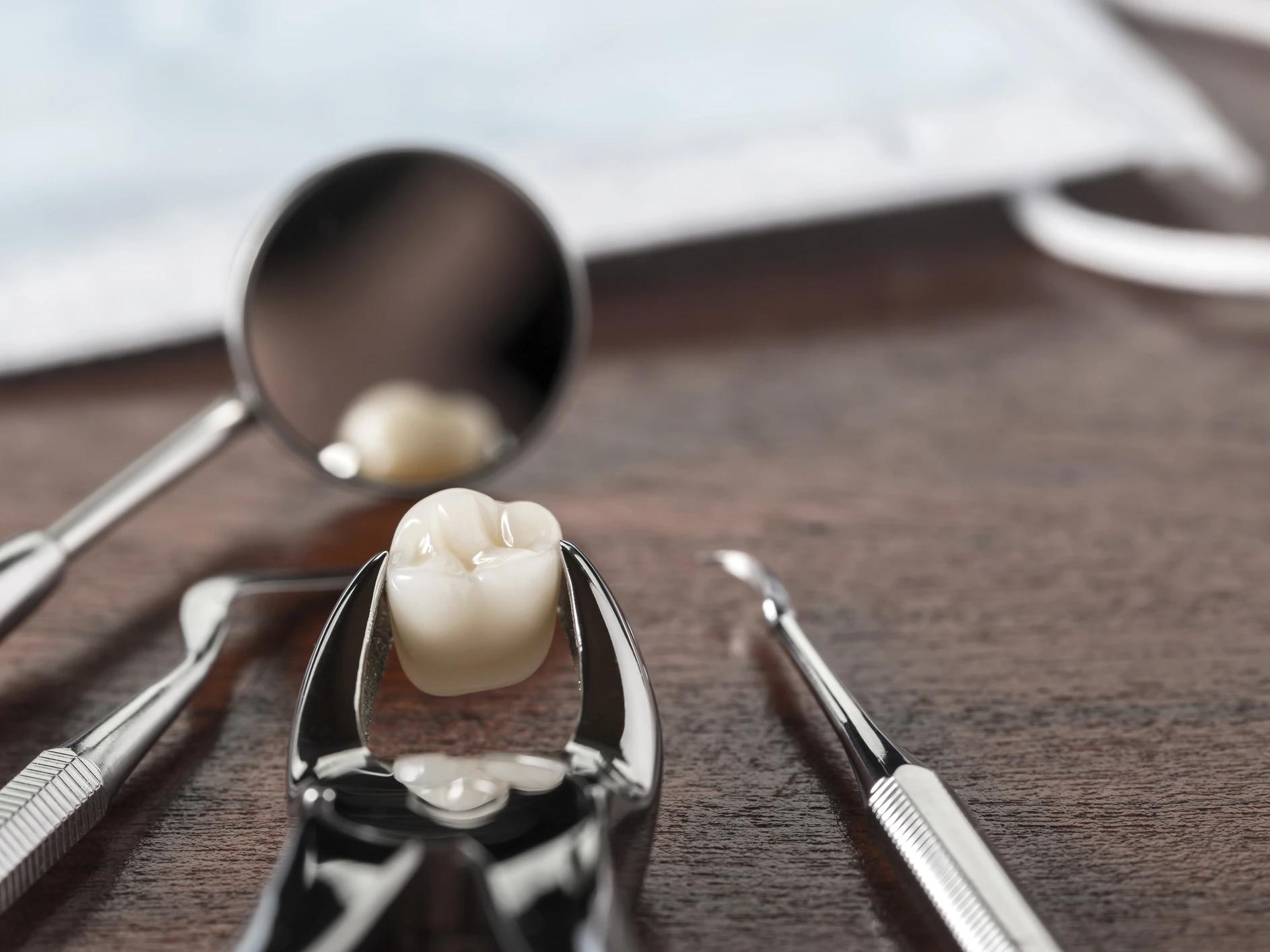
A dental extraction is the complete removal of a tooth from its socket in the jawbone. It is typically performed when a tooth cannot be preserved through restorative treatments such as fillings, crowns, or root canal therapy.
27 January 2026
11 min read
TL;DR
Are dental extractions cheaper abroad than in the UK?
Often yes, especially for complex or multiple extractions. Simple extractions abroad may offer limited savings once travel costs are included, but surgical and wisdom tooth removals can still be substantially cheaper.
Indicative costs (per tooth):
- UK: €110 - €290
- Albania:€30 - €100
- Poland: €60 - €180
- Turkey: €50 - €270
What is dental extraction?
A dental extraction is the complete removal of a tooth from its socket in the jawbone. It is typically performed when a tooth cannot be preserved through restorative treatments such as fillings, crowns, or root canal therapy.
Extractions are most commonly required when a tooth is:
- Severely decayed and structurally unsalvageable
- Infected, with infection that cannot be controlled or eliminated
- Broken below the gum line or fractured in a way that prevents repair
- Loosened by advanced gum disease
- Impacted or problematic wisdom teeth, causing pain, infection, crowding, or damage to neighbouring teeth
In clinical practice, extractions are broadly divided into simple extractions and surgical extractions. A simple extraction is performed when the tooth is fully visible in the mouth and can be removed with standard dental instruments under local anaesthetic. Surgical extractions are more complex and are required when a tooth is broken at gum level, has curved or difficult roots, or is impacted in the bone (as is common with wisdom teeth). These procedures may involve lifting the gum, removing small amounts of bone, or sectioning the tooth to allow safe removal. Before recommending extraction, dentists assess X‑rays, surrounding bone health, infection risk, and long‑term treatment planning, as removing a tooth can affect bite stability and neighbouring teeth if not appropriately managed.
Sources:
Let’s Talk About Your Smile - Free Consultation
Trusted by thousands of international patients in Albania

Types of extractions and treatment complexity
Dental extractions are not a single, uniform procedure. The approach a dentist takes depends on several factors, including the position of the tooth, the condition of the surrounding bone and gums, and whether the tooth has fully erupted into the mouth. These variables determine not only how the tooth is removed, but also the level of skill required, the length of the procedure, and the expected recovery time.
In clinical practice, extractions are broadly classified based on access and difficulty. Some teeth can be removed straightforwardly using standard instruments, while others require surgical access, sectioning, or bone removal to minimise trauma and protect nearby structures such as nerves and adjacent teeth. This classification helps dentists plan treatment safely and allows patients to understand why one extraction may be quick and simple while another is more involved.
- Simple extraction: Removal of a fully erupted tooth.
- Surgical extraction: Required when a tooth is broken, impacted, or covered by gum or bone.
- Impacted wisdom tooth removal: The most complex type, often requiring bone removal and sectioning of the tooth.
Complexity directly affects cost and treatment time. As extraction complexity increases, so do treatment time, technical demands, and overall cost. More complex extractions require longer appointments, advanced surgical skills, additional instruments, and sometimes sedation or referral to an oral surgeon. Recovery time and aftercare needs also increase accordingly, making complexity one of the most important drivers of both price and patient experience.
Sources:
What to Expect During a Tooth Extraction | Healthline Media
Extractions | MouthHealthy - Oral Health Information from the ADA
Dental extraction costs in the UK
Dental extractions in the UK can be provided either through the NHS or privately, depending on clinical urgency, availability, and patient choice. While NHS extractions fall under Band 2 pricing, access is often limited by long waiting lists, strict referral pathways, and prioritisation of acute cases. For non-urgent extractions or impacted wisdom teeth, patients are frequently advised to seek private treatment to avoid delays of several months.
Private extraction costs in the UK are driven by high operating expenses, including clinician salaries, regulatory compliance, indemnity insurance, and practice overheads. Surgical and wisdom tooth extractions are priced higher because they require longer appointments, greater technical skill, advanced imaging, and sometimes sedation or referral to an oral surgeon. These factors explain why costs can vary widely between clinics, even for the same type of extraction.
Private costs typically range as follows:
- Simple extraction: €110 - €290
- Surgical extraction: €230 - €700
- Wisdom tooth extraction: €175 - €700
Sources:
Dental extraction costs in Albania
Albania offers some of the lowest prices in Europe:
- Simple extraction: €30 - €100
- Surgical extraction: €80 - €250
- Wisdom tooth extraction: €50 - €150
Prices usually include consultation, anaesthetic, sutures, and follow-up checks.
Lower prices in Albania are not the result of shortcuts, inferior materials, or reduced clinical standards. Instead, they reflect structural economic and system-level differences compared with the UK.
- Significantly lower staff wages and employment costs
Dentists, dental nurses, and support staff in Albania earn substantially lower salaries than their UK counterparts. While Albanian dentists are often EU-trained and highly skilled, average wages reflect the country’s lower cost of living. - Lower clinic overheads and property costs
Rent, utilities, equipment leasing, and business rates are far lower in Albania than in the UK. Dental clinics can operate in modern premises without the high fixed costs seen in British cities, especially London and the South East. - Bundled, all-inclusive pricing models
Unlike the UK, where consultations, imaging, follow-ups, and medications may be charged separately, Albanian clinics commonly use bundled pricing. This creates lower headline prices and clearer cost expectations for patients.
Sources:
WHO: Albania Spends 5 Times Less on Healthcare Than the European Average - Euronews Albania
Dental extraction costs in Poland
Poland provides EU-regulated dentistry with moderate savings:
- Simple extraction: €60-€100
- Surgical extraction: €80-€130
- Wisdom tooth extraction: €160-€220
Poland’s pricing reflects a balance between EU clinical standards and a lower-cost economic environment, rather than any reduction in quality.
- Lower but rising staff wages
Dental professionals in Poland earn less than their UK counterparts, though more than in Albania. Polish dentists are often highly trained, many with postgraduate EU or international education, but average salaries and employment costs remain significantly lower than in the UK. - Lower clinic overheads and property expenses
Commercial rents, utilities, and business operating costs are lower in Poland than in the UK, even in major cities such as Warsaw, Kraków, or Gdańsk. Clinics can operate profitably at lower price points without the pressure of high fixed costs seen in UK practices. - Clearer separation between NHS-equivalent and private care
Unlike the UK’s mixed NHS/private model, Polish dentistry operates largely on a private-pay basis. This avoids cross-subsidisation pressures, inefficiencies, and pricing distortions that exist in the UK system, allowing clinics to price treatments more transparently and efficiently.
Sources:
Dental extraction costs in Turkey
Turkey offers low headline prices but with greater variation:
- Simple extraction: €50-€80
- Surgical extraction: €120 - €160
- Wisdom tooth extraction: €170-€270
Patients should verify clinic standards and materials carefully. Turkey’s pricing reflects a combination of economic advantages and market dynamics, alongside regulatory differences.
- Lower wages and operating costs
Dental staff wages and clinic operating costs in Turkey are significantly lower than in the UK and comparable to or slightly higher than Albania in some urban centres. This allows clinics to offer low base prices for routine procedures such as extractions. - Non-EU regulatory environment
Turkey operates outside the EU medical device and healthcare regulatory framework. While many reputable clinics voluntarily use internationally recognised materials and follow high standards, regulatory oversight is less uniform. This contributes to greater price variation between clinics and regions. - Wide gap between domestic and international clinics
There is a substantial difference between local clinics serving domestic patients and premium clinics targeting foreign patients. International-facing clinics tend to charge more but offer English-speaking staff, coordination services, and bundled packages. This creates a broad price range for the same procedure.
Sources:
Materials and clinical standards
Across the UK, Albania, and Poland, dental extractions are performed using the same core categories of clinical materials and equipment, governed by European medical device standards. Turkey operates outside the EU regulatory framework, but many reputable clinics still use internationally recognised products.
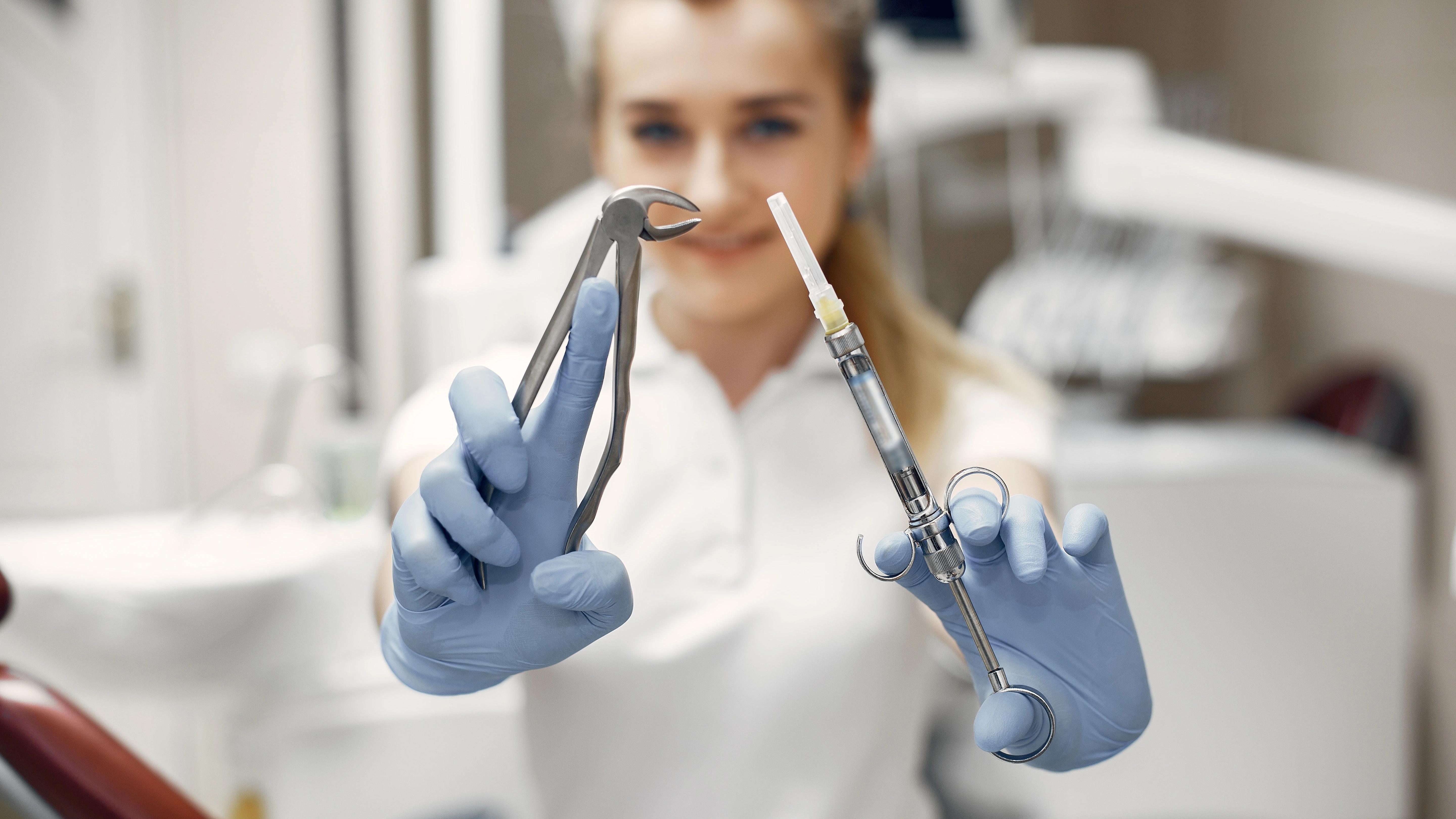
Regardless of country, a routine dental extraction relies on a small and well‑defined set of materials:
- Local anaesthetics (e.g. lidocaine or articaine with adrenaline)
- Disposable needles and syringes
- Extraction instruments (forceps, elevators)
- Surgical handpieces and burs (for surgical and wisdom tooth extractions)
- Sutures (resorbable or non‑resorbable)
- Sterilisation consumables (gloves, drapes, disinfectants)
These are standardised products with little variation in cost or function between countries. The procedure itself does not rely on bespoke or country‑specific materials.
CE marking and EU medical device regulation
In the UK, Albania, and Poland, dental materials and instruments are subject to CE marking under EU Medical Device Regulation (MDR). CE marking confirms that a product meets strict requirements for:
- Patient safety
- Biocompatibility
- Sterility and manufacturing quality
- Traceability and post‑market surveillance
This means that anaesthetics, sutures, needles, and instruments used in these countries are typically sourced from the same global manufacturers and meet identical safety thresholds. Albania, while not an EU member state, aligns its dental imports and clinical practice with EU standards, particularly in clinics treating international patients.
The materials used in a dental extraction account for a very small proportion of total treatment cost-often only a few pounds per procedure. A cartridge of local anaesthetic, a sterile needle, and sutures cost roughly the same whether used in London, Warsaw, or Tirana. As a result, differences in extraction prices are not driven by cheaper drugs or inferior tools abroad.
Instead, price differences arise from labour costs, insurance, regulation, and clinic overheads, not from the consumables used during treatment.
Turkey: non‑EU regulation but international sourcing
Turkey operates outside the EU Medical Device Regulation framework. However, many established clinics-particularly those treating international patients-use:
- European‑manufactured CE‑marked products
- FDA‑approved materials
- International brands from Germany, Switzerland, Italy, and the US
The key difference is consistency and enforcement, not availability. While excellent clinics exist, regulatory oversight is less uniform than in EU‑aligned systems, which is why standards and pricing can vary more widely between clinics.
Sources:
What to consider when going abroad
Travelling abroad for a dental extraction is generally low risk when the procedure is properly planned and carried out by a reputable clinic. However, because treatment takes place outside the UK healthcare system, patients should approach the decision with informed caution rather than focusing solely on headline price.
1. Clinic reputation and transparency
Clinic reputation is one of the strongest predictors of a good outcome. Patients should look for clinics that:
- Publish clear, itemised price lists
- Treat international patients routinely
- Provide written treatment plans and consent forms
- Are transparent about materials, techniques, and aftercare
2. Dentist and surgeon experience (especially for wisdom teeth)
Simple extractions are routine procedures for most dentists, but surgical and wisdom tooth extractions require additional experience. Patients should confirm:
- Whether the procedure will be performed by a general dentist or an oral surgeon
- The clinician’s experience with impacted or complex wisdom teeth
- Whether additional imaging (e.g. panoramic X-rays) is used for planning
3. Diagnosis and pre-treatment planning
Before travelling, patients should have a clear diagnosis. Ideally:
- Recent X-rays are reviewed in advance
- The clinic confirms whether the extraction is simple or surgical
- A worst-case price is agreed upfront
4. Communication and language
Clear communication is essential. Clinics treating international patients should:
- Offer consultations in English
- Provide written post-operative instructions
- Be reachable by phone, email, or messaging apps after treatment
5. Timing, recovery, and travel safety
Patients should plan to remain in the destination country for at least 48 hours after an extraction, particularly for surgical or wisdom tooth removals. This allows early complications such as bleeding or swelling to be managed locally and reduces the risk of issues during air travel.
6. Realistic expectations and risk awareness
Dental extractions are among the lowest-risk dental procedures, but no treatment is risk-free. Potential complications include dry socket, infection, swelling, or temporary nerve irritation. These risks exist regardless of country and are influenced more by complexity and patient health than by location.
Sources:
Treatment timelines and travel
One of the main reasons dental extractions are suitable for treatment abroad is that they are single-stage procedures. Unlike crowns, bridges, or implants, extractions do not rely on laboratory work or healing phases between appointments.
Typical treatment timeline abroad
In most cases, dental extractions can be completed within a very short and predictable timeframe. This timeline allows most patients to complete treatment in a single short trip of 3–5 days, making extractions one of the most travel-compatible dental procedures.
| Day | What happens | Notes for international patients |
|---|---|---|
Day 1 | Arrival, consultation, clinical examination, and X-rays (if not reviewed in advance) | In many clinics, consultation and extraction are done on the same day for simple cases |
Day 1 or Day 2 | Tooth extraction under local anaesthetic | Simple extractions usually take 10–20 minutes; surgical or wisdom tooth extractions may take 30–60 minutes per tooth |
Day 2–3 | Local recovery period and optional follow-up check | Clinics treating international patients often schedule a brief post-operative review before travel |
Day 3 or later | Return travel if recovery is stable | Most patients are fit to fly once swelling and pain are controlled |
Why waiting 48 hours before flying matters
Patients are generally advised to remain in the destination country for at least 48 hours after an extraction, especially after surgical or wisdom tooth removal. This recommendation is based on several practical and clinical considerations:
| Reason | Why it matters | Clinical impact if ignored |
|---|---|---|
Bleeding control | The first 24-48 hours are when post-extraction bleeding is most likely to occur | Delayed bleeding may require emergency care during travel |
Blood clot stabilisation | Early flying can disrupt the blood clot in the socket | Increased risk of dry socket and delayed healing |
Swelling and pain management | Swelling and discomfort often peak within the first 48 hours | Flying during peak swelling increases pain, stress, and discomfort |
Access to immediate care | Any early complications can be treated by the original clinician | Reliance on emergency or unfamiliar care while travelling |
Differences by extraction complexity
- Simple extractions: Some patients travel home within 24 hours, but a 48-hour buffer is still recommended as a precaution.
- Surgical and wisdom tooth extractions: A 48–72 hour stay is strongly advised, particularly if bone removal or sutures were required.
- Multiple extractions: Patients having several teeth removed may benefit from a slightly longer stay to ensure pain and swelling are well controlled.
Practical travel considerations
- Flight comfort: Patients should avoid long-haul flights immediately after extraction if possible, as prolonged sitting and cabin pressure changes may worsen discomfort.
- Medication access: Clinics usually provide pain relief and, if needed, antibiotics. Patients should ensure they have sufficient medication for the journey home.
Activity restrictions: Strenuous activity, alcohol, and smoking should be avoided for several days after extraction, which may affect holiday plans.
Sources:
Total Cost Comparison (Treatment + Travel)
Before looking at the numbers, it’s important to understand what actually drives the difference. In the UK, private extraction fees accumulate quickly as each additional tooth is treated, particularly once surgical or wisdom tooth removals are involved. When treatment is carried out abroad, per-tooth fees are lower, and the main additional cost is travel, which remains broadly the same regardless of whether a patient has two teeth or ten teeth removed. This means that for multi-tooth cases, the proportion of money spent on travel decreases, and the underlying treatment cost difference becomes the dominant factor.
Example: multiple extractions (e.g. 6-10 teeth, mixed simple and surgical)
UK private prices rise sharply with each additional extraction, especially when surgical or wisdom teeth are involved.
- Overseas treatment prices rise more slowly, because per‑tooth fees are lower.
- Travel costs remain broadly similar whether 2 teeth or 10 teeth are treated.
Result: for multi‑tooth extraction cases, Albania in particular often remains significantly cheaper overall, even after flights and accommodation are included.
Total Cost Comparison
| Country | Treatment | Travel & stay | Total cost |
|---|---|---|---|
UK | £2,000+ | £0 | £2,000+ |
Albania | £700 - £900 | £500 - £700 | £1,200 – £1,600 |
Poland | £1,000 – £1,300 | £500 – £900 | £1,500 – £2,200 |
Turkey | £900 - £1,200 | £500 - £800 | £1,400 - £2,000 |
Aftercare and long-term considerations
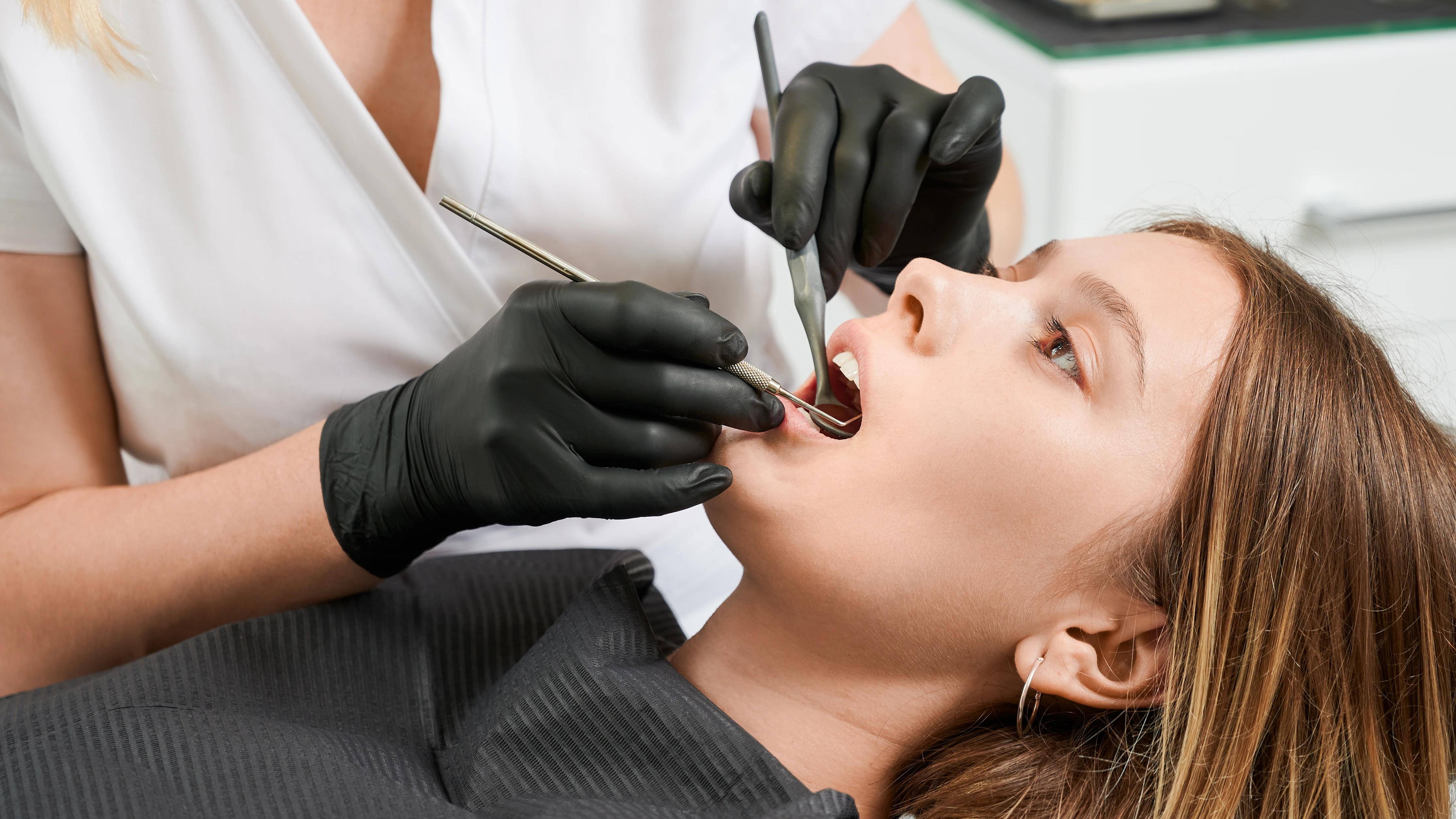
Aftercare following a dental extraction is generally simple and predictable, regardless of where the procedure was carried out. Unlike complex restorative treatments, extractions do not require ongoing specialist maintenance once healing is complete.
Immediate aftercare and healing
In the days following an extraction, normal aftercare focuses on:
- Allowing the blood clot to stabilise
- Managing mild pain or swelling
- Keeping the area clean to prevent infection
Most patients experience the majority of healing within 7-10 days, with full soft-tissue healing over several weeks. These timelines are the same whether the extraction was performed in the UK or abroad.
Once a patient returns home, routine aftercare is managed in the UK, just as it would be after a private UK extraction. This includes:
- Checking healing during routine dental check-ups
- Removing non-dissolvable sutures if required
- Managing common complications such as dry socket or localised infection
UK dentists cannot refuse clinically necessary care simply because treatment was carried out overseas. This is confirmed by guidance from the General Dental Council (GDC).
What UK dentists are not responsible for
While UK dentists can and do provide aftercare, there are practical limits:
- They are not responsible for correcting or redoing the original treatment
- Overseas clinic warranties do not transfer to UK practices
- Any follow-up treatment in the UK is typically charged privately unless NHS eligibility applies
This mirrors the situation after UK private dentistry, where follow-up care is not automatically free.
Long-term considerations
Once healed, an extraction site usually requires no ongoing maintenance. Long-term considerations relate mainly to whether the missing tooth should be replaced:
- Wisdom teeth generally do not need replacement
- Front or functional teeth may eventually require a bridge, denture, or implant
These decisions can be made later and do not depend on where the extraction took place. Many patients have extractions abroad and complete restorative treatment in the UK, or vice versa.
References:
Final Thoughts
Dental extractions are simple and predictable, yet costs vary greatly. UK prices reflect high wages, insurance, and overheads, while countries like Albania and Poland offer the same care at lower costs without compromising safety. Turkey has low prices too, but with more variability. Extractions adapt well to overseas care: single-stage, minimal follow-ups, and easy aftercare. Choosing abroad should focus on informed decisions, not just savings.
Let’s Talk About Your Smile - Free Consultation
Trusted by thousands of international patients in Albania
Frequently Asked Questions
Is dental extraction painful?
Dental extractions are carried out under local anaesthetic, which numbs the area completely. Patients usually feel pressure and movement, but not pain. Mild discomfort or soreness after the procedure is normal and can usually be managed with standard pain relief. Pain levels are similar regardless of whether the extraction is performed in the UK or abroad.
Are materials and standards lower abroad?
In the UK, Albania, and Poland, clinics use CE-marked materials that meet EU medical device standards. Many reputable clinics in Turkey also use internationally recognised brands. Lower prices abroad are driven by economic and system-level factors, not by inferior materials.
Will a UK dentist refuse to treat me because I had treatment abroad?
No. UK dentists are not allowed to refuse clinically necessary care solely because treatment was carried out overseas. They may not take responsibility for the original procedure, but they can provide aftercare, pain management, and treatment of complications.
Can all dental extractions be done abroad?
Most simple and surgical extractions, including wisdom teeth, can be safely done abroad when properly planned. However, very complex cases involving severe infection, high medical risk, or proximity to major nerves may require specialist hospital-based care, which can be easier to coordinate in the UK.
Is it safe to fly after a dental extraction?
Yes, but patients are generally advised to wait at least 48 hours before flying, particularly after surgical or wisdom tooth extractions. This allows early bleeding, swelling, or pain to be managed locally and reduces the risk of complications during travel.
References:
Tooth Extraction (Removal) | Bupa Dental Care UK
What to Expect During a Tooth Extraction | Healthline Media
Extractions | MouthHealthy - Oral Health Information from the ADA
How much NHS dental treatment costs
WHO: Albania Spends 5 Times Less on Healthcare Than the European Average - Euronews Albania
Albania health system information
Dentist Salary in Poland | Salary Expert
Dentist Salary in Turkey (2026) - ERI SalaryExpert
The future of health systems | OECD
Medical devices | European Medicines Agency (EMA)
Going abroad for dental treatment | General Dental Council
Answering your questions on dental tourism | DDU Journal
Author

Marcela Shehu
Marcela Shehu is the Co-Founder of Dental Tourism Albania and a UK-based patient coordinator specialising in cross-border dental care. She lives in London and splits her time between London and Tirana, giving her first-hand insight into both UK patient expectations and the standards of leading dental clinics in Albania.
Marcela works closely with carefully vetted clinics in Tirana, supporting patients with treatment planning, travel coordination, and aftercare guidance. Through the blog, she shares practical insights on dental procedures, cost comparisons, and how to safely plan dental treatment in Albania with confidence.