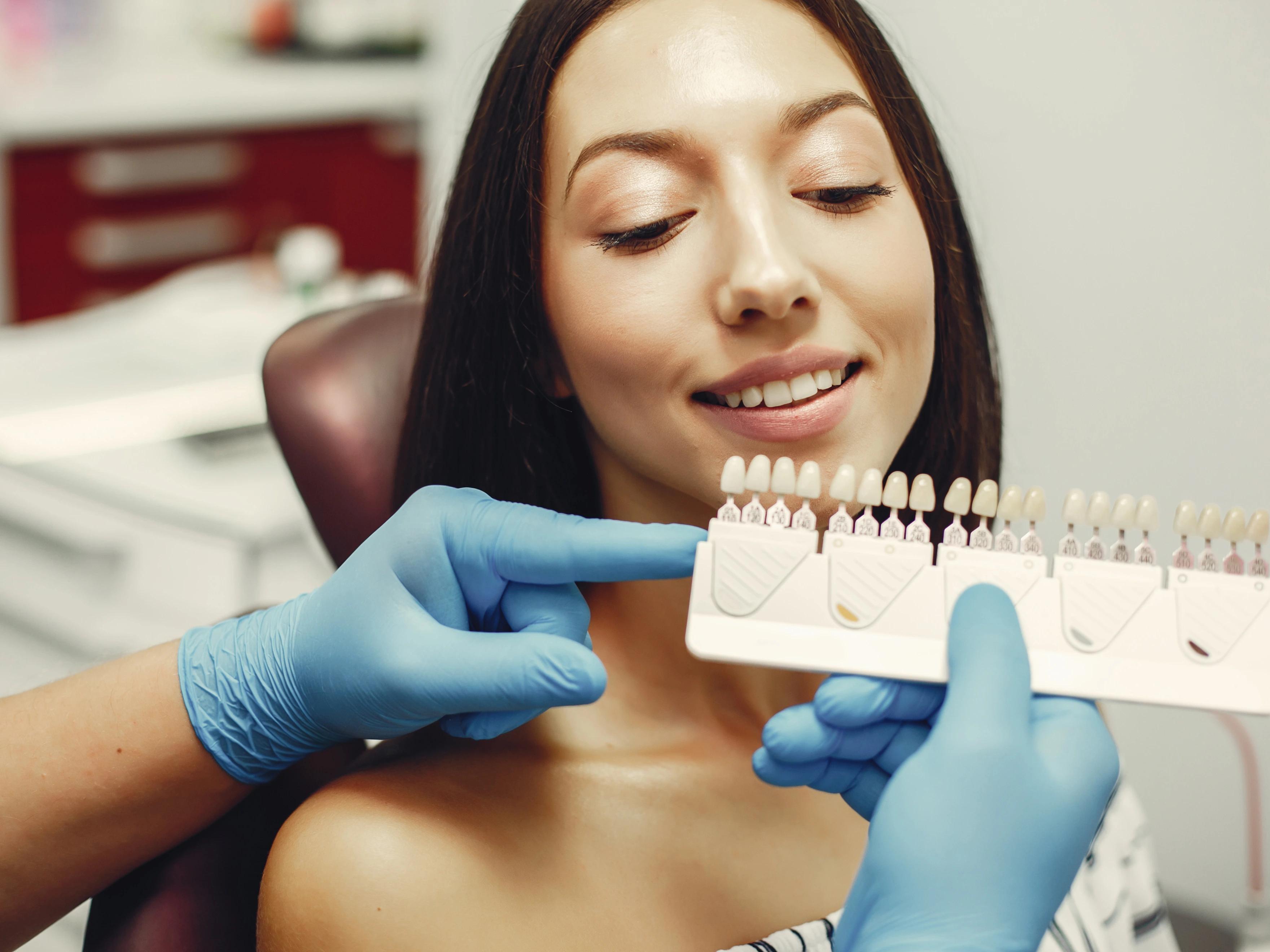
Can You Whiten Composite Bonding: What Happens if You Try?
To whiten composite bonding effectively, one must understand that traditional peroxide treatments at 10-16% concentrations, like Philips Zoom or Boutique Whitening, only lighten natural enamel and will not change.
TL;DR
Composite bonding is a non-porous synthetic resin that does not respond to chemical whitening agents like hydrogen peroxide, meaning your bonding will stay its original color while surrounding teeth brighten. If you attempt to whiten existing bonding, you will likely face a "two-tone smile" where the resin appears yellow or dull against newly whitened enamel.
Quick Tips
Tip 1: Always complete your full teeth whitening course before getting new composite bonding applied.
Tip 2: Wait at least two weeks after whitening for bond strength to recover fully.
Tip 3: Avoid abrasive "whitening" toothpastes that can scratch and dull your bonding's surface.
Why Does Composite Bonding Material Fail to Respond to Whitening?
Composite bonding is an inorganic, non-porous material designed to be chemically stable once cured. Unlike natural tooth enamel, which is 96% mineralised hydroxyapatite with microscopic pores, composite resin is a dense cross-linked polymer network. It consists of high-molecular-weight monomers like bis-GMA and inorganic fillers such as glass or ceramic particles.
This synthetic structure acts as a biological seal. Peroxide-based whitening agents work by releasing free radicals that navigate through the pores of enamel to break down internal stains. Because composite resin lacks these pathways, the whitening molecules simply cannot penetrate the material. The pigments within the resin are locked into the plastic during the manufacturing process, making them impervious to oxidative decolorisation.
- The resin matrix is composed of dimethacrylate polymers.
- Inorganic fillers provide the strength but lack permeability.
- Photoinitiators create a 3D network that blocks fluid diffusion.
- Natural teeth are semi-permeable; composite is a non-porous synthetic.
Natural Enamel vs Composite Bonding Resin
| Feature | Natural Enamel | Composite Bonding Resin |
|---|---|---|
Material Base | Hydroxyapatite (Inorganic) | Dimethacrylate Polymer |
Microstructure | Prismatic and Porous | Cross-linked Non-porous |
Fluid Permeability | High (Semi-permeable) | Low (Synthetic Seal) |
Reaction to Peroxide | Oxidative Lightening | Chemically Inert |
What Happens if You Whiten Composite Bonding Anyway?

Attempting to whiten your teeth when you already have composite bonding leads to several undesirable aesthetic and structural outcomes. The most common issue is the "two-tone smile," where your natural enamel lightens significantly while the bonding remains its original, darker shade. This creates a sharp contrast that makes the bonding look like a stained or yellow patch on the tooth.
Beyond the colour clash, high concentrations of hydrogen peroxide can actually damage the integrity of the resin. Studies show that oxidative stress can cause the "cleavage" or breaking of polymer chains in the matrix. This leads to microscopic pitting and increased surface roughness. While the bonding doesn't get whiter, it does become more "grippy" for stains from coffee, tea, or red wine, ironically making it look darker over time.
- Uneven Colour: The contrast makes bonding look yellow or "dirty."
- Surface Degradation: Loss of the polished "glaze," leading to a plastic-like appearance.
- Marginal Leakage: Peroxide can penetrate the gaps where the resin meets the tooth, causing dark lines at the edges.
- Plaque Retention: Rougher surfaces after chemical exposure attract more bacteria and biofilm.
A common misconception is that whitening is harmless to restorations. While it won't change the colour, it can degrade the surface polish, making the resin more susceptible to future.
Sources: How to Whiten Composite Bonding | Colgate
How Does Bonding Compare to Porcelain and Other Materials?
It's helpful to view composite bonding as a more flexible but less "colour-stable" option compared to lab-made ceramics. Porcelain veneers and zirconia crowns are glass-ceramics that are entirely non-porous and chemically inert. They do not have the organic matrix found in composite, which means they are even more resistant to the effects of peroxide, but also more resistant to the degrading "pitting" that composite might suffer.
The main difference lies in how these materials handle external stains over the years. Porcelain is highly resistant to picking up surface stains, whereas composite bonding is prone to "marginal staining" where the bond meets the tooth. This comparison is vital for patients choosing between a lower-cost "repair" and a long-term "restoration."
Composite Bonding vs Other Materials
| Material | Stain Resistance | Response to Bleaching | Typical Lifespan |
|---|---|---|---|
Composite Bonding | Moderate | None (Fixed Shade) | 3 - 7 Years |
Porcelain Veneers | Very High | None (Fixed Shade) | 10 - 15 Years |
Natural Enamel | Low | Significant Change | Lifetime |
Zirconia Crowns | Excellent | None (Fixed Shade) | 15 - 20 Years |
Sources:
Composite bonding vs veneers: What’s the difference?
Dental Composite Bonding (Cosmetic) | Bupa Dental Care UK
Why Do Dentists Advise Against Whitening Existing Bonding?
Dental professionals advise against whitening existing bonding because it is technically impossible to achieve a uniform result without replacing the resin. Once the surrounding teeth have been whitened, the existing resin will no longer match. The only way to correct this is to remove the old bonding and apply a fresh layer of resin that matches the new, brighter shade of the natural teeth.
Furthermore, dentists are concerned about "internal staining" or marginal leakage. If a patient uses a whitening kit, the peroxide might seep under the restoration if the bond has weakened over time. This doesn't just look bad; it can hide decay or lead to sensitivity. The recommended pathway is always to achieve the desired tooth shade through whitening first, wait for the colour to "set," and then perform the bonding.
- Professionals suggest a 14-day wait after whitening before bonding.
- Bonding requires a "clean" surface for the strongest adhesion.
- Replacing the top layer of resin (refacing) is often cheaper than full replacement.
- Maintenance includes regular professional polishing rather than chemical whitening.
Sources: NHS: Teeth Whitening
Can Professional Office Treatments Change the Resin Shade?

Many patients believe that a stronger, professional-grade laser or light-accelerated whitening treatment at a dental clinic might be powerful enough to "lift" the shade of their bonding. However, the limitation is not the strength of the chemical but the fundamental nature of the material. Even the most advanced 35% hydrogen peroxide gel cannot alter the synthetic pigments embedded in a cured polymer matrix.
Professional treatments are highly effective at removing "extrinsic" surface stains from bonding through specialized polishing tools, but they cannot change the "intrinsic" base colour. If your bonding is internally stained due to its age or the quality of the resin used, no amount of light or chemical treatment can fix it. In these cases, the only solution is a replacement or a "refacing" of the composite material.
- Professional polishing uses fine-grit discs to restore luster.
- Airflow technology (sodium bicarbonate spray) can remove deep surface biofilm.
- "Refacing" involves removing the top 0.5mm of resin and adding a fresh layer.
- Laser whitening acts only on the organic components of the natural tooth.
Sources: Teeth Whitening | Johns Hopkins Medicine
How to Choose?
Choosing the right maintenance or replacement strategy for your bonding depends on your current goals and budget. Use the following criteria to decide your next step:
- Check the Age: If your bonding is over 5 years old, it may be better to replace it entirely than to try and clean it.
- Assess the Stain: Is the stain on the surface (removable by a dentist) or is it a dark line around the edge (internal leakage)?
- Evaluate Your Overall Colour: If you want your whole smile to be whiter, you must budget for both the whitening treatment and the replacement of all visible bonding.
- Consider the Cost: A professional polish usually costs £50-£100, while a full bonding.
Frequently Asked Questions
Can I whiten my composite bonding with baking soda?
No, you should avoid using high-concentration baking soda or charcoal. These materials are highly abrasive and will scratch the protective polish on your bonding, making it appear dull and more likely to stain in the future.
What happens if I whiten my teeth before I get bonding?
This is the ideal approach. By whitening first, your dentist can match the composite resin to your new, brighter tooth shade, ensuring a seamless and uniform smile. If you are looking for affordable cosmetic care, many patients seek treatment in Tirana to achieve these results.
Can I whiten my composite bonding if it has turned yellow?
If the "yellowing" is just surface staining from food and drink, a professional dental cleaning or "Airflow" treatment can often restore the original shade. If the resin itself has aged and changed colour, it cannot be whitened.
How often does composite bonding need to be replaced?
On average, composite bonding lasts between 3 to 7 years. Its lifespan depends on your diet, whether you smoke, and how well you maintain a professional cleaning schedule.
Will whitening my teeth make my bonding look darker?
Yes, whitening your teeth can make composite bonding look darker. Whitening agents like hydrogen peroxide only affect natural enamel, not the bonding material.As your teeth become lighter, the bonding stays the same shade, creating a noticeable contrast or “two-tone” effect.
Final Thoughts
While composite bonding is a fantastic, conservative way to enhance your smile, its inability to be whitened is a significant limitation. If you're looking to brighten your look, remember that "food insurance" starts with a professional plan: whiten your natural teeth first, then match your bonding. As the Albania tourism growth continues, more international patients are discovering the benefits of planning their cosmetic dental journeys carefully. If your current bonding is looking dull, skip the DIY whitening kits and book a professional polish to safely restore its shine and keep your smile looking its best.
References:
NHS: Teeth Whitening
Teeth Whitening | Johns Hopkins Medicine
Adanews: Diving into teeth-whitening options
What Is Dental Bonding?
Dental Composite Bonding (Cosmetic) | Bupa Dental Care UK
Author

Dr. Irma Marku
Dr. Irma Marku is an experienced General Dentist and founder of Dental Oasis. She has a strong background in the hospital and healthcare industry, with expertise in Endodontics, Dentistry, Patient Education, Medicine, and Oral Surgery. Dr. Marku is a dedicated professional with a solid academic foundation, holding a degree in Dentistry from the University of Medicine, Tirana.