Why Are Dental Implant Success Rates So High?
Modern dentistry has moved beyond dentures to reliable dental implants. With advanced 3D planning and modern materials, implants now offer stable, natural-looking tooth replacement with high success rates.
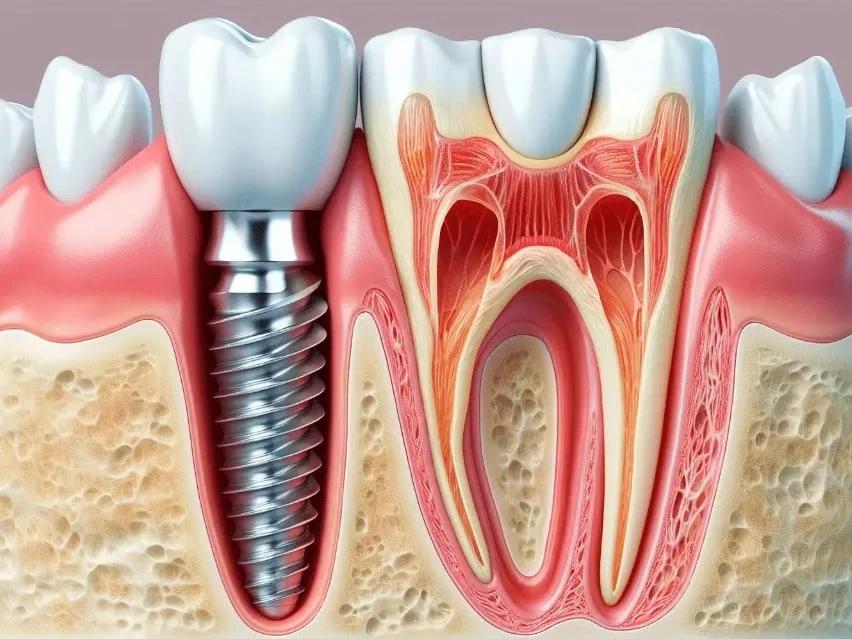
Modern dentistry has undergone a massive transformation, moving away from uncomfortable dentures toward permanent, lifelike teeth. Dental implants are now the gold standard for tooth replacement because they offer a level of stability that other methods cannot match. While no medical procedure is guaranteed, the data surrounding dental implants is exceptionally positive. Research consistently shows that these restorations are among the most reliable procedures in all of healthcare. Implementing advanced 3D planning and better material science has pushed success metrics to new heights, making them a predictable solution for almost any patient.
TL;DR
- Dental implants boast a long-term success rate between 95% and 98% in healthy patients.
- Success is defined by functional stability and bone health rather than just the implant staying in the mouth.
- Age, smoking habits, and systemic conditions like diabetes are the primary factors influencing outcomes.
- Modern technologies like 3D guided surgery have significantly reduced human error during placement.
What Are the Actual Success Rates for Dental Implants?
How often do dental implants truly succeed? The most cited figure for dental implant success typically hovers around 95% to 98%. However, a deeper look at clinical epidemiology reveals that these numbers change based on the timeframe being measured.
“”In the first year, the implant-level survival rate is a staggering 99.1%.
This is because the initial surgical phase is highly controlled. As time progresses, environmental factors like oral hygiene and mechanical wear begin to play a larger role.
Clinical research categorises failures into two groups: early and late. Early failures happen before the bone fully fuses with the implant, often due to surgical trauma or acute infection. Late failures occur after the prosthetic tooth is attached, usually caused by a condition called peri-implantitis, which is essentially gum disease for implants.
| Longitudinal Horizon | Implant-Level Survival | Patient-Level Survival | Primary Failure Driver |
|---|---|---|---|
1 Year | 99.1% | 98.5% | Surgical trauma |
5 Years | 98.2% | 96.7% | Mechanical stress |
10 Years | 96,1% | 92,5% | Peri-implantitis |
20 Years | 89,7% | 78,0% | Systemic health decline |
It is important to understand that patient-level survival is naturally different from implant-level survival. When a patient receives multiple implants for example five each implant still maintains a very high success rate, but statistically there is a slightly greater chance that one of them may require attention compared with placing a single implant. Clinicians refer to this as the cluster effect, meaning that an individual’s unique biological environment influences how all implants heal and integrate. With proper planning and care, however, multiple implants can still achieve excellent long-term outcomes.
References: Evaluation of Survival Rates of Dental Implants and the Risk Factors
How Does Age and Lifestyle Impact Success?

Does a person's age or daily habits truly affect the longevity of an implant? Chronological age is not a barrier to dental implants, but it does change the risk profile. In geriatric populations, specifically those aged 66 to 80, the early failure risk is higher, potentially reaching 14.56%. This is often due to reduced bone mineral density and a naturally slower healing response. Conversely, younger patients under 40 have very high initial success but face more mechanical challenges over 40 or 50 years, such as screws loosening or the ceramic crown chipping under decades of biting pressure.
Lifestyle choices, particularly smoking, are the most significant predictors of failure. Nicotine causes blood vessels to constrict, which starves the healing bone of the oxygen and nutrients it needs to fuse with the implant.
- Non-smokers enjoy a 10-year success rate of approximately 97.2%.
- Light smokers smoking fewer than 10 cigarettes a day see success dip to 92.1%.
- Heavy smokers smoking over 20 cigarettes a day face a failure risk that is double that of a non-smoker.
Modern clinical guidelines are becoming more flexible, suggesting that patients stop smoking at least two weeks before surgery and eight weeks after to allow for the initial healing window, rather than demanding a permanent quit for those who find it difficult.
For instance, consider a patient named John, a lifelong smoker. Despite initial concerns, John committed to abstaining from smoking for the recommended period around his implant surgery. His dedication significantly improved his healing process, demonstrating the tangible impact of lifestyle modifications on implant success.
How Do Systemic Health Conditions Affect Results?
A dental implant is not just a mechanical screw; it requires a biological partnership with the body. Systemic conditions that affect bone turnover or immune response can complicate this partnership. Diabetes is the most common concern. While well-controlled diabetics (HbA1c levels under 7%) have success rates nearly identical to healthy patients, those with poorly controlled diabetes face an 87.3% success rate and a much higher risk of infection.
Osteoporosis and the medications used to treat it, such as bisphosphonates, also play a role. While osteoporosis itself doesn't prevent implants, bisphosphonate therapy can increase the risk of failure by 65.3% due to changes in how the bone remodels itself.
“”"The success of dental implants is no longer just about the skill of the surgeon, but the metabolic health of the patient. Pre-operative screening for Vitamin D levels and HbAc1 is becoming standard for high-level care."
Other conditions like hypertension and a history of severe periodontitis (gum disease) are also linked to lower survival rates. However, with careful management and a tailored surgical plan, most patients with these conditions can still successfully receive implants. Patient empowerment, through diligent management of their systemic health, plays a crucial role in ensuring a favorable outcome.
References: American Academy of Periodontology
What Technologies Are Increasing Performance?
How has technology transformed the world of dental implants? The leap in success rates over the last decade is largely due to digital technology. In the past, surgeons relied on X-rays and tactile feel to place implants. Today, Digital Smile Design (DSD) and 3D surgical templates allow for guided surgery. This means the dentist plans the entire procedure on a computer first, ensuring the implant is placed in the exact spot where bone density is highest and clear of nerves.
- 3D Cone Beam Imaging provides a 3D map of the jawbone, avoiding surprises during surgery.
- Guided Templates are custom-made guides that fit over the teeth to lock the drill into the perfect position.
- Digital Smile Design ensures the final tooth looks natural and fits the patient's bite perfectly.
These advancements reduce human error and minimize the size profile of the surgical site, which leads to faster healing and less post-operative discomfort for the patient. This precision also allows for minimally invasive techniques, often resulting in quicker recovery times and a more comfortable experience for the patient.
References: Journal of Clinical Medicine Research
What Is the Difference Between Success and Survival?
Is an implant that is still in the mouth truly a success? Patients often hear the word "success," but clinicians use a more rigorous definition. An implant is said to have survived if it is still in the mouth and has not fallen out. However, an implant is only a success if it meets specific health criteria.
1. Stability: The implant must not move even slightly.
2. Bone Health: Annual bone loss must be less than 0.2mm after the first year.
3. No Infection: There should be no bleeding, pus, or inflammation in the surrounding gums.
4. Function: The patient must be able to chew comfortably and be happy with the appearance.
Understanding this distinction is crucial because an implant can survive for years while suffering from chronic infection (mucositis) or bone loss (peri-implantitis). Early detection of these issues through regular hygienist visits is the only way to convert a surviving implant into a successful one. This highlights the ongoing partnership between patient and clinician long after the initial procedure.
References: British Dental Journal
How Do Different Implant Materials Compare?
When it comes to dental implants, what material options are available, and which is right for you? While titanium remains the industry standard due to its incredible ability to fuse with bone, zirconia (ceramic) implants are becoming a popular alternative. Zirconia is entirely metal-free, which appeals to patients with sensitivities or those who prefer a more holistic approach.
| Feature | Titanium Implants | Zirconia (Ceramic) Implants |
|---|---|---|
Material | Grade 4 or 5 Titanium | Zirconium Dioxide |
History | 50+ years of clinical data | 15+ years of clinical data |
Aesthetics | Metal may show through thin gums | Naturally tooth-colored |
Biocompatibility | Excellent | Excellent (hypoallergenic) |
Strength | Extremely high fracture resistance | High, but slightly more brittle |
Titanium is typically favoured for complex Full Arch or All-on-4 restorations because it can withstand the heavy mechanical loads of a full set of teeth. Zirconia is often the preferred choice for a single front tooth where the smile zone aesthetics are the highest priority.
References: Implant biomaterials: A comprehensive review - PMC
Let’s Talk About Your Smile - Free Consultation
Trusted by thousands of international patients in Albania

Which Option Should You Choose?
Selecting the right approach for dental implants depends on individual health markers and aesthetic goals. For a single missing tooth in a healthy patient, a standard titanium implant with 3D guided placement is the most predictable route. However, if there are concerns about metal allergies or if the patient has very thin gum tissue, zirconia may be the better aesthetic choice.
Those looking for full-mouth rehabilitation, such as All-on-4, must prioritise structural integrity. In these cases, titanium frameworks provide the necessary strength to support an entire bridge of teeth. Regardless of the material, the data is clear: the most important factor in success is the initial surgical precision and the patient's commitment to aftercare. This personalized approach ensures the best possible outcome for each unique case.
Final Thoughts
Dental implants have a track record of success that few other medical implants can claim. With success rates consistently above 95%, they offer a life-changing solution for those struggling with tooth loss. By leveraging modern 3D technology and maintaining a healthy lifestyle, patients can expect their implants to last for many decades. If considering this treatment, the first step is a comprehensive consultation to evaluate bone density and systemic health, ensuring a patient is a prime candidate for a successful outcome. This initial assessment and ongoing commitment to oral hygiene are the cornerstones of long-term implant success.
Author

Marcela Shehu
Marcela Shehu is the Co-Founder of Dental Tourism Albania and a UK-based patient coordinator specialising in cross-border dental care. She lives in London and splits her time between London and Tirana, giving her first-hand insight into both UK patient expectations and the standards of leading dental clinics in Albania.
Marcela works closely with carefully vetted clinics in Tirana, supporting patients with treatment planning, travel coordination, and aftercare guidance. Through the blog, she shares practical insights on dental procedures, cost comparisons, and how to safely plan dental treatment in Albania with confidence.