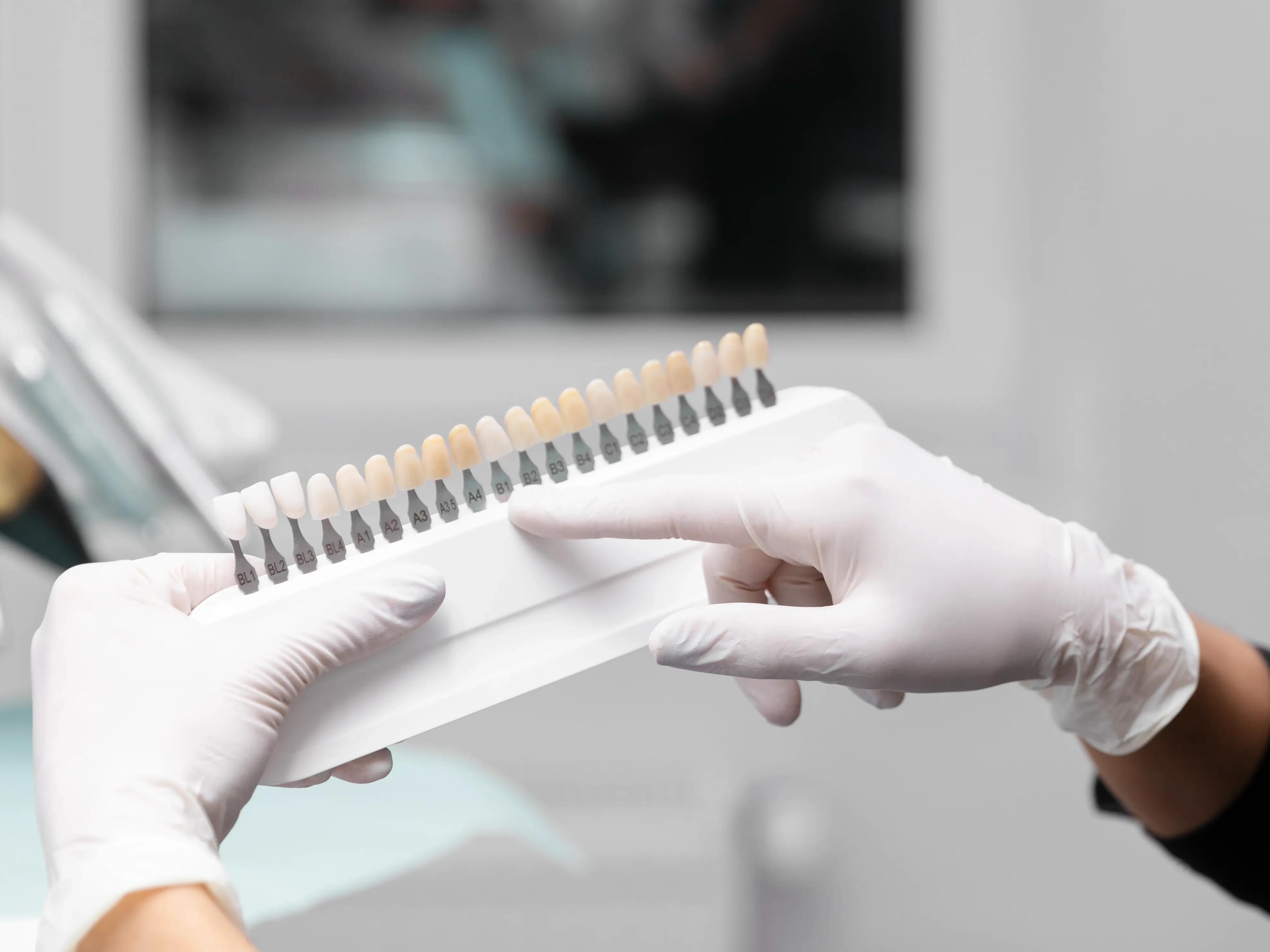
Composite Bonding vs Veneers: Differences, Costs, Longevity, and Which Is Right for You
Composite bonding and veneers are often grouped together as cosmetic dentistry, but clinically they serve different purposes. Composite bonding is an additive procedure that builds onto the natural tooth with resin, preserving enamel and keeping future options open. Veneers involve permanently altering the tooth surface to create a new external layer.

TL;DR
- Composite bonding is a minimally invasive, largely reversible cosmetic dental treatment best suited to small chips, gaps, and minor shape issues. It is cheaper upfront, but requires more maintenance over time. Typical UK cost is £200-£450 per tooth, with a realistic lifespan of 5-8 years.
- Veneers are a permanent cosmetic solution designed for full smile makeovers, severe discolouration, and significant shape or symmetry issues. They are more expensive but last longer and provide a higher aesthetic ceiling. Typical UK cost is £600-£1,100 per tooth, with a lifespan of 10-15+ years.
The right choice depends on the scale of change you want, how long you want results to last, and whether you are comfortable with permanent enamel alteration.
Composite Bonding vs Veneers
Composite bonding and veneers are often grouped together as cosmetic dentistry, but clinically, they serve different purposes. Composite bonding is an additive procedure that builds onto the natural tooth with resin, preserving enamel and keeping future options open.
Veneers involve permanently altering the tooth surface to create a new external layer. Bonding prioritises flexibility and tooth preservation. Veneers prioritise longevity, colour stability, and comprehensive aesthetic change.
At-a-Glance Comparison Table
| Factor | Composite Bonding | Veneers (Porcelain) |
|---|---|---|
Cost (UK range) | ~£150 - £400 per tooth (private). NHS not offered for cosmetic bonding. | ~£500 - £1,000 per tooth (private). Usually private; NHS only if clinically necessary. |
Lifespan | ~5 - 7 years on average, up to 10 years with excellent care. | ~10 - 15 years on average, some last 20+ years. |
Tooth preparation | None or minimal. Surface lightly roughened with no significant enamel removal. | Moderate enamel removal. Around 0.3 - 0.7 mm removed from the front of the tooth. |
Reversibility | Largely reversible. Composite can usually be removed leaving the tooth close to its original form. | Not reversible. Enamel is permanently removed. |
Appointment time | One visit, typically 30 - 60 minutes per tooth. | Multiple visits. Preparation and impressions, then fitting after 1 - 2 weeks. |
Aesthetic ceiling | Good, natural look but slightly less translucent than porcelain. | Excellent, highly lifelike aesthetics. Porcelain closely mimics natural enamel. |
Repairability | Easily repaired in a single visit. | Difficult to repair; often requires full replacement. |
Risk profile | Low risk to tooth structure; may chip or stain over time. | Higher risk due to permanent enamel loss; possible sensitivity or debonding. |
Maintenance needs | Good oral hygiene; avoid staining foods. Periodic polishing may be needed. | Routine hygiene; avoid hard objects. Night guard advised if grinding. Replacement likely after 10 - 15 years. |
What is composite Bonding?
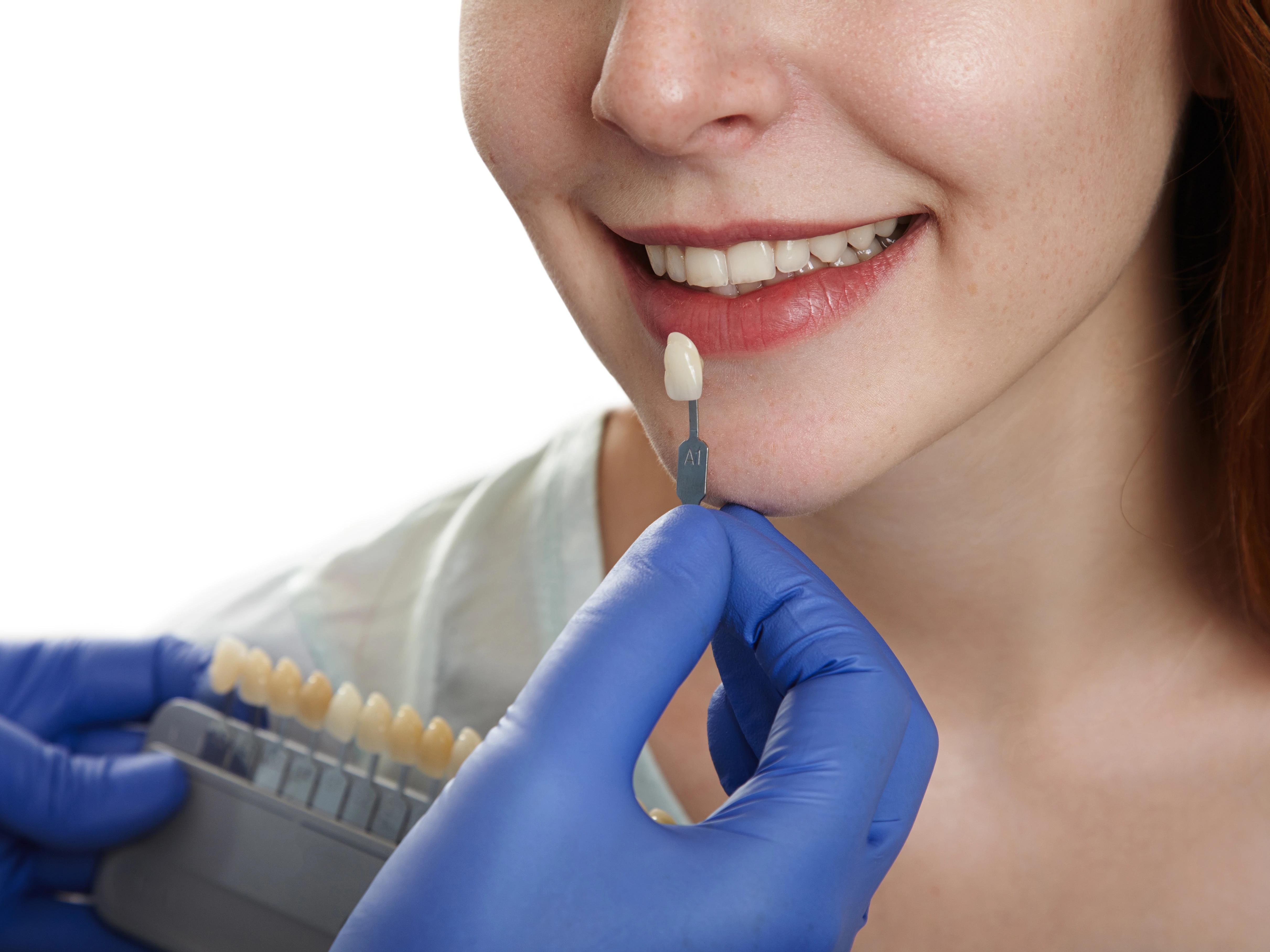
Composite bonding, also known as dental bonding, involves applying a tooth-coloured resin directly to the tooth surface. The enamel is lightly etched, a bonding agent is applied, and the resin is shaped and cured with a light. As minimal tooth structure is removed, the procedure is conservative and usually requires no injections.
Bonding is ideal for correcting minor cosmetic issues such as small gaps, chipped edges, or subtle shape and length adjustments. It offers an immediate improvement without permanent alteration, making it a common first-line treatment.
However, composite resin is softer and more porous than porcelain, so it can stain and chip over time, particularly in patients who grind their teeth or bite hard objects. It is not suitable for full smile makeovers or major colour changes. With proper care, bonding typically lasts five to eight years before repair or replacement is needed.
References:
What are veneers?
| Veneers Overview | Details |
|---|---|
Treatment type | Indirect restorative covering |
Materials | Porcelain or composite |
Tooth removal | 0.3-0.5 mm enamel removal |
Typical lifespan | 10-15+ years |
Appointments | 2-3 visits |
Best for | Full smile makeovers |
Reversibility | Irreversible |
Veneers are thin shells placed over the front surface of teeth to permanently change their colour, shape, and alignment. Porcelain veneers are custom-made in a dental laboratory, allowing precise control over translucency, brightness, and symmetry. Composite veneers are applied directly but share the same full-coverage concept.
To place veneers correctly, a dentist must remove a thin layer of enamel so the final result does not appear bulky. This step makes veneers a permanent commitment. Once enamel is removed, the tooth will always need a covering for protection.
Veneers are suited to patients who want a long-term, predictable aesthetic outcome. They are particularly effective for masking deep discolouration that whitening cannot fix, correcting uneven tooth size, and creating symmetry across the smile. While veneers are durable, failure usually requires full replacement rather than repair.
References:
Dental Veneers: Benefits, Procedure, Costs, and Results - Healthline
Composite bonding vs veneers: key differences explained
Composite bonding and veneers differ fundamentally in intent and long-term commitment. Bonding is designed as a conservative, flexible cosmetic enhancement. It works best when the goal is subtle improvement rather than transformation. Veneers, by contrast, are a definitive restorative solution aimed at long-term aesthetic stability and uniformity.
Cost differences are often the first deciding factor, but longevity and permanence matter more over time. Bonding is cheaper upfront but typically needs refreshing or replacement within a decade. Veneers cost more initially, but their durability and colour stability mean fewer aesthetic interventions over the long term.
Another key difference lies in tooth preservation. Bonding adds material to natural teeth and keeps future options open. Veneers permanently alter the tooth surface, committing the patient to ongoing restorations for life. This trade-off is acceptable for patients seeking a high-impact, lasting result, but unsuitable for those wanting a reversible or interim solution.
References:
Pros and cons that actually affect decisions
| Treatment | Pros | Cons |
|---|---|---|
Composite Bonding | Preserves enamel, lower cost, single visit, repairable | Stains over time, shorter lifespan, more maintenance |
Veneers | Superior aesthetics, long lifespan, colour stability | Permanent enamel removal, higher cost, irreversible |
Who is composite bonding best for?
Composite bonding is best suited to patients who want cosmetic improvement while keeping treatment conservative, flexible, and reversible. It is not designed for dramatic transformations, but it excels in specific, well-defined scenarios.
Composite bonding is ideal if you:
- Have small chips, cracks, or worn edges
- Want to close small gaps without orthodontics
- Have generally healthy teeth with minor shape issues
- Are younger and want to preserve enamel
- Want a lower upfront cost
- Prefer a reversible or interim cosmetic solution
| Patient profile | Suitability |
|---|---|
Minor cosmetic defects | ✓ Excellent |
Young patients (late teens, 20s) | ✓ Recommended |
Budget-conscious | ✓ Suitable |
Heavy grinders | ⚠ Requires caution |
Full smile makeover | ✕ Not ideal |
Composite bonding works particularly well for patients with isolated aesthetic concerns, such as a chipped incisor or uneven tooth edges. It is also commonly used as a trial phase for patients considering veneers in the future, allowing them to test changes in tooth shape or length without permanent commitment.
Because bonding preserves enamel, it is often recommended for younger patients or those who may want orthodontic treatment later. Financially, bonding spreads costs over time rather than requiring a large upfront investment, making it accessible to more patients.
However, patients must accept that bonding requires maintenance and is not a lifetime solution. It suits those comfortable with periodic refinements and realistic expectations.
Who are veneers best for?
Veneers are best suited to patients seeking a long-term, comprehensive cosmetic transformation and who are comfortable with permanent enamel alteration.
Veneers are ideal if you:
- Want a full smile makeover
- Have severe or intrinsic discolouration
- Need consistent shape, size, and symmetry across teeth
- Want long-lasting, stain-resistant results
- Are willing to invest upfront for durability
| Patient profile | Suitability |
|---|---|
Severe discolouration | ✓ Excellent |
Multiple teeth with issues | ✓ Ideal |
Desire for longevity | ✓ Strong fit |
Aversion to drilling | ✕ Poor fit |
Younger patients | ⚠ Case-dependent |
Veneers are particularly effective for masking deep intrinsic staining that cannot be corrected with whitening and for addressing proportional or symmetry issues across multiple teeth. Porcelain offers precise control over translucency, surface texture, and brightness, allowing clinicians to deliver highly predictable and durable aesthetic outcomes.
However, veneers require long-term commitment. Enamel removal is irreversible, and patients must accept that veneers will eventually need replacement over their lifetime. For this reason, veneers are best suited to individuals who prioritise maximum aesthetic refinement and longevity over flexibility, and who fully understand that this represents a permanent restorative pathway rather than a reversible cosmetic option.
Can you combine composite bonding and veneers?

Yes, and in many cases this is the most clinically sensible and cost-effective approach. Combining composite bonding and veneers allows treatment to be tailored to each tooth rather than using a one-size-fits-all solution.
In a typical hybrid plan, porcelain veneers are placed on the most visible teeth, usually the upper front teeth that define the smile, where colour stability, strength, and symmetry matter most. Less visible teeth, such as canines or premolars, may only require minor refinement, where composite bonding is often sufficient and avoids unnecessary enamel removal.
This approach preserves healthy tooth structure while still achieving a cohesive, high-end aesthetic. It is also financially efficient, as using fewer veneers reduces laboratory costs without compromising results. Hybrid treatment also simplifies future maintenance, as bonded areas can be adjusted independently while veneers provide long-term stability where it matters most.
Risks and complications dentists do not always explain
Composite bonding and veneers are often presented as simple cosmetic treatments, but both carry risks that can affect long-term satisfaction. These are not always highlighted in marketing materials.
With composite bonding:
- Marginal staining commonly develops over time, creating dark lines where the resin meets the natural tooth, which cannot be removed with normal cleaning.
- Chipping is relatively frequent, especially in patients with:
- strong bite forces
- teeth grinding
- habits such as pen chewing
- Poor shaping or polishing can trap plaque and irritate the gums, potentially leading to inflammation or gum recession.
Veneers involve more permanent risks:
- Removal of enamel is irreversible and may cause long-term tooth sensitivity.
- In some cases, nerve irritation can occur and may require root canal treatment.
- Veneer failure is more likely when bonding to dentine rather than enamel, increasing the risk of debonding or fracture.
- Poor design or grinding habits can place excessive stress on teeth, leading to cracking or failure.
Understanding these risks highlights the importance of conservative treatment planning and choosing an experienced clinician, not just the lowest price.
Maintenance and aftercare

Maintenance is essential for the longevity of both composite bonding and veneers. Although neither treatment is highly demanding, ignoring aftercare guidance significantly reduces lifespan and increases long-term costs.
Patients with composite bonding should use soft-bristled toothbrushes and low-abrasive toothpaste. Abrasive whitening products, charcoal pastes, and baking soda can scratch the resin surface, leading to faster staining and a dull appearance.
Diet also affects bonding longevity, as frequent exposure to coffee, tea, red wine, and tobacco causes gradual discolouration and shortens the time before cosmetic refresh is needed.
Veneers require less cosmetic upkeep but still need mechanical protection. Patients should avoid biting hard objects and wear a night guard if grinding is present. While porcelain does not stain, surrounding natural teeth may darken over time, causing colour mismatch.
Regular dental check-ups help detect wear, chips, or gum issues early, extending the lifespan of both treatments and preventing complications.
UK cost breakdown

Before choosing between composite bonding and veneers, it is important to understand how cosmetic dentistry is priced in the UK. Unlike routine dental care, cosmetic treatments are not covered by the NHS, meaning all costs are private and vary widely.
Pricing is influenced by several factors, including clinician experience, materials used, laboratory quality, and geographic location. A lower price does not necessarily indicate poor quality, but extremely cheap cosmetic dentistry often involves compromises in materials, planning, or long-term support.
Composite bonding has a lower entry cost because it requires no laboratory stage and is completed in a single appointment. Veneers cost more due to multiple visits, specialist materials, and laboratory fabrication. While veneers involve higher upfront cost, their longer lifespan can make them more economical over a 10-15 year horizon.
| Treatment | Typical UK cost |
|---|---|
Composite bonding (per tooth) | £200–£400 |
Composite veneer | £300–£500 |
Porcelain veneer | £600–£1,100 |
Full smile (8-10 veneers) | £5000–£11,000 |
Final decision framework
| Decision factor | Bonding | Veneers |
|---|---|---|
Minor chips or small gaps | ✓ |
|
Major colour or shape change |
| ✓ |
Minor cosmetic issues | ✓ |
|
Full smile makeover |
| ✓ |
Preserve natural enamel | ✓ |
|
Long-term durability priority |
| ✓ |
Long-term durability priority | ✓ |
|
Colour stability |
| ✓ |
Willing to accept permanence |
| ✓ |
Frequently Asked Questions
Is composite bonding reversible?
Composite bonding is largely reversible, though the enamel surface may not return to its original state.
Do veneers ruin teeth?
Veneers permanently remove enamel, which is irreversible.
Which lasts longer?
Porcelain veneers last significantly longer than composite bonding.
Can bonding stain?
Yes. Composite resin absorbs pigments over time.
Can veneers be whitened?
No. Veneers must be replaced to change colour.
Let’s Talk About Your Smile - Free Consultation
Trusted by thousands of international patients in Albania

Author

Dr. Aida Zhupani
Dr. Aida Zhupani completed her studies at the Faculty of Medical Sciences, Department of Somatology. As the founder of Zeus Dental Clinic, she is dedicated to providing professional, compassionate, and high-quality dental care. With a patient-centered approach and years of experience, Dr. Zhupani focuses on helping people feel comfortable and confident in their smiles. Her passion for dentistry and commitment to continuous learning inspire the insights she shares through this blog.