Composite Veneers vs Composite Bonding: Differences, Costs, Longevity, and Which Is Right for You
Although often grouped together, composite bonding and composite veneers serve different cosmetic goals. Composite bonding focuses on localised corrections. It adds resin only where needed, preserving natural tooth shape and structure. Composite veneers extend this concept by reshaping the entire visible surface of the tooth.

TL;DR
Composite bonding and composite veneers use the same tooth‑coloured resin material, but they differ in scale, intent, and longevity.
- Composite bonding is a conservative, additive treatment best for small chips, gaps, and minor shape corrections. It is affordable, reversible, and completed in one visit, but requires maintenance and has a shorter lifespan.
- Composite veneers involve covering the entire front surface of a tooth with composite resin. They allow broader cosmetic changes than bonding but still preserve far more enamel than porcelain veneers. They are more durable and aesthetic than small bonding repairs, but less long‑lasting and stain‑resistant than porcelain.
- Cost: Composite bonding is generally more budget-friendly upfront (£150–£400 per tooth), making it appealing for minor, localised cosmetic fixes.
- Cost: Composite veneers have a higher initial cost (£300–£500 per tooth), but provide greater durability and a more uniform cosmetic result, and are still less expensive than porcelain veneers.
The right choice depends on how much change you want, how many teeth are involved, and whether you prefer a flexible or longer‑term cosmetic solution.
Composite Bonding vs Composite Veneers
Although often grouped together, composite bonding and composite veneers serve different cosmetic goals.
Composite bonding focuses on localised corrections. It adds resin only where needed, preserving natural tooth shape and structure.
Composite veneers extend this concept by reshaping the entire visible surface of the tooth. They are still additive and conservative, but aim for a more uniform smile rather than isolated fixes.
Bonding prioritises flexibility and minimal intervention. Composite veneers prioritise broader aesthetic improvement without committing to porcelain.
In terms of appearance, composite veneers tend to offer a higher level of natural translucency and uniformity, more closely mimicking the look of healthy enamel, while bonding is best for subtle repairs but may not achieve the same seamless, lifelike finish across multiple teeth.
Let’s Talk About Your Smile - Free Consultation
Trusted by thousands of international patients in Albania

At-a-Glance Comparison
| Factor | Composite Bonding | Composite Veneers |
|---|---|---|
Treatment scope | Localised repairs targeting specific chips, gaps, or edge defects | Full front-surface coverage of the tooth to reshape colour, contour, and proportions |
Cost (UK) | ~£150-£400 per tooth (private) NHS not offered for cosmetic bonding | ~£300-£500 per tooth (private). Still significantly lower than porcelain veneers |
Lifespan | ~5-7 years on average, can reach 10 years with excellent care | ~7-10 years on average with good hygiene and bite control; may require refresh over time |
Tooth preparation | None or minimal. The surface is lightly roughened with no significant enamel removal | None to minimal. Often purely additive, occasionally minor contouring to avoid bulk |
Reversibility | Largely reversible. Composite can usually be removed, leaving the tooth close to its original form | Largely reversible. Resin can typically be removed, though minor surface changes may remain |
Appointment time | Completed in one visit, typically 30–60 minutes per tooth | Completed in a single visit, usually longer per tooth due to full-surface sculpting |
Aesthetic ceiling | Good, natural appearance but slightly less translucent than porcelain. Very nice results, with some artistic limits | Higher and more uniform aesthetic result across multiple teeth, though still less translucent than porcelain |
Repairability | Easily repaired if chipped or worn. New resin can be added and polished in a single visit | Easily repairable. Localised wear or chips can be corrected without replacing the entire veneer |
Risk profile | Low risk to tooth structure. Main risks are chipping or staining over time | Low to moderate risk. Similar material risks as bonding, with slightly higher exposure due to full coverage |
Best for | Chips, small gaps, edge wear, and isolated cosmetic defects | Smile reshaping and multi-tooth aesthetic improvement without committing to porcelain |
What is Composite Bonding?
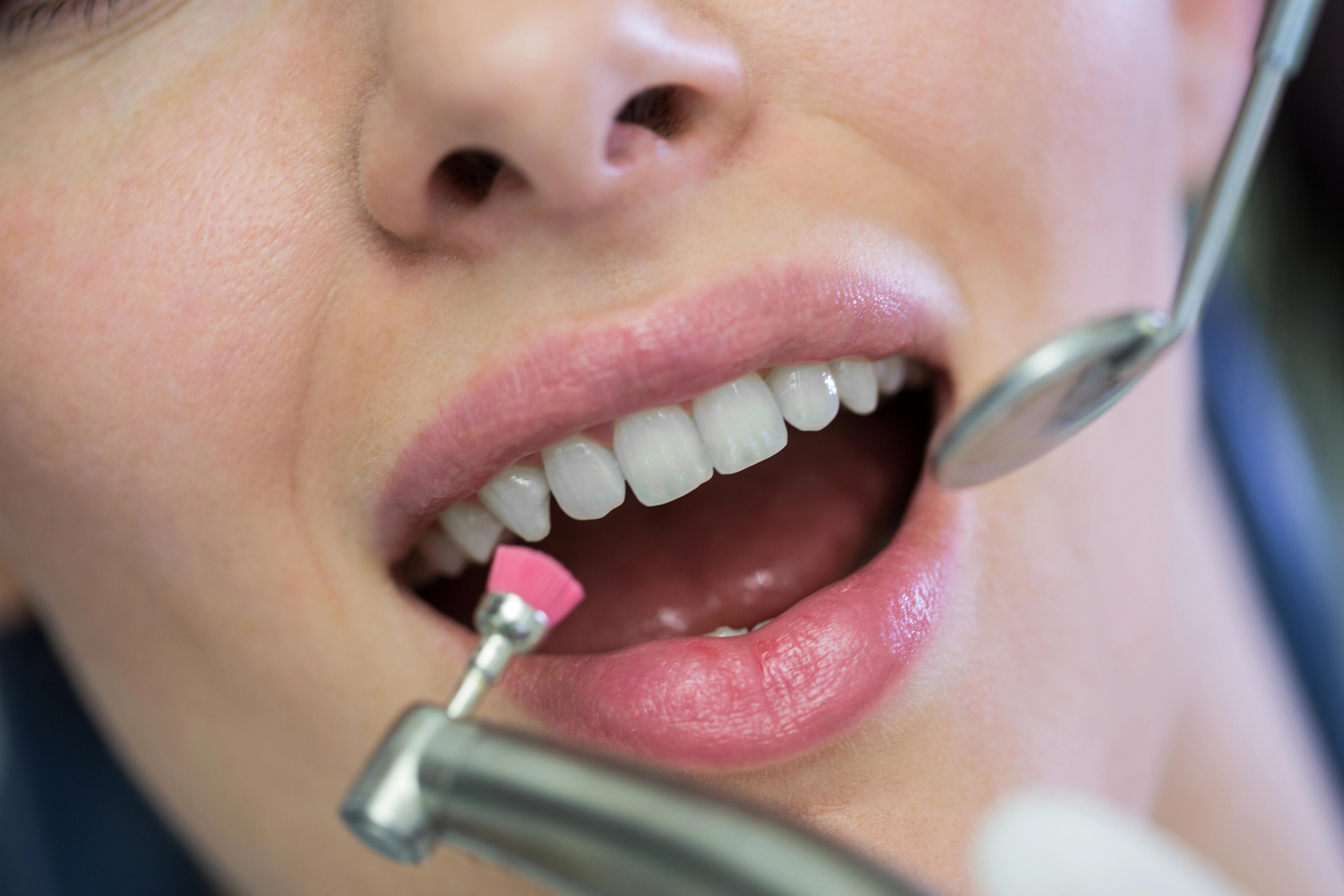
Composite bonding is a cosmetic dental procedure where tooth‑coloured resin is applied directly to specific areas of a tooth. The enamel is lightly etched, a bonding agent is applied, and resin is sculpted and polished to improve shape or appearance.
Because almost no natural tooth is removed, bonding is considered highly conservative and is often completed without anaesthetic. It is particularly effective for:
- Chipped or cracked edges
- Small gaps between teeth
- Minor asymmetry or uneven edges
- Isolated discolouration
Composite bonding works best when the underlying teeth are healthy and only subtle cosmetic correction is required.
It is not designed for dramatic colour changes or full smile redesigns.
This is because composite resin has material and technical limitations. While highly effective for small, targeted enhancements, it becomes less predictable when used across many teeth. Achieving consistent colour and symmetry on a full smile is more challenging, and the material is more prone to long-term staining and surface wear. For broader, long-lasting smile transformations, full-coverage approaches are usually more suitable.
Sources:
What Are Composite Veneers?

Composite veneers use the same resin material as bonding, but instead of correcting a small area, the dentist covers the entire front surface of the tooth. The aim is to create a new visible façade that improves colour, shape, proportions, and overall smile balance.
Unlike porcelain veneers, composite veneers are applied directly by the dentist in a single visit. This allows real-time shaping and adjustments, giving greater flexibility during treatment. They usually require little or no enamel removal, making them a more conservative option for patients who want noticeable aesthetic improvement without permanent tooth alteration. They can also be useful as an interim or transitional solution before committing to porcelain later.
Key characteristics of composite veneers include:
- Direct application by the dentist (no laboratory stage)
- Little to no enamel removal in most cases
- Single-appointment treatment
- Easy adjustment, repair, or refresh over time
Composite veneers are often chosen by patients who want a visible smile upgrade but are not ready for the cost, permanence, or enamel removal associated with porcelain veneers. They can also be useful as an interim or transitional solution before committing to porcelain later.
Composite veneers can address:
- Generalised uneven tooth shapes
- Mild to moderate discolouration
- Short or worn teeth
- Smile imbalance across several teeth
Purpose comparision
Choosing the right cosmetic dental treatment depends on your goals, budget, and the level of change you want to achieve. Both composite bonding and composite veneers are popular options for improving the appearance of teeth, but they are designed for slightly different purposes.
The table below explains the key differences in what each treatment is used for, helping you understand which option may be best suited to your smile.
| Composite Bonding | Composite Veneers |
|---|---|
Composite bonding allows you to improve the shape and/or colour of your teeth. | Composite veneers are custom-made in a dental laboratory by a technician before being bonded to your teeth. |
A tooth-coloured composite resin is carefully applied directly to your natural teeth. | Veneers are typically used to improve the appearance of an entire tooth or multiple teeth. |
This treatment can correct small imperfections or achieve a subtle smile enhancement. | They are ideal if you are looking for a complete smile makeover. |
Procedure Differences
While both treatments aim to enhance your smile, the process involved for each is quite different. Understanding how the procedures work can help set clear expectations around time, comfort, and preparation.
| Composite Bonding | Composite Veneers |
|---|---|
Composite bonding is a straightforward treatment that is usually completed in a single visit to your cosmetic dentist. | Veneer treatment requires preparation of the teeth to create space for the veneers. |
The composite material is applied directly to the tooth, then hand-shaped and polished by your dentist. | This process involves local anaesthetic and the removal of a minimal amount of tooth enamel, planned with precision. |
In most cases, no injections or drilling are required. | Digital scans are taken and sent to the lab where the veneers are created. |
Composite bonding vs Composite Veneers: Key Differences Explained
The most important difference between composite bonding and composite veneers is intent.
Bonding is corrective. Veneers are transformative.
Composite bonding is designed to fix specific, isolated concerns while leaving the rest of the tooth untouched. It is reactive in nature, addressing what is broken, uneven, or missing without changing the overall smile design.
Composite veneers, by contrast, take a more planned, aesthetic approach. Although still applied tooth-by-tooth, they follow a full-coverage mindset, with the dentist shaping each tooth in relation to the others to achieve balance, proportion, and visual harmony across the smile.
From a patient perspective, this means bonding tends to preserve individuality between teeth, whereas composite veneers aim for consistency and symmetry.
In practical terms:
- Bonding is ideal when one or two teeth bother you and the rest of your smile already works well
- Composite veneers make more sense when several teeth need coordinated improvement to achieve a cohesive overall result
Pros and cons that actually affect decisions
| Treatment | Pros | Cons |
|---|---|---|
Composite Bonding | Preserves enamel Lower cost, Largely reversible Completed in one visit Easy to repair or adjust | Limited durability compared to veneers More prone to staining over time Not suitable for major colour or shape changes |
Composite Veneers | More uniform aesthetic result across multiple teeth Still conservative compared to porcelain Affordable alternative to porcelain veneers Repairable and adjustable over time | Shorter lifespan than porcelain veneers Can stain over time Not ideal for severe or intrinsic discolouration |
Who is composite bonding best for?
Composite bonding is best suited to patients who want conservative, flexible cosmetic improvement without permanently altering their teeth.
It works particularly well when the goal is to correct specific flaws rather than redesign the entire smile.
Composite bonding is ideal for patients who:
- Have small chips, cracks, or gaps
- Want minimal intervention and maximum tooth preservation
- Are younger or keen to preserve enamel for the future
- Prefer a lower upfront cost
- Want a reversible or interim cosmetic option
| Patient profile | Suitability |
|---|---|
Minor cosmetic defects | ✓ Excellent |
Young patients (late teens, 20s) | ✓ Recommended |
Budget-conscious | ✓ Suitable |
Heavy grinders | ⚠ Requires caution |
Full smile makeover | ✕ Not ideal |
Who Are Composite Veneers Best For?
Composite veneers are better suited to patients who want a broader aesthetic improvement affecting multiple teeth, but who are not ready for the permanence or cost of porcelain veneers.
They offer a balance between visible enhancement and conservative treatment.
Composite veneers are ideal for patients who:
- Want consistent improvement across several teeth
- Have uneven shapes, worn edges, or mild discolouration
- Are not ready to commit to porcelain veneers
- Want noticeable results in a single visit
| Patient profile | Suitability |
|---|---|
Multiple teeth needing reshaping | ✓ Excellent |
Mild to moderate discolouration | ✓ Suitable |
Desire for broader smile enhancement | ✓ Strong fit |
Preference for conservative options | ✓ Suitable |
Severe discolouration or major makeover | - Not ideal |
Can Composite Bonding and Composite Veneers Be Combined?

Yes. In fact, combining composite bonding and composite veneers is often the most clinically sensible and cost-effective approach, especially when different teeth have different cosmetic needs.
Rather than treating every tooth the same, dentists can tailor the treatment tooth by tooth. The most visible teeth in the smile (usually the upper front teeth) may benefit from composite veneers, where full front-surface coverage helps improve colour consistency, proportions, and overall balance. Adjacent or less prominent teeth may only need small bonding additions to correct edges, close gaps, or refine shape.
This selective approach avoids unnecessary full coverage on teeth that do not need it. By limiting treatment to what is clinically and aesthetically required, healthy enamel is preserved wherever possible, reducing long-term biological cost.
From a patient perspective, combining treatments also makes smile enhancement more accessible. Fewer composite veneers means lower overall cost, while still achieving a cohesive, high-quality aesthetic result. It also allows flexibility over time: bonded areas can be easily adjusted or refreshed, and composite veneers can later be upgraded to porcelain if desired.
This approach:
- Preserves healthy enamel by avoiding over-treatment
- Reduces overall cost while maintaining aesthetic harmony
- Allows flexible future upgrades as needs or preferences change
Risks and Limitations
Both composite bonding and composite veneers are highly technique-sensitive treatments. The quality and longevity of the result depend heavily on the dentist’s skill in shaping, layering, and polishing the resin. Poorly contoured or inadequately polished composite can create rough margins where plaque accumulates, increasing the risk of staining, gum inflammation, and, over time, localised gum recession.
Unlike porcelain, composite resin is a softer material. While this allows it to be conservative and repairable, it also makes it more vulnerable to mechanical and cosmetic wear. Over time, composite restorations are more prone to:
- Chipping, particularly in patients with strong bite forces or grinding habits
- Surface wear, which can dull the appearance and alter tooth shape
- Marginal staining, where the composite meets the natural tooth, especially with coffee, tea, red wine, or smoking
These risks do not mean composite treatments are unreliable, but they do mean expectations must be realistic. Composite restorations require maintenance and occasional refinement to remain aesthetic and functional.
For this reason, choosing an experienced cosmetic dentist is often more important than the material itself. A skilled clinician will design the bite correctly, respect gum health, and use advanced polishing techniques to minimise wear and staining. Well-executed composite work can perform predictably for many years, whereas poorly executed work can fail early regardless of material choice.
Maintenance and Aftercare

Proper maintenance plays an important role in how long composite bonding and composite veneers last and how well they continue to look. While care is straightforward, poor habits can significantly shorten their lifespan.
Patients should use soft-bristled toothbrushes and non-abrasive toothpaste. Abrasive or whitening products can scratch the composite surface, making it more prone to staining and plaque buildup.
Composite resin can absorb pigments, so frequent coffee, tea, red wine, curry, and smoking will accelerate discolouration. Moderation and rinsing with water after consumption can help reduce staining.
Regular dental check-ups allow early detection of wear or staining, and professional polishing can refresh the appearance of composite restorations.
For patients who grind or clench their teeth, a night guard is strongly recommended to prevent chipping and premature wear.
With good hygiene and sensible habits, both composite bonding and composite veneers can perform reliably for many years. Good aftercare is often the deciding factor between early failure and long‑term success.
Proper aftercare plays a major role in longevity. Poor habits shorten lifespan significantly.
To maximise results:
- Use a soft-bristled toothbrush and non-abrasive toothpaste
- Limit staining foods and drinks
- Rinse after consuming pigmented foods
- Attend regular dental check-ups
- Have professional polishing when needed
- Wear a night guard if you grind your teeth
UK Cost Breakdown
Costs for composite bonding and composite veneers in the UK vary depending on the dentist’s experience, clinic location, and complexity of treatment. All prices below refer to private cosmetic treatment, as the NHS does not usually cover cosmetic procedures.
While composite veneers cost more than simple bonding, they remain a more affordable and conservative option compared with porcelain veneers. Patients should also factor in long-term maintenance, as composite treatments may require polishing, repairs, or refreshes over time.
| Treatment | Typical UK cost (per tooth) |
|---|---|
Composite bonding | £150–£400 |
Composite veneer | £300–£500 |
Multiple teeth (bonding) | £1,000–£2,500+ |
Multiple teeth (composite veneers) | £2,000–£4,000+ |
Final Decision Framework
| Decision factor | Composite Bonding | Composite Veneers |
|---|---|---|
Minor chips or small gaps | ✓ | - |
Minor cosmetic issues | ✓ | - |
Major colour or shape change | - | ✓ |
Broader smile improvement across several teeth | - | ✓ |
Preserve natural enamel | ✓ | ✓ |
Long-term durability priority | - | ✓ |
Lower upfront cost / budget | ✓ | - |
Colour stability over time | - | ✓ |
Willing to accept increased surface coverage | - | ✓ |
Frequently Asked Questions
Is composite bonding reversible?
Composite bonding is largely reversible because little to no enamel is removed. The resin can usually be polished off, leaving the tooth close to its original condition.
Are composite veneers permanent?
Composite veneers are not considered permanent in the same way as porcelain veneers. They are additive and conservative, and while some minor surface changes may remain, they can usually be adjusted or removed.
Which lasts longer: composite bonding or composite veneers?
Composite veneers generally last slightly longer than bonding, often 7–10 years, because the resin is spread across the full tooth surface. Composite bonding typically lasts 5–7 years, depending on habits and maintenance.
Can composite veneers replace porcelain veneers?
Composite veneers can be an effective alternative for mild to moderate cosmetic concerns, but they do not match porcelain for colour stability, translucency, or longevity. They are best seen as a conservative or transitional option.
Let’s Talk About Your Smile - Free Consultation
Trusted by thousands of international patients in Albania
Author

Dr. Aida Zhupani
Dr. Aida Zhupani completed her studies at the Faculty of Medical Sciences, Department of Somatology. As the founder of Zeus Dental Clinic, she is dedicated to providing professional, compassionate, and high-quality dental care. With a patient-centered approach and years of experience, Dr. Zhupani focuses on helping people feel comfortable and confident in their smiles. Her passion for dentistry and commitment to continuous learning inspire the insights she shares through this blog.
Related Blogs