Dental Crowns vs Veneers: Differences, Costs, Longevity, and Which Is Right for You
Dental crowns and veneers are both fixed restorations, but they serve different clinical purposes. Crowns are full-coverage restorations designed to strengthen and protect damaged or weakened teeth. Veneers are primarily cosmetic, covering only the front surface of healthy teeth to improve colour, shape, and symmetry.
TL;DR
Dental crowns and veneers are both fixed restorations, but they serve different clinical purposes. Crowns are full-coverage restorations designed to strengthen and protect damaged or weakened teeth. Veneers are primarily cosmetic, covering only the front surface of healthy teeth to improve colour, shape, and symmetry.
Crowns are more invasive but structurally protective, making them ideal for teeth with large fillings, fractures, or root canal treatment. Veneers are more conservative and aesthetic-focused, best suited for smile makeovers where teeth are otherwise healthy. Costs and longevity are similar, but the biological impact and intent are very different.
Dental Crowns vs Veneers
Although crowns and veneers are often discussed together, they are not interchangeable. Clinically, they exist at opposite ends of the restorative area.
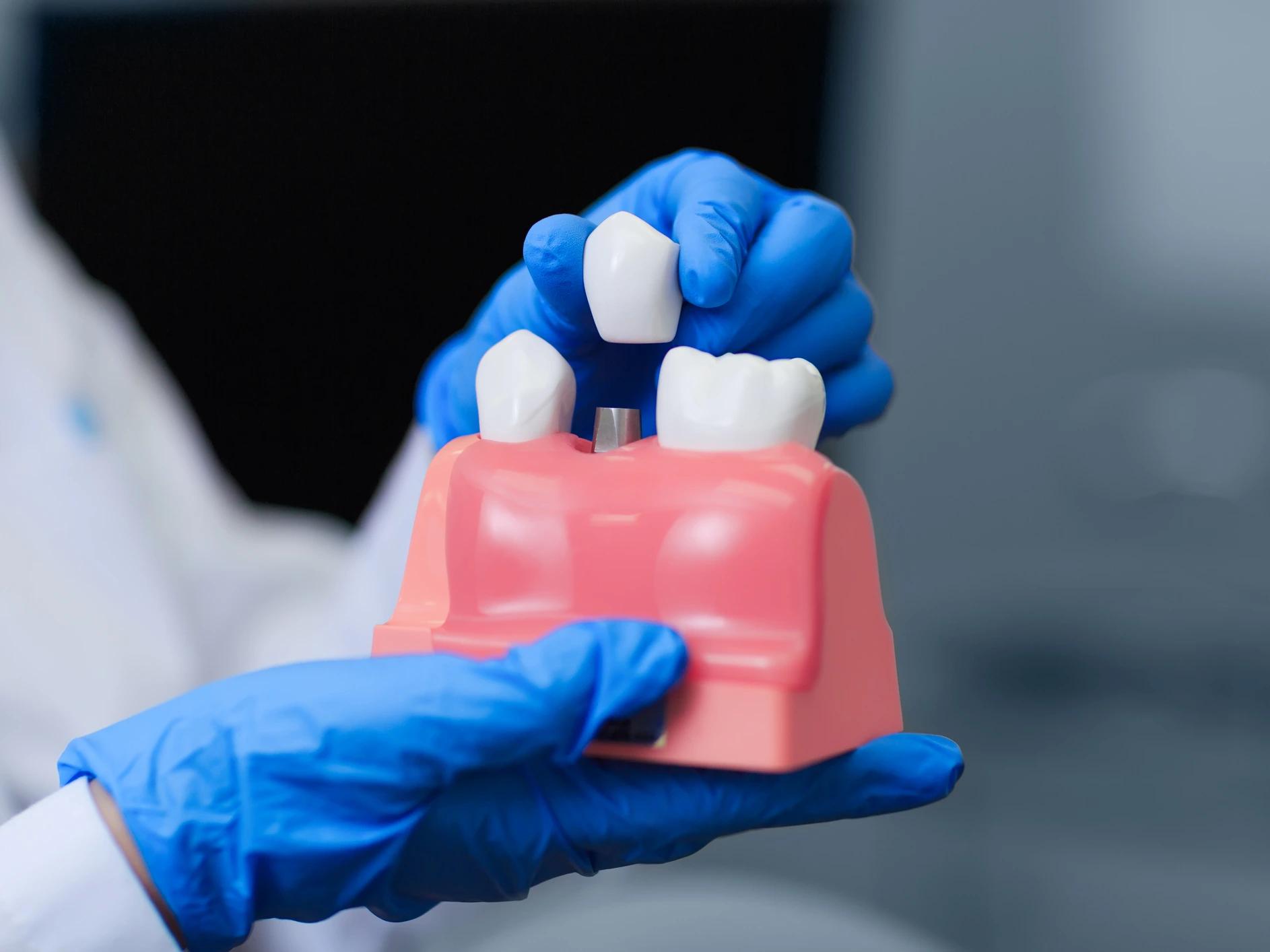
A dental crown is a full-coverage restoration that encases the entire tooth above the gumline. Its primary role is to restore strength, function, and durability to a compromised tooth. A dental veneer is a partial-coverage restoration bonded only to the front surface of the tooth, designed to improve aesthetics while preserving most of the natural structure.
Choosing between them depends far more on tooth condition than cosmetic preference.
References:
At-a-Glance Comparison
| Factor | Dental Crowns | Dental Veneers |
|---|---|---|
Primary purpose | Structural restoration and aesthetics | Cosmetic enhancement |
Tooth coverage | Entire tooth (360°) | Front surface only |
Tooth preparation | Extensive (1-2 mm reduction all around) | Conservative (≈0.3-0.7 mm on the front) |
Reversibility | Irreversible | Irreversible (porcelain) |
Typical lifespan | 10-15+ years | 10-15+ years |
Repairability | Limited, often requires replacement | Limited, often requires replacement |
Appointments | 2 visits (sometimes same-day CAD/CAM) | 2 visits (porcelain) |
Aesthetic ceiling | High (material-dependent) | Very high (especially porcelain) |
What Is a Dental Crown?
A dental crown is a custom-made cap that fully covers a tooth that has lost structural integrity. Crowns are used when a tooth is too damaged, weakened, or heavily restored to survive with a filling or veneer alone.
Crowns restore chewing function, protect against fracture, and can significantly improve appearance. Because they encase the tooth, they redistribute bite forces and reduce the risk of further breakdown. Crowns are functional restorations first, cosmetic restorations second.
Common indications include:
- Teeth with large or failing fillings
- Cracked or fractured teeth
- Root canal-treated teeth
- Severe tooth wear or erosion
- Teeth supporting dental bridges or dental implants
References:
What Are Veneers?
Veneers are thin shells bonded to the front surface of teeth to permanently improve aesthetics. They do not strengthen teeth and rely on healthy enamel for long-term success.
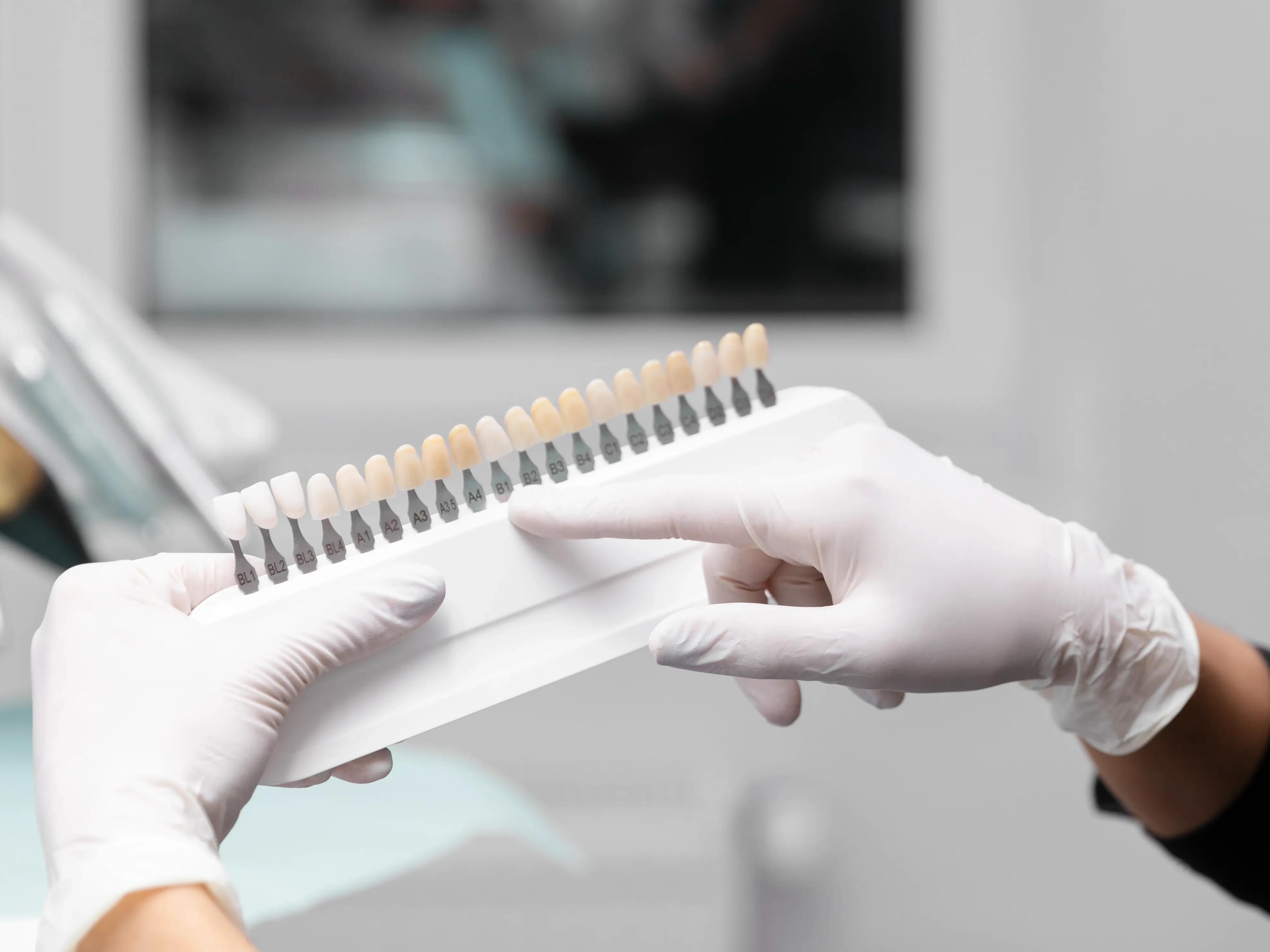
Porcelain veneers are fabricated in a dental laboratory, allowing precise control over translucency, colour, and symmetry. Composite veneers are applied directly but still involve full front-surface coverage.
Veneers are most effective for:
- Severe discolouration resistant to whitening
- Uneven tooth size or shape
- Minor alignment or spacing issues
- Smile makeovers involving multiple front teeth
Because enamel is removed, veneers represent a permanent aesthetic commitment.
Sources:
Key Differences That Actually Matter
The most important difference between crowns and veneers is how much natural tooth structure is used.
- Veneers are inherently conservative: only a thin layer of enamel is removed from the front surface of the tooth, preserving the majority of its original structure.
- Crowns, by contrast, require circumferential reduction. Tooth structure is removed from all sides and the biting surface, permanently changing the tooth and increasing the biological cost of treatment.
This difference directly affects what each restoration can do.
- Crowns are designed to reinforce teeth that are already weakened.
- Veneers rely on the tooth being stable and intact beforehand.
The aesthetic goal also differs.
- Veneers are chosen to create uniform colour, shape, and symmetry across the visible smile.
- Crowns prioritise function and longevity first, with aesthetics incorporated as part of restoring a damaged tooth rather than redesigning a smile.
Finally, the consequences of failure are not the same.
- When a veneer fails, the issue is usually aesthetic and managed by replacement.
- When a crown fails, it often reflects deeper problems in the underlying tooth, such as decay, fracture, or loss of retention, which can require more invasive treatment to resolve.
References:
Pros and Cons That Influence Real Decisions
| Treatment | Pros | Cons |
|---|---|---|
Dental Crowns | Restore and protect structurally weakened teeth; Suitable for heavy bite forces and back teeth; Long clinical track record with predictable outcomes | Significant enamel and dentine removal; Higher biological cost and risk of nerve complications; Irreversible once placed |
Dental Veneers | More conservative than crowns; Superior cosmetic control and smile uniformity; Excellent colour stability with porcelain | No structural reinforcement; Permanent enamel loss; Unsuitable for teeth with extensive damage |
Who Are Crowns Best For?
Dental crowns are best suited to patients whose teeth are structurally compromised and require full coverage to remain functional and predictable long term. Crowns are not primarily cosmetic; they are a restorative solution used when a tooth would be at high risk of fracture, failure, or pain without reinforcement.
Crowns are ideal if you:
- Have a tooth with a very large filling or repeated restorations
- Have a cracked, fractured, or heavily worn tooth
- Have had root canal treatment and need protection against fracture
- Experience heavy bite forces or grinding that compromise tooth strength
- Need to restore back teeth used for chewing
- Require a crown as part of an implant or bridge
References:
Crown Patient profile
| Profile | Suitability |
|---|---|
Large fillings or decay | ✓ Excellent |
Root canal-treated teeth | ✓ Strongly recommended |
Heavy grinders / clenchers | ✓ Often necessary |
Back teeth (molars, premolars) | ✓ Ideal |
Mostly healthy front teeth | ✕ Usually excessive |
Purely cosmetic concerns | ✕ Not appropriate |
Who Are Veneers Best For?
Veneers are best suited to patients seeking a long-term cosmetic enhancement of their smile where the underlying teeth are healthy and structurally stable. Veneers are an aesthetic solution first and should only be used when strength and function are already adequate.
Veneers are ideal if you:
- Want a full smile makeover with consistent colour and shape
- Have severe or intrinsic discolouration that whitening cannot fix
- Have uneven tooth size, shape, or minor alignment issues
- Want long-lasting, stain-resistant cosmetic results
- Are comfortable with permanent enamel alteration
- Prioritise aesthetics over reversibility
References:
Veneers Patient Profile
| Profile | Suitability |
|---|---|
Severe discolouration | ✓ Excellent |
Multiple front teeth with cosmetic issues | ✓ Ideal |
Desire for long-term aesthetics | ✓ Strong fit |
Healthy enamel and stable bite | ✓ Required |
Aversion to tooth drilling | ✕ Poor fit |
Very young patients | ⚠ Case-dependent |
Can Crowns and Veneers Be Combined?
Yes, and often with excellent results: Combining crowns and veneers is common in high-quality treatment planning and allows different teeth to receive the most appropriate solution.
Treatment should be tooth-specific: Structurally weakened teeth (large fillings, cracks, root canal treatment, heavy wear) benefit from crowns, while healthy but cosmetically imperfect teeth can be treated with veneers to preserve enamel.
Common in smile makeovers: Veneers are often placed on the most visible front teeth, while neighbouring teeth receive crowns if they are darker, heavily restored, or weakened. When planned together, the final result appears uniform.
Works only with proper planning: Crowns and veneers perform well together when chosen based on tooth condition and bite forces. Problems arise when they are used interchangeably or for cosmetic convenience rather than clinical need.
References:
Risks Dentists Don’t Always Emphasise

Crowns and Veneers are often described as straightforward cosmetic or restorative treatments, but they are irreversible procedures with long-term consequences. One of the most important risks is related to tooth preparation. Crowns require significant reduction of the tooth, which can occasionally irritate the nerve and lead to long-term sensitivity or, in some cases, the future need for root canal treatment. While this does not happen often, it is a recognised risk that patients are not always clearly warned about.
Veneers carry a different type of risk. Their success depends heavily on bonding to healthy enamel. When enamel is thin, aggressively reduced, or already compromised, veneers are more likely to debond, chip, or fail earlier than expected.
Bite forces are another commonly overlooked factor. Teeth involved in chewing guidance or affected by grinding and clenching are exposed to higher stress. Veneers placed on these teeth without proper bite assessment or protection are more prone to chipping. Crowns that are not carefully adjusted can wear down faster. Many failures blamed on materials are actually caused by untreated bite issues.
Finally, both crowns and veneers tend to fail at their margins rather than in the porcelain itself. Poor gum health, plaque buildup, or inadequate cleaning can lead to decay at the edges of restorations. For this reason, these treatments should be chosen with long-term planning in mind, especially in younger patients.
References:
Maintenance and Aftercare
Maintain excellent oral hygiene: Brush twice daily and clean between teeth, especially along the gumline. Most long-term problems start at the margins, not in the restoration itself.
Avoid excessive force: Do not bite hard objects, chew ice, or use teeth as tools. Veneers on front teeth are particularly vulnerable to chipping.
Manage grinding and clenching: If you grind or clench, a night guard is essential to protect crowns and veneers and extend their lifespan.
Attend regular check-ups: Routine reviews and professional cleaning help detect early issues and maintain healthy gums around restorations.
Think long term: Crowns and veneers may need replacement in the future. Good habits can delay this significantly, while poor habits shorten their lifespan.
References:
UK Cost Overview
Pricing for crowns and veneers in the UK varies widely and is influenced by more than just the material used.
One of the biggest factors is clinical complexity. Teeth that require additional procedures such as root canal treatment, build-ups, bite adjustments, or gum management will naturally cost more to restore. A straightforward veneer on a healthy tooth is very different from a crown placed on a heavily restored or weakened tooth, even if both use similar ceramic materials.
Another influence on price is the level of expertise and laboratory work involved. High-quality cosmetic results depend on skilled clinicians, detailed planning, and reputable dental laboratories that use premium ceramics and precise fabrication techniques. These factors increase cost but also improve fit, longevity, and aesthetics.
Importantly, crowns may be partially covered by the NHS when clinically necessary, while veneers are almost always private, which significantly affects overall affordability.
| Treatment | Typical UK Cost (per tooth) |
|---|---|
Crown (private) | £700-£1,200 |
Porcelain veneer | £900 - £1,800 |
NHS crown (Band 3) | £326.70 |
Final Decision Framework
Choose a crown if the tooth needs protection, strength, or has extensive damage. Choose a veneer if the tooth is healthy and the goal is aesthetic improvement. When in doubt, the least invasive option that achieves long-term stability is the correct one.
| Decision factor | Crowns | Veneers |
|---|---|---|
Structurally weakened tooth | ✓ |
|
Large fillings, cracks, root canal | ✓ |
|
Purely cosmetic concerns |
| ✓ |
Full smile makeover |
| ✓ |
Preserve as much natural enamel as possible |
| ✓ |
Long-term durability under heavy bite | ✓ |
|
Back teeth / chewing function | ✓ |
|
High aesthetic priority (front teeth) |
| ✓ |
Willing to accept permanent enamel removal | ✓ | ✓ |
Frequently Asked Questions
Are veneers safer than crowns?
Veneers are more conservative because they remove less natural tooth structure, which lowers biological risk when placed on healthy teeth. However, they are only safe when the underlying tooth is strong and has sufficient enamel for bonding. Crowns involve more tooth reduction but are safer and more predictable for teeth that are already weakened.
Can veneers replace crowns?
No. Veneers cannot replace crowns when a tooth requires structural reinforcement. Teeth with large fillings, cracks, or root canal treatment generally need full coverage to prevent fracture. Veneers are designed for cosmetic enhancement, not for strengthening compromised teeth.
Are crowns always obvious?
No. Modern all-ceramic crowns can look extremely natural and are often indistinguishable from real teeth, especially on front teeth. When properly planned and executed, most people cannot tell whether a tooth has a crown, a veneer, or no restoration at all.
Are crowns and veneers permanent?
Yes. Both crowns and porcelain veneers are considered permanent treatments because they involve irreversible tooth preparation. While restorations may need replacement over time, the initial decision commits the tooth to long-term restorative care.
Let’s Talk About Your Smile - Free Consultation
Trusted by thousands of international patients in Albania

References
- Crowns - Oral Health Foundation
- Veneers - Oral Health Foundation
- Tooth Crown Procedure | Bupa Dental Care
- Teeth Veneers Procedure & Cost | Bupa Dental Care
- Dental treatments - NHS
- What Are Dental Veneers? Cost, Procedure & Advantages
- Veneers | MouthHealthy - Oral Health Information from the ADA
- Crowns | MouthHealthy - Oral Health Information from the ADA
- Fillings, Crowns & Veneers | Bupa Dental Care UK
Author

Dr. Irma Marku
Dr. Irma Marku is an experienced General Dentist and founder of Dental Oasis. She has a strong background in the hospital and healthcare industry, with expertise in Endodontics, Dentistry, Patient Education, Medicine, and Oral Surgery. Dr. Marku is a dedicated professional with a solid academic foundation, holding a degree in Dentistry from the University of Medicine, Tirana.