Metal Braces vs Ceramic Braces: Which Path To A Straighter Smile Is Right?
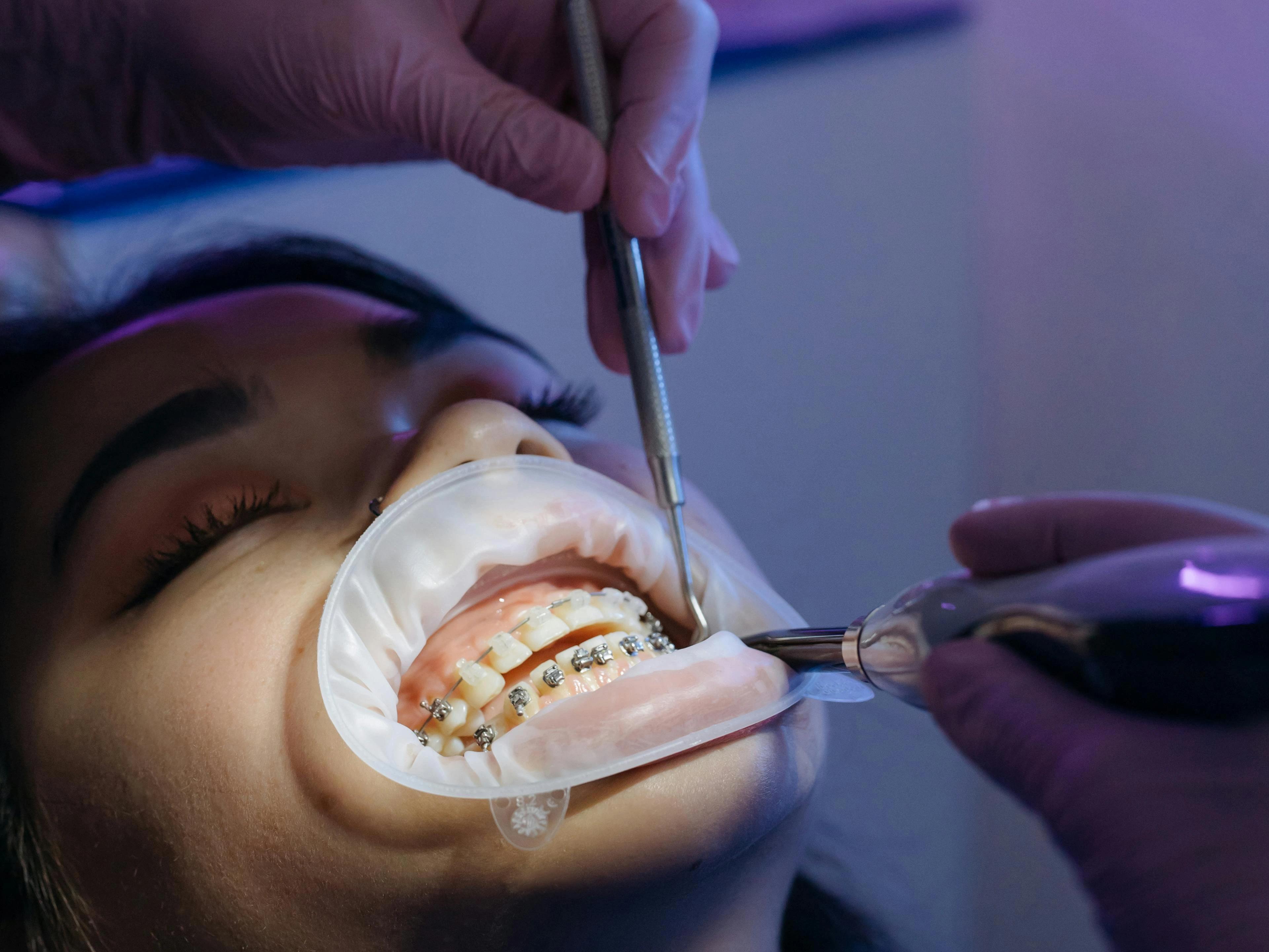
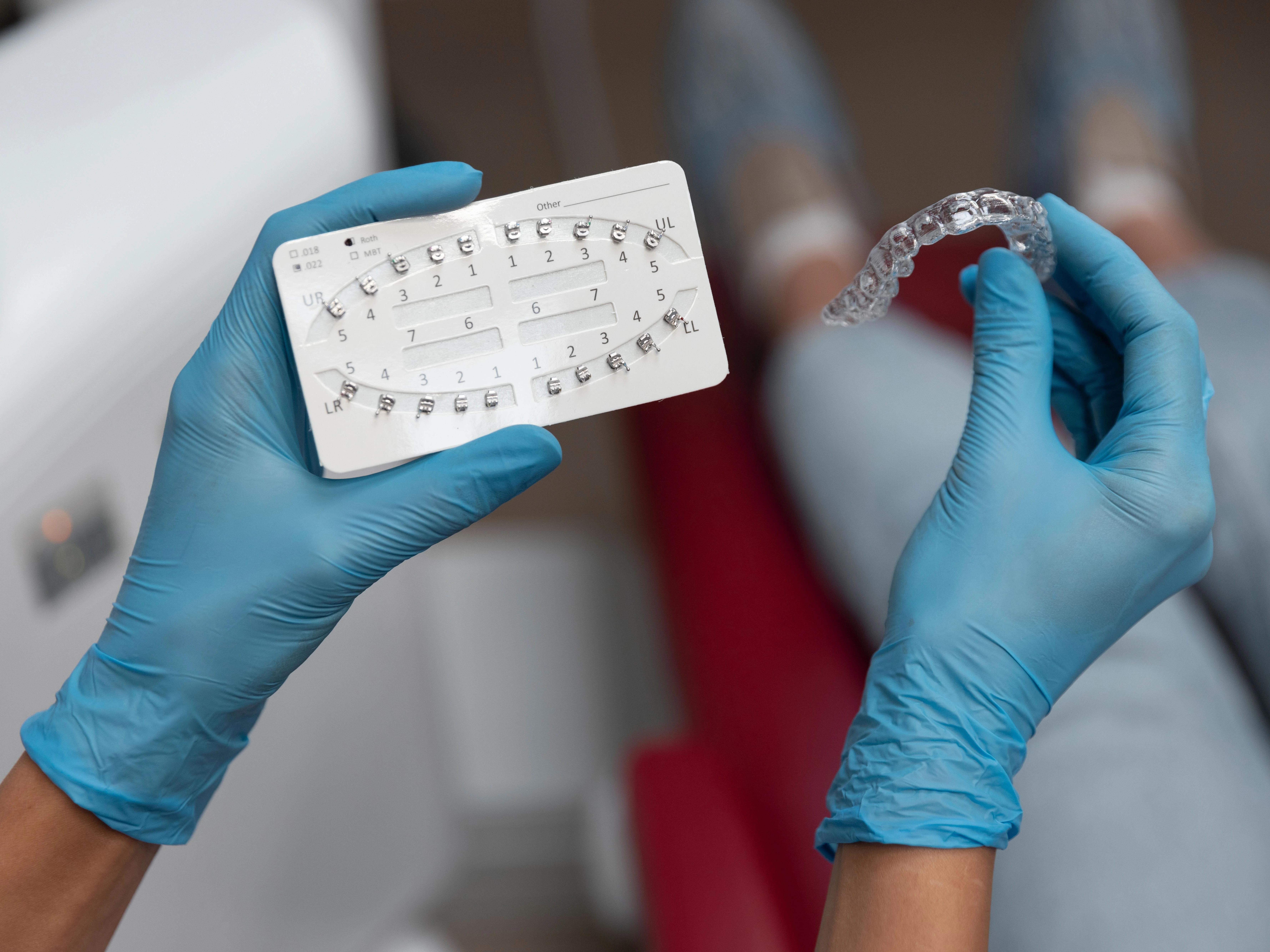
Choosing between metal and ceramic braces is a major decision for anyone looking to improve their dental health and aesthetics. While both systems function by applying consistent pressure to shift teeth into alignment, they differ significantly in terms of durability, speed, and visibility. Understanding these differences is essential for setting realistic expectations for the orthodontic journey.
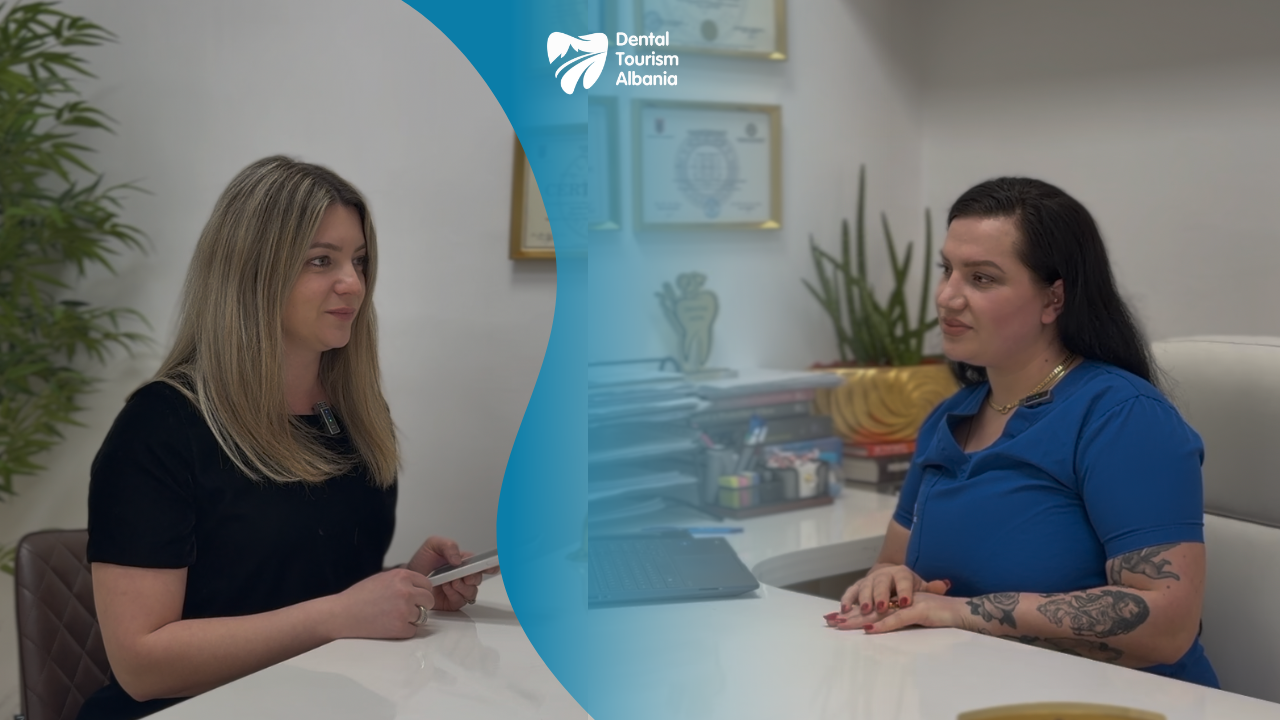
We interviewed one of our best dentists.
Interviewer asked Dr. Aida the most important practical and clinical questions patients have about metal vs ceramic braces, including predictability, breakage, treatment speed, enamel safety, comfort, costs, and when a hybrid approach makes sense.
Who is Dr. Aida
Dr. Aida Zhupani is a dentist and the founder of Zeus Dental Clinic. A graduate of the Faculty of Medical Sciences, Department of Somatology, she has years of experience treating patients with orthodontic and restorative dental care. Known for her patient-centered approach and focus on practical treatment outcomes, Dr. Zhupani regularly helps patients choose the most effective solutions for their dental health and smile aesthetics.
TL;DR
- Metal braces offer superior durability and are the preferred choice for complex orthodontic corrections like severe rotations or space closures.
- Ceramic braces provide a discreet, tooth-coloured appearance but are more prone to fracturing and can extend the total treatment time.
- Standard metal brackets are generally more cost-effective, whereas ceramic options carry a higher price tag due to material costs and frequent repairs.
- Many orthodontists suggest a hybrid approach, using ceramic on visible front teeth and metal on molars for better mechanical control.
Quick Tips
Tip 1: Choose metal braces if the treatment plan involves closing large gaps or correcting rotations.
Tip 2: Opt for ceramic brackets only if maintaining a professional, low-profile appearance is the priority.
Tip 3: Maintain meticulous hygiene to reduce staining around bracket edges and lower enamel risk.
1. Which Braces Provide More Predictable Results?
Predictability in orthodontics means your teeth move in the direction the orthodontist intends, at the pace expected, with minimal surprises. In clinical terms, predictability is about control: how well the bracket-and-wire system allows precise movements like torque, rotation, and space closure.
Material matters because orthodontic treatment is a mechanical system. If the bracket is fragile or restricts wire movement, the clinician may need to reduce force, change mechanics, or accept slower progress. That’s why “aesthetic” choices can become “performance” trade-offs in practice.
Interviewer: Which ones provide more predictable tooth movement, metal braces or ceramic braces?
Dr. Aida: Metal braces are more predictable, because the wire allows sliding in metal brackets and they are more controlled. Whereas ceramic brackets are very delicate, fragile, and there are some movements that they do not allow, they do not give the wire the possibility to perform.
Interviewer: When do ceramic brackets lose control compared to metal braces?
Dr. Aida: Ceramic brackets mainly lose control in torque movements, in space closures, and in major problems involving tooth rotations.
Interviewer: If precision is the priority, which would you trust more? And why?
Dr. Aida: Absolutely, I would choose metal braces, because they have more resistance, and since they have more resistance, I have the possibility to better control the arch and the teeth, and to give the movements that I want to give to the teeth through the arches, to achieve the result that I am looking for.

2. How Do Durability and Emergency Visits Compare?
Durability affects treatment continuity. A bracket that breaks or fractures stops acting as an anchor point for the wire, meaning tooth movement can stall until it’s repaired. Even when repairs are quick, they can create a pattern of delays that extend total treatment time
This is one of the biggest day-to-day differences between metal and ceramic braces. Metal brackets are designed to withstand force and activation. Ceramic brackets can be more brittle, particularly during higher-force movements or accidental impacts.
Interviewer: Let’s talk about breakages, failures and repairs. Between ceramic braces and metal braces, which break more often?
Interviewer: Let’s talk about breakages, failures and repairs. Between ceramic braces and metal braces, which break more often?

Dr. Aida: Regarding metal braces, very rarely can a bracket fracture occur. It can happen during the activation process, or from an external impact. Whereas ceramic brackets are very delicate and mainly break.
Interviewer: When ceramic breaks, how does the fracture differ from metal?
Dr. Aida: Usually, metal brackets do not break, whereas ceramic brackets fracture, they can crack over time, or at the moment when we apply a lot of force.
Interviewer: If you had to give one answer, which of the two types of brackets brings more emergency visits?
Dr. Aida: The more emergency visits in the clinic are mainly caused by ceramic brackets.
Let’s Talk About Your Smile - Free Consultation
Trusted by thousands of international patients in Albania

3. Does Material Choice Affect Treatment Speed?
Treatment speed is influenced by how quickly orthodontists can progress through wire sequences, how much force can be applied safely, and whether bracket breakage interrupts mechanics. Lower friction and higher bracket strength generally allow faster progress, especially in stages like space closure and rotation.
A key point is that ceramic treatment can be clinically effective, but often requires a more cautious approach. That caution can add months in some cases.
Interviewer: Let’s talk about treatment speed and efficiency. Which of the brackets, between ceramic and metal, finishes treatment faster?
Dr. Aida: It finishes faster with metal braces, since we have the possibility to place stronger, thicker arches, whereas for ceramic brackets we must keep them for a slightly longer time, with thinner arches. This makes the treatment last longer in time, the forces must be very controlled and small.
Interviewer: When do ceramic brackets slow down the process?
Dr. Aida: At the moment when we want to close spaces or rotate teeth, here the process slows down, because the forces must truly be very small.
Interviewer: What surprises patients the most after they have worn ceramic brackets for some time?
Dr. Aida: What surprises the patient… is the fact that the brackets can fracture and the treatment can last longer… If with metal braces the treatment lasts 9 months, with ceramic brackets an extra 4 months will be added.
4. What Are the Risks to Dental Enamel?
Enamel risk is not only about the bracket, but also about bonding, removal technique, and oral hygiene during treatment. Any braces can contribute to decalcification if plaque is left around brackets, but ceramic brackets have a specific risk during removal because they often need to fracture to be removed.
In practice, the dentist’s risk assessment often becomes patient-specific. If hygiene is poor, enamel risk increases regardless of whether the bracket is metal or ceramic.
Interviewer: Let’s talk about enamel safety and risks during bracket removal. Which are more aggressive to enamel? Metal braces or ceramic braces?
Dr. Aida: Ceramic brackets… create a very strong bond with the tooth… during removal they must fracture… At the moment they fracture, they can also damage the enamel.
Interviewer: Have you ever changed the plan in bracket selection due to enamel risks?
Dr. Aida: It is not related to metal or ceramic brackets. It is related to the patient and how good they are with hygiene… If patients have poor hygiene, I suggest… remove the orthodontic appliance completely rather than end up destroying the weak structure.
5. How Do They Age Over Time?
Patients often assume ceramic braces stay “invisible” for the full treatment. In reality, how braces look after months depends on hygiene, diet, acidity exposure, and the quality of materials used. Even the adhesive around brackets can stain if hygiene is inconsistent.
This section matters because many patients choose ceramic braces mainly for appearance. Understanding how ceramics can discolour, and how adhesive edges can stain even with metal braces, helps set realistic expectations.
Interviewer: Ok. Let’s talk about appearance over time. After 6 months, which gives more results? Metal braces or ceramic braces?
Dr. Aida: We always depend on the case… In simple orthodontic cases, mainly I choose ceramic brackets… but in difficult cases, I always choose metal braces. After 6 months, if the patient has poor hygiene, even in metal braces the adhesive… will begin to take color around the edges.
Interviewer: Which age worse over time?
Dr. Aida: Over time… ceramic brackets are more delicate, they begin to take color… hygiene, food, acidity, and what brand the bracket is… cheap brands… after one month they begin to discolor heavily… quality matters.
6. How Do They Affect Daily Comfort and Irritation?
Comfort isn’t only about pain from tooth movement. Bracket size, edges, and how they interact with cheeks, lips, and gums can drive daily irritation. Ceramic brackets are often bulkier, which can irritate gums. Metal brackets can irritate cheeks and lips, particularly early on.
Patients also vary. Some are careful and adapt quickly. Others struggle more due to diet choices, hygiene habits, or sensitivity.
Interviewer: How do brackets affect the soft tissues? Which cause more irritation?
Dr. Aida: Ceramic brackets… are slightly larger, irritate the gums a little more… whereas metal brackets irritate more the cheeks, the lip area… during movements… the patient damages the cheek tissues.
Interviewer: Which bring more complaints from patients?
Dr. Aida: Both types… This is related to the problem… and how the patient is… With metal… detachment… irritation… With ceramic… irritation… discoloration… fractures.
7. Sports Safety: Which Is Safer for Athletic Patients?
Patients often ask which bracket is “safer” for sports. The key point is that impacts can cause trauma regardless of bracket type. Braces add hard surfaces inside the mouth, increasing the need for protection during contact sports.
A mouthguard is the practical solution, but bracket type alone does not eliminate risk.
Interviewer: For athletic patients, patients who engage in sports activities, which are safer, or which are stronger?
Dr. Aida: Neither of the two is safe, because an external impact can occur and there can be trauma to the tooth area, the bracket, and also the soft tissues.
8. Hidden Costs and Chair Time: What Patients Don’t Expect
“Hidden costs” often mean unplanned repairs and extra appointments. But there’s also “chair time” across treatment, meaning how many visits and how much adjustment time a case needs overall. Patients often assume ceramic will always require more chair time because of repairs.
Dr. Aida’s answer adds nuance: while ceramic has more repair-related costs, overall chair time can be similar depending on the case and how carefully the patient follows instructions.
Interviewer: Hidden costs and time, which of the treatments requires more chair time throughout the entire treatment?
Dr. Aida: Absolutely both cases, both patients treated with metal brackets and those treated with ceramic brackets.
Interviewer: Which create more hidden costs for frequent repairs?
Dr. Aida: Absolutely ceramic.
9. Cost Comparison: Which Costs More Overall?
Patients usually want a simple answer. The practical reality is that ceramic brackets cost more to purchase, and more fractures can increase overall treatment expense in some clinics.
This is separate from “chair time.” Even if chair time is similar, material and repair frequency can still make ceramic more expensive overall.
Interviewer: Between ceramic brackets and metal brackets, which has a higher treatment cost?
Dr. Aida: Ceramic brackets have a higher treatment cost, because they also have a higher purchasing cost.
10. Hybrid Treatment: When Do Orthodontists Combine Metal and Ceramic?
Hybrid treatment is one of the most useful real-world compromises. Patients get a more discreet look on the front teeth while maintaining stronger control where forces are highest, such as molars or teeth that repeatedly break ceramic brackets.
This also answers a common “why didn’t anyone mention this?” question: many patients don’t realise mixing bracket types is often an option.
Interviewer: When do you combine ceramic and metal brackets in the same treatment?
Dr. Aida: Usually we combine them… in the molar areas… we place metal… on the teeth that require more force to eliminate fracture issues… or when patients fracture them repeatedly… we must place a metal one in that spot.
Interviewer: Why is this hybrid method rarely explained to patients?
Dr. Aida: Absolutely, we are clear from the beginning, we explain to patients every detail… because we do not want to have misunderstandings at the end.
11. The Dentist’s Personal Preference: What Dr. Aida Chooses, and When
The dentist’s preference matters because it reflects what feels most secure in daily clinical practice. Even when ceramic is appropriate, many clinicians still prefer metal for overall control and fewer disruptions.
This section also clarifies “when never ceramic” and “when ceramic is clearly right.”
Interviewer: When do you prefer metal more than ceramic?
Dr. Aida: Mainly, I am a supporter of metal brackets… I treat most of my patients with metal brackets, because I have them more under control… and at the end… we have a result that truly satisfies the patient.
Interviewer: The dentist’s personal preferences. If everything were equal, which would you prefer to work with?
Dr. Aida: My priority is metal brackets, since they give me more security in treatment.
Interviewer: When would you never choose a ceramic bracket?
Dr. Aida: I would not choose treatment with ceramic brackets in class III orthodontic cases.
Interviewer: Are there cases where ceramic brackets are clearly the right option for the patient?
Dr. Aida: Absolutely yes, in simple cases… short… also patients who have a complex due to work, who are older, we place ceramic brackets… from an aesthetic standpoint.
12. The Most Misunderstood Difference Between Ceramic and Metal Braces
Many patients assume the more aesthetic option is equally effective. Dr. Aida’s final point is the core message that ties the entire comparison together: appearance is not the same as efficiency.
This matters because it reframes the decision. The “best” choice depends on your case complexity, lifestyle, and tolerance for longer treatment timelines or repairs.
Interviewer: What is the most misunderstood difference between ceramic and metal brackets?
Dr. Aida: The most misunderstood difference is that aesthetics does not always bring efficiency.
Let’s Talk About Your Smile - Free Consultation
Trusted by thousands of international patients in Albania
Final Thoughts
Deciding between metal and ceramic braces involves balancing the desire for a discreet look with the need for clinical efficiency and reliability. Metal braces offer more predictable control, fewer fractures, and faster progress in complex cases. Ceramic braces can be a good choice for simple cases where appearance is the priority, but they may discolour, fracture, and extend treatment time.
As Dr. Aida puts it: aesthetics does not always bring efficiency.
Author

Dr. Aida Zhupani
Dr. Aida Zhupani completed her studies at the Faculty of Medical Sciences, Department of Somatology. As the founder of Zeus Dental Clinic, she is dedicated to providing professional, compassionate, and high-quality dental care. With a patient-centered approach and years of experience, Dr. Zhupani focuses on helping people feel comfortable and confident in their smiles. Her passion for dentistry and commitment to continuous learning inspire the insights she shares through this blog.